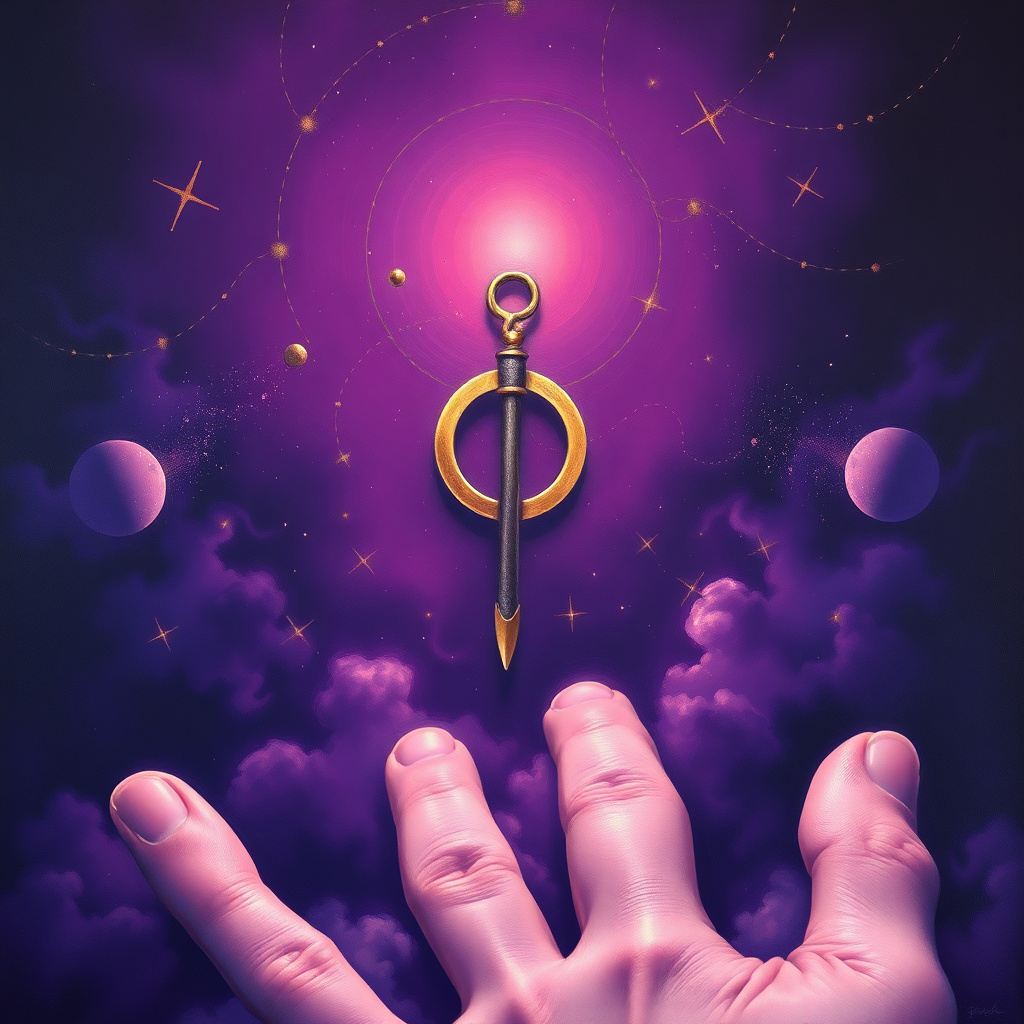
Tool Symbolism: A Jungian Archetypal Analysis of Psychic Functionality
Explore the psychological significance of the Tool through a Jungian lens, examining its role in individuation, the shadow, and psychic structure.
In the topography of the psyche, a Tool functions not as a mere object of utility, but as an extension of the ego’s capacity to interact with the unconscious. From a Jungian perspective, encountering a Tool signifies the emergence of a psychological mechanism designed to mediate between the conscious self and the vast, unmapped territories of the collective unconscious. Rather than representing external labor, the Tool serves as a psychic instrument—a specialized faculty of the soul utilized to shape, carve, or dismantle the complex structures of the personality during the arduous process of individuation.
What does your Tool dream mean?
What is the primary state of the Tool in your psyche?
The Tool as an Instrument of Individuation
Carl Jung posited that the ultimate goal of human development is individuation: the integration of the conscious and unconscious elements into a cohesive whole. Within this framework, a Tool represents the specific psychic faculties—such as logic, intuition, or emotional regulation—that an individual must master to navigate this process. Just as a carpenter requires a specialized chisel to refine wood, the maturing psyche requires specific cognitive or affective 'tools' to refine the ego. When the psyche presents a Tool, it is highlighting a functional capacity that is currently being developed or is urgently required to manage the tension of opposites. If the Tool appears pristine and highly specialized, it may suggest that the individual has identified a potent psychological resource, such as a newly integrated aspect of the Anima or Animus, which can now be used to navigate complex relational or existential landscapes. Conversely, a blunt or broken Tool suggests a deficit in the psychological apparatus; the ego is attempting to solve a complex internal conflict using an outdated or insufficient mode of operation. In waking life, we use physical implements to alter our environment, but in the depth psychology of the dream, the Tool is the mechanism by which the dreamer alters their own internal architecture. It is the bridge between the intention of the conscious will and the raw, unformed material of the unconscious. To master the Tool is to master the ability to exert agency over one's own psychic evolution, moving from a state of being acted upon by instinctual drives to a state of conscious craftsmanship over one's destiny.
Shadow Dynamics and the Maladaptive Tool
The Shadow archetype encompasses all the repressed, denied, or unacknowledged aspects of the personality. When a Tool appears in a dream context, it can serve as a manifestation of Shadow material, particularly when the tool is perceived as threatening, jagged, or dangerously powerful. A Tool used for destruction or one that feels 'wrong' in the hand suggests a psychic mechanism that has been hijacked by the Shadow. This might manifest as an intellect used solely for cynicism, or an emotional capacity used for manipulation. In Jungian theory, the Shadow is not inherently evil, but it contains the primal energy necessary for growth; however, if this energy is expressed through a Tool that the ego cannot control, it leads to psychic fragmentation. The Tool becomes a symbol of the 'weaponized' psyche—the ways in which we use our psychological functions to defend against the vulnerability of true self-knowledge. For instance, a Tool that feels heavy and cumbersome might represent a defense mechanism that has become a psychological burden, a way of 'working' at life that actually prevents movement. Analyzing the Tool through the lens of the Shadow requires asking whether the instrument is being used to build the self or to wall off the unconscious. In the collective unconscious, certain archetypal Tools—such as the sword of discernment or the hammer of will—carry immense weight. If these appear in a distorted form, it indicates that the dreamer's capacity for discernment or willpower is currently being undermined by unintegrated, darker impulses that seek to bypass the ego's healthy boundaries.
Archetypal Structures and the Collective Unconscious
Beyond the personal ego, the Tool can function as an archetype of the 'techné'—the innate human capacity to transform nature through structured intelligence. This connects the individual to the collective unconscious, where the Tool represents the ancestral patterns of problem-solving and creation that reside within the human species. When a Tool appears, it may not be a personal symbol at all, but a manifestation of a structural archetype that governs how the psyche organizes chaos into order. This is deeply linked to the concept of the Anima and Animus; the Tool can act as the mediator between the masculine principle of directed action (the 'doing') and the feminine principle of receptive potential (the 'being'). A Tool is the point of contact where the abstract idea becomes a concrete reality. In the realm of depth psychology, this represents the moment a psychic insight (the unconscious) is translated into a functional behavior (the conscious). The Tool is the medium of this translation. It is the symbol of the 'craftsman' archetype, which seeks to find meaning through the disciplined application of psychic energy. If the Tool is ancient or mythic in appearance, it suggests that the psychological task at hand is not merely personal, but part of a larger, transpersonal movement of the soul. The dreamer is being called to participate in the eternal work of cosmic order, using the inherited structures of the psyche to bring form to the void. This transcends simple problem-solving and enters the territory of the sacred, where the act of psychic 'work' becomes a ritual of self-actualization and cosmic alignment.
Frequently Asked Questions
What is the psychological meaning of a tool dream?
In a psychological sense, a Tool represents the functional capacity of your psyche. It signifies the specific mental or emotional mechanisms you are currently using—or need to develop—to navigate life's challenges and the process of individuation. It is an emblem of your agency and your ability to shape your internal and external reality.
How does a tool dream meaning relate to the shadow?
If the Tool feels threatening or is used for harm, it likely represents Shadow material. This suggests that your psychological faculties (like intellect or emotion) may be being used as defense mechanisms or destructive forces, indicating a need to integrate repressed impulses that are currently misdirecting your psychic energy.
Why would I dream about a broken tool?
A broken Tool symbolizes a perceived inadequacy in your psychological apparatus. It suggests that the methods you are using to cope with your current life situation or internal conflicts are no longer effective, signaling a need to evolve your cognitive or emotional strategies to better suit your growing self.