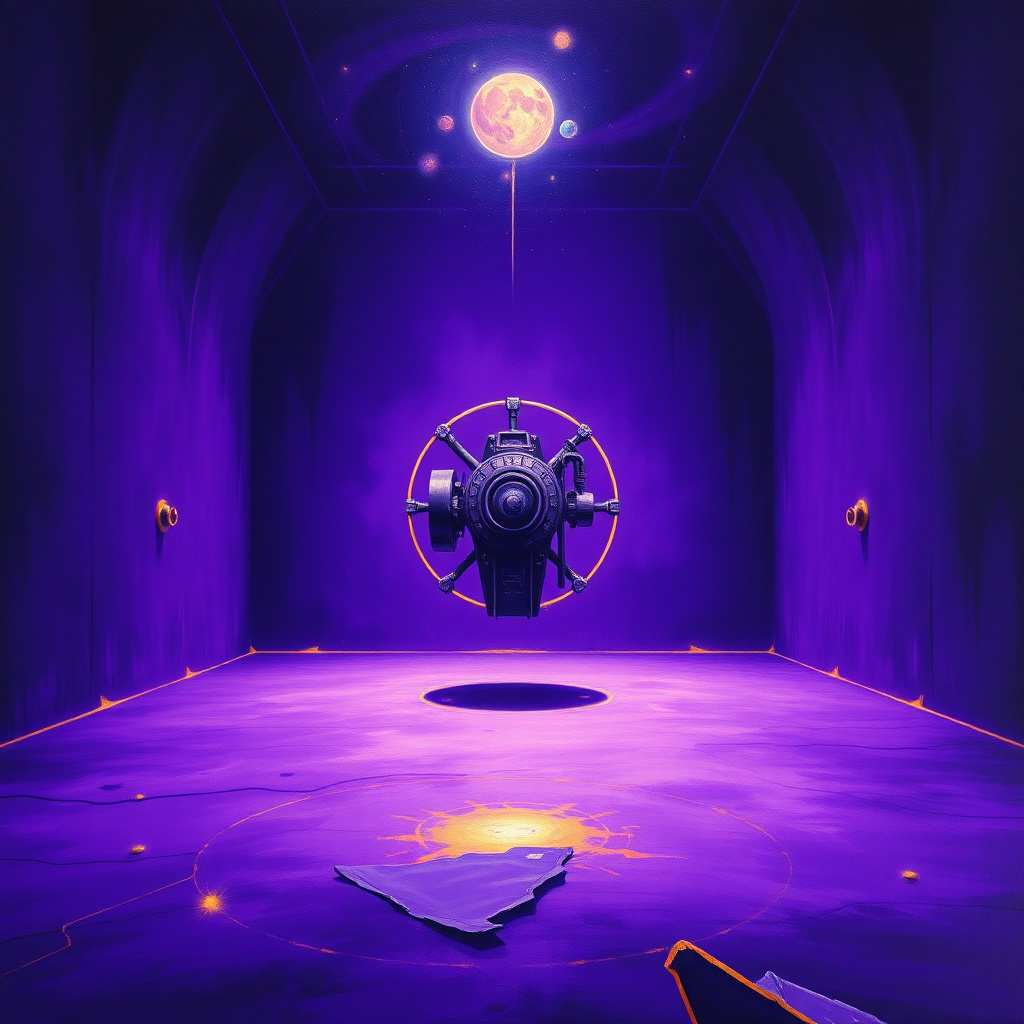
Machine Dream Meaning: A Jungian Archetypal Analysis
Explore the psychological depth of the Machine symbol in dreams through a Jungian lens, examining its role in individuation and the collective unconscious.
In the landscape of the psyche, a Machine serves as a profound structural metaphor for the complex, often automated processes of the human soul. Rather than a mere object of technology, the Machine functions as a psychic construct representing the intricate interplay between conscious intent and unconscious compulsion. From a depth psychology perspective, encountering a Machine suggests an encounter with the highly organized, yet potentially dehumanizing, mechanics of the ego or the rigid structures of the collective unconscious. It invites an investigation into how the dreamer’s internal systems are functioning, whether they are facilitating growth or operating through calcified, unthinking repetition.
What does your Machine dream mean?
How does the Machine appear in your psychic landscape?
The Machine as an Archetype of Psychic Automation
Within the Jungian framework, a Machine can be viewed as an archetype of the 'automaton'—a representation of psychological processes that have become disconnected from the conscious will. When the psyche presents a Machine, it often highlights the tension between the spontaneous life force (Libido) and the rigid, repetitive structures of the persona. Just as a mechanical device operates according to predetermined laws, certain aspects of the dreamer's personality may have become 'mechanized,' performing social roles or defense mechanisms without genuine emotional integration. This reflects a state where the ego has surrendered its agency to a highly efficient, but soul-less, pattern of behavior. This automation often serves as a protective layer, shielding the individual from the chaotic influx of the unconscious, yet it simultaneously creates a barrier to authentic existence. If the Machine in the dream appears perfectly functional and rhythmic, it may indicate a highly disciplined ego-structure that, while efficient in the external world, risks neglecting the irrational, creative impulses of the anima or animus. Conversely, a Machine that is malfunctioning suggests a breakdown in these automatic psychological defenses, forcing the individual to confront the raw, unmediated contents of the shadow. The Machine thus acts as a mirror to the degree of 'mechanization' present in the dreamer's current psychic economy, signaling whether they are living as a conscious agent or merely as a component within a larger, unexamined social or psychological apparatus. To engage with this symbol is to ask whether one is driving the mechanism of their life or merely being processed by it.
The Machine and the Process of Individuation
The journey toward individuation—the process of becoming a whole, integrated self—requires the reconciliation of opposites. The Machine represents a unique structural paradox in this journey: it is a symbol of extreme order and teleological purpose, yet it can also represent the cold, impersonal forces of the collective unconscious that threaten to swallow the individual identity. In Jungian theory, the Machine can be seen as a manifestation of the 'Self' in its most structured, organized form, yet it carries the danger of becoming a 'False Self.' If the Machine is perceived as an overwhelming, inescapable force, it may represent the crushing weight of societal norms and collective archetypes that prevent the dreamer from realizing their unique, idiosyncratic essence. The Machine's complexity mirrors the complexity of the psyche itself, suggesting that the dreamer is beginning to perceive the intricate, interconnected nature of their internal drives, instincts, and cognitive functions. However, the challenge of individuation lies in preventing this internal structure from becoming a closed system. A healthy psyche requires the 'friction' of the irrational and the spontaneous to prevent the 'gears' of the personality from grinding into a state of stagnation. When the Machine appears in a dream, it often marks a threshold where the dreamer must decide whether to integrate these structural elements into a more fluid, living whole or to allow themselves to be subsumed by the rigid mechanics of a purely rationalistic worldview. The Machine, therefore, is not a destination but a diagnostic tool used by the unconscious to measure the balance between structural integrity and vital spontaneity.
Shadow Projections and the Mechanical Unconscious
The Machine frequently serves as a vessel for Shadow projections, representing the parts of the psyche that are felt to be cold, unfeeling, or devoid of human agency. In waking life, we often project our fear of losing control onto technological advancement, but in the dream state, this projection is turned inward. The Machine becomes the 'Shadow Machine'—the repository for all the repressed, instinctual, and 'irrational' energies that the ego has deemed too messy or inefficient to acknowledge. By relegating these drives to a mechanical metaphor, the ego attempts to distance itself from the visceral reality of human emotion. When a dreamer encounters a Machine that feels menacing or oppressive, they are likely encountering the Shadow in its most organized and formidable form. This is the Shadow not as a chaotic monster, but as a calculated, relentless force that operates behind the scenes of the conscious mind. This can manifest as compulsive behaviors, habitual thought patterns, or self-sabotaging cycles that feel as inevitable as a gear turning. To move toward psychological wholeness, the dreamer must 'humanize' the Machine, recognizing that the perceived coldness of the mechanism is actually a mask for deeply felt, albeit repressed, psychic energies. Integrating the Machine involves acknowledging that even our most structured, 'robotic' behaviors are driven by profound, underlying unconscious motives. By bringing these mechanical processes into the light of consciousness, the individual can transform a rigid, deterministic internal world into a dynamic, integrated psychic landscape where order and chaos coexist in a productive tension.
Frequently Asked Questions
What is the significance of a dream about machine functionality?
From a psychological perspective, the functionality of the Machine reflects the efficiency of your psychic ego-structures. A smoothly running machine suggests a high level of integration and disciplined cognitive processes, whereas a broken machine indicates a disruption in your psychological defenses or a breakdown in the way you manage your internal drives and external responsibilities.
What does a machine dream meaning imply regarding my personality?
A dream involving a Machine often points to the degree of 'mechanization' in your personality. It asks whether you are operating out of authentic volition or if you have fallen into 'automatic' patterns of behavior—driven by social conditioning or habitual neuroses—that prevent you from experiencing true psychological spontaneity and connection to your deeper self.
Why do I dream of being part of a machine?
This often symbolizes a loss of agency or an over-identification with the persona. In Jungian terms, you may feel subsumed by the collective unconscious or societal expectations, feeling more like a cog in a vast, impersonal system than a unique individual. It is a call to reclaim your subjective identity from the overwhelming structures of your environment.