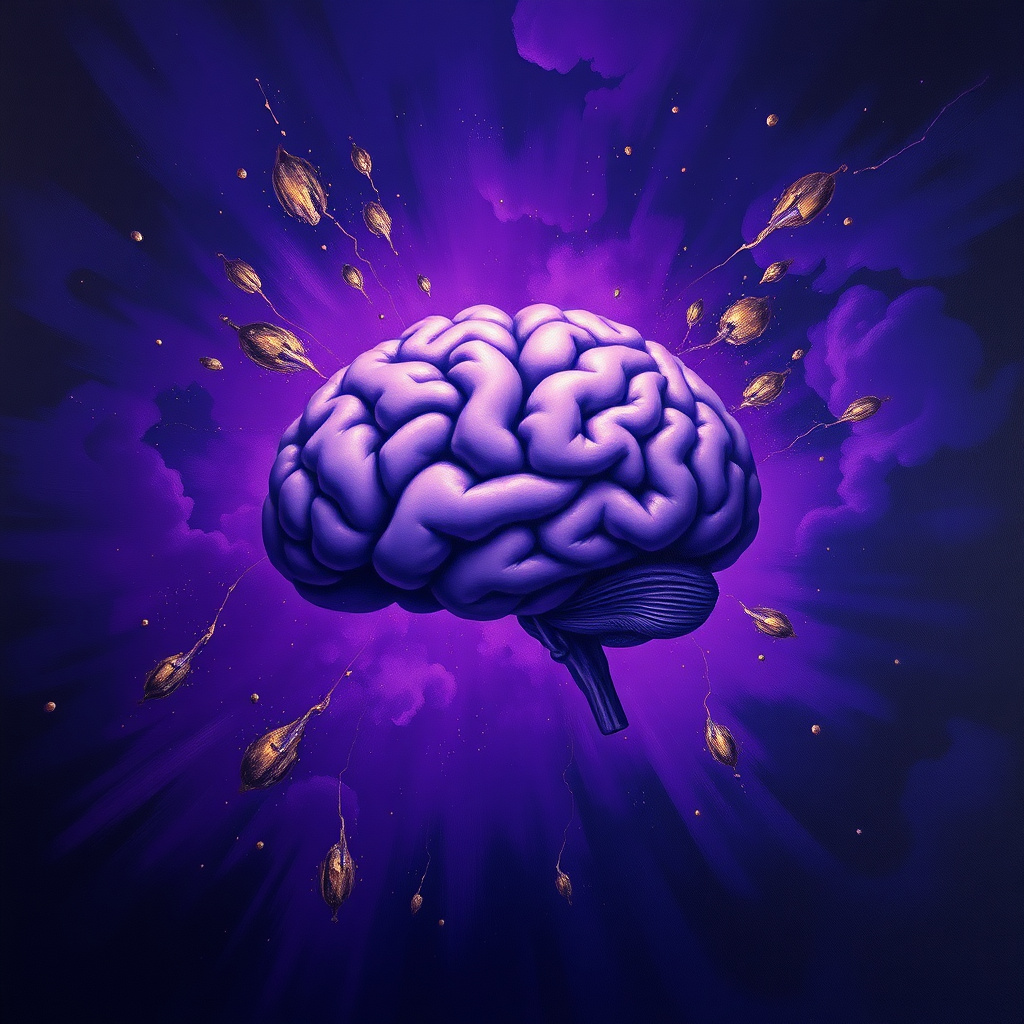
Brain Dream Symbolism: A Historical Evolution of Interpretation
Explore how the dream symbol of the brain has evolved from ancient omens to modern neuroscience, shifting from a seat of the soul to a biological engine.
The brain serves as a profound focal point in the human subconscious, yet its perceived essence has undergone radical shifts through history. To dream of the brain is to encounter the very mechanism of existence, though what that mechanism 'is' depends entirely on the era in which the dreamer stands. While ancient observers viewed the brain through the lens of divine messaging or elemental balance, modern perspectives ground the symbol in the complexities of biological functioning and cognitive integrity. Understanding the brain in dreams requires tracing this trajectory from the metaphysical to the physiological.
What does your Brain dream mean?
Which historical era's view of the brain resonates most with your current mindset?
Ancient and Medieval Conceptions: The Seat of Divine Essence
In the classical era of Greek prophetic traditions, the brain was rarely viewed as a purely mechanical organ. Instead, dreams involving the brain were often interpreted as direct interventions from the gods or the movement of 'pneuma'—the vital breath or spirit. An ancient dreamer encountering the brain might have perceived it as a vessel for divine wisdom or a site of spiritual imbalance. Rather than focusing on cognitive health, the focus remained on the soul's alignment with the cosmos. The brain was a conduit, a bridge between the mortal mind and the celestial intellect. As the timeline transitioned into the medieval period, this interpretation shifted toward the theological. The brain became a battleground for the struggle between virtue and vice. In medieval dream lore, the brain was often treated as a symbolic site where the intellect attempted to govern the unruly passions of the flesh. An emphasis was placed on the 'purity' of thought. If the brain appeared distorted in a dream, it was not seen as a medical concern but as an omen of moral corruption or a warning that one's spiritual faculties were being clouded by earthly temptations. The interpretation was strictly dualistic: the brain was the tool of the intellect, which served the soul. Therefore, any vision of the brain was a reflection of one's standing within a divine hierarchy. The physical anatomy was secondary to the metaphysical state of the dreamer's character. This era established the brain as a symbol of internal governance, where the primary concern was not how the organ functioned, but what spiritual truths it was attempting to manifest or suppress through the dreamer's moral lens.
Victorian Spiritualism and the Dawn of Psychical Inquiry
The Victorian era introduced a complex tension between the burgeoning scientific method and the height of spiritualism. During this period, the interpretation of the brain in dreams began to split into two distinct directions. On one hand, the rise of early psychology suggested the brain was the seat of the 'unconscious,' a reservoir of repressed desires and hidden memories. On a dream level, the brain started to represent the threshold between the known self and the mysterious 'beyond.' Victorian spiritualists, however, often viewed the brain as a highly sensitive antenna. In their view, a dream about the brain was not merely a biological byproduct but evidence of the brain's ability to tune into higher vibrations or communicate with the spirit world. This era saw the brain move from a purely moral center to a sensory instrument. If a dreamer experienced visions of the brain, it was often interpreted as a sign of heightened psychic sensitivity or a 'thinning of the veil.' There was a fascination with the brain's capacity to transcend the physical body, viewing it as a biological machine capable of metaphysical reception. This period bridged the gap between the ancient view of the brain as a divine vessel and the modern view of it as a biological processor. The brain was seen as the hardware through which the software of the soul or the spirit operated. This duality created a rich, often contradictory interpretive landscape where a dream of the brain could simultaneously suggest a burgeoning scientific understanding of the self and an expansion of one's spiritual reach into the ether.
The Modern Era: Neurobiological Realism and Cognitive Integrity
In the contemporary age, the interpretation of the brain in dreams has undergone a profound shift toward neurobiological realism. With the advent of advanced imaging and neuroscience, the symbol has been stripped of its mystical and spiritualist veneers. Today, dreaming of the brain is largely interpreted through the lens of cognitive processing, mental health, and the preservation of the self. The brain is no longer viewed as a conduit for gods or a psychic antenna, but as the central processing unit of human identity. Consequently, dreams involving the brain often reflect concerns regarding mental load, cognitive function, or the fear of losing one's agency. When the brain appears in a modern dream context, it is frequently associated with the mechanics of thought, memory, and the stability of the psyche. Interpretations focus on the 'health' of the system—symbolizing the dreamer's ability to manage information, solve problems, or maintain emotional regulation. The focus has shifted from 'what the brain receives' from the divine to 'how the brain operates' within the biological framework. This modern perspective emphasizes the fragility and complexity of the organ. A dream about the brain is seen as a reflection of the dreamer's relationship with their own intellect and the biological reality of their consciousness. It is a symbol of the self's structural integrity. The interpretation is grounded in the lived experience of managing a complex mind in an information-dense world, turning the brain into a symbol of mental capacity, neurological stability, and the fundamental architecture of the individual's reality.
Frequently Asked Questions
What does a dream about brain surgery imply?
From a historical perspective, this has shifted from a fear of spiritual intervention to a modern reflection of cognitive restructuring. Today, it often suggests a need to examine or 'operate' on specific thought patterns, mental habits, or deep-seated beliefs to improve one's mental clarity or psychological functioning.
How should I interpret a dream about a brain tumor?
In modern interpretive frameworks, this symbol typically relates to 'encroaching' thoughts or mental burdens. It reflects a perception of an intrusive, growing problem within one's cognitive or emotional life that threatens to disrupt the stability of one's mental processing or identity.
What is the meaning of a dream about brain damage?
This symbol often represents a perceived loss of control or a fear regarding one's intellectual or emotional capabilities. It mirrors concerns about the fragility of the self and the potential for life's stressors to impact one's ability to function, reason, or maintain mental equilibrium.