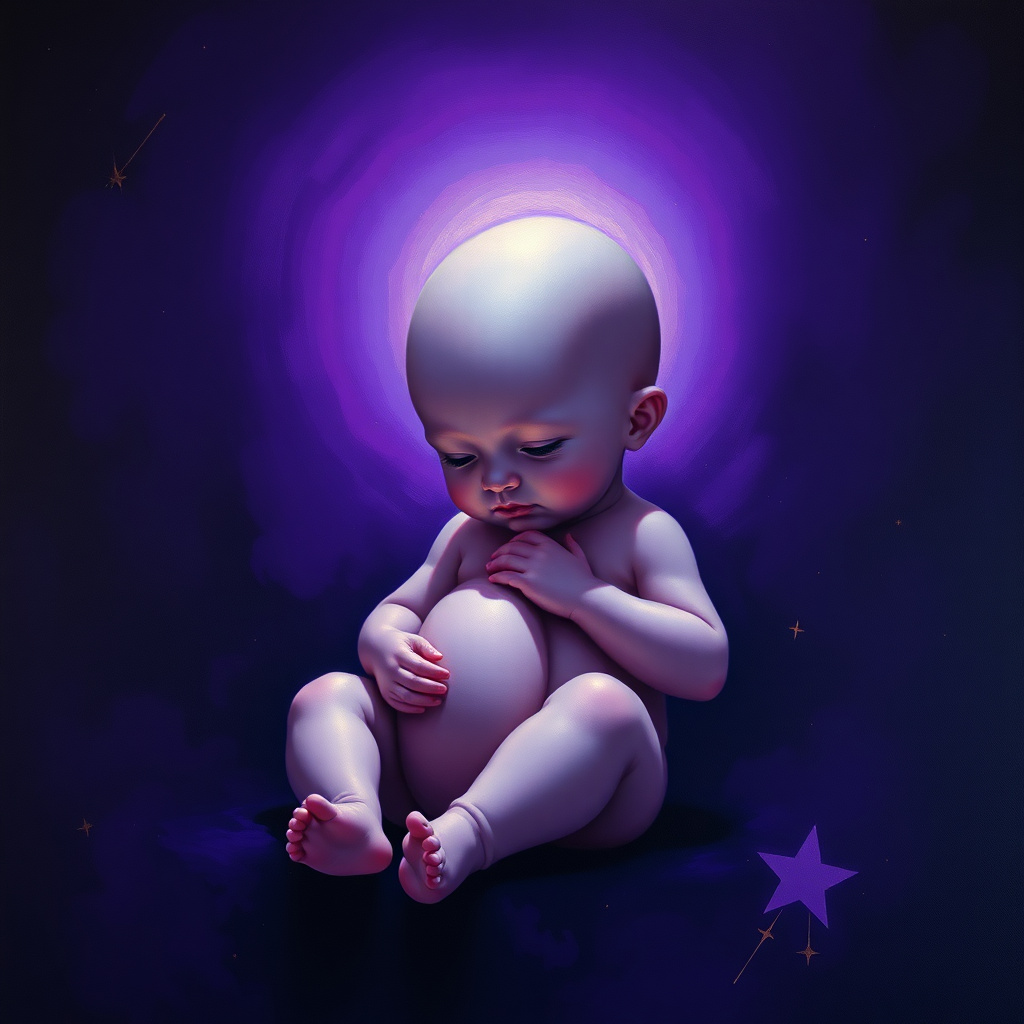
The Mythic Significance of the Baby: Divine Archetypes and Folklore
Explore the cultural and mythological roots of the Baby symbol. From divine incarnations to ancestral spirits, discover ancient narratives of the infant.
Across the tapestry of human history, the Baby has served as more than a mere biological entity; it is a vessel for the sacred and the supernatural. In the grand theater of global folklore, the infant often appears as a harbinger of destiny, a miniature deity, or a bridge between the mortal realm and the spirit world. Whether viewed through the lens of Hellenic myth, Biblical prophecy, or Eastern ancestral veneration, the Baby functions as a concentrated point of cosmic potential, embodying the raw, unwritten laws of the universe before they are tempered by the weight of civilization.
What does your Baby dream mean?
Which mythological realm does the Baby inhabit?
Divine Incarnations and Sacred Lineages
In the annals of religious history, the appearance of a Baby is frequently a signal of celestial intervention. Within the Abrahamic traditions, the infant is often the centerpiece of profound prophecy, representing a direct conduit for the divine will to enter the earthly plane. This is not merely a matter of biological birth, but a rupture in the fabric of the mundane. Similarly, in Hindu iconography, the infant Krishna represents the playful yet omnipotent presence of the divine manifesting in a vulnerable form to disrupt the rigid structures of the ego. These cultural narratives suggest that the Baby is a carrier of 'Dharma' or sacred law, arriving to reset the cosmic balance. In Greek mythology, the infant Hercules, though born of mortal lineage, possessed the strength of the gods, illustrating the archetype of the divine spark trapped within a fragile, human vessel. This tension between extreme vulnerability and infinite power is a recurring motif in ancient storytelling. When looking at the Baby through this mythological lens, one moves away from the individual and toward the archetypal. The infant becomes a symbol of the 'Primordial Child,' a figure that exists before the laws of man are established. To encounter such a figure in a narrative context is to face the raw, unconditioned essence of existence. This is the state of being that precedes the social contract, the uncarved block of Taoist philosophy, and the pure, unadulterated essence of the soul before it is shaped by the trials of earthly life and the expectations of society.
Ancestral Spirits and the Veil of the Unseen
In many indigenous and Eastern traditions, the Baby acts as a liminal figure, standing on the threshold between the world of the living and the realm of the ancestors. In various Asian folklore traditions, an infant may be seen as a reincarnated soul or an ancestral spirit returning to guide the lineage. This perspective shifts the understanding of the Baby from a new beginning to a profound continuation of a spiritual cycle. The infant is the physical manifestation of the 'Great Chain of Being,' connecting the ancient dead to the unborn future. In some shamanic cultures, the arrival of a Baby is treated as a spiritual event requiring mediation, as the child is believed to possess 'sight' or an intuitive connection to the spirit world that adults have long since lost. This connection makes the Baby a figure of both immense blessing and profound caution; they are the keepers of secrets that the waking world has forgotten. Unlike the structured, logical world of adulthood, the Baby operates under the laws of the spirit, unburdened by the illusions of the material world. This makes the Baby a symbol of 'Pure Perception.' In folklore, the child's innocence is not viewed as a lack of knowledge, but as a superior form of knowing—a direct, unmediated communion with the sacred. They are the messengers of the unseen, carrying the weight of ancestral legacies within their tiny, seemingly powerless frames, reminding the community of their cosmic origins and their inevitable return to the source of all life.
Fairy Tales and the Archetype of the Vulnerable Hero
Literary archetypes, particularly those found in the Grimm tradition or the epic poems of antiquity, often utilize the Baby as a catalyst for grand, sweeping quests. The 'Lost Child' or the 'Hidden Prince' is a staple of European folklore, where a Baby is cast out into the wilderness only to rise and claim a throne. This narrative arc utilizes the Baby to represent the resilience of the human spirit and the inevitable triumph of destiny over circumstance. In these tales, the Baby is never truly helpless; rather, their vulnerability is the very mechanism through which the supernatural intervenes. The Baby's survival often depends on the intervention of forest spirits, talking animals, or divine providence, reinforcing the idea that the infant is a protected entity within the cosmic order. This is seen in the 'Hamlet-style' preoccupation with the fragility of life and the weight of inheritance; the Baby is the ultimate symbol of what is at stake in the struggle for power and succession. In these cultural narratives, the Baby represents the 'Seed of Greatness'—a concentrated essence of what is to come. They are the beginning of the hero's journey, the point of origin from which all legends grow. By studying these literary motifs, we see that the Baby is used to explore the concepts of fate and providence. The infant does not struggle against the world; instead, the world revolves around the infant's destined path, proving that even the smallest, most seemingly insignificant life can alter the course of history and the movement of the stars.
Frequently Asked Questions
What does it mean to dream about baby snakes?
In mythological contexts, the Baby snake represents a primal, untamed force of nature. Unlike the adult serpent which often signifies wisdom or temptation, the infant serpent suggests a nascent, emerging power or a new, unrefined instinct that is beginning to stir within the cosmic order of your life's narrative.
What is the significance of a dream about baby turtles?
Drawing from ancient Eastern symbolism, the Baby turtle is a signifier of longevity and the slow, steady unfolding of destiny. It reflects the mythological concept of the world-bearer, suggesting that even the smallest, most gradual movements are part of a vast, divine architecture of time and endurance.
What does a dream about baby dying mean in folklore?
In many cultural allegories, the death of an infant symbolizes the abrupt end of a spiritual cycle or the loss of a sacred promise. It is often interpreted as a warning that a burgeoning divine idea or an ancestral connection is being neglected or severed by the weight of worldly concerns.
What is the meaning of a dream about baby getting swept away in the ocean?
This mirrors the mythological theme of the 'Chaoskampf,' where the ordered world (the Baby) is threatened by the primordial, chaotic waters. It signifies a struggle between the nascent soul and the overwhelming, unformed forces of the cosmic ocean that existed before creation.