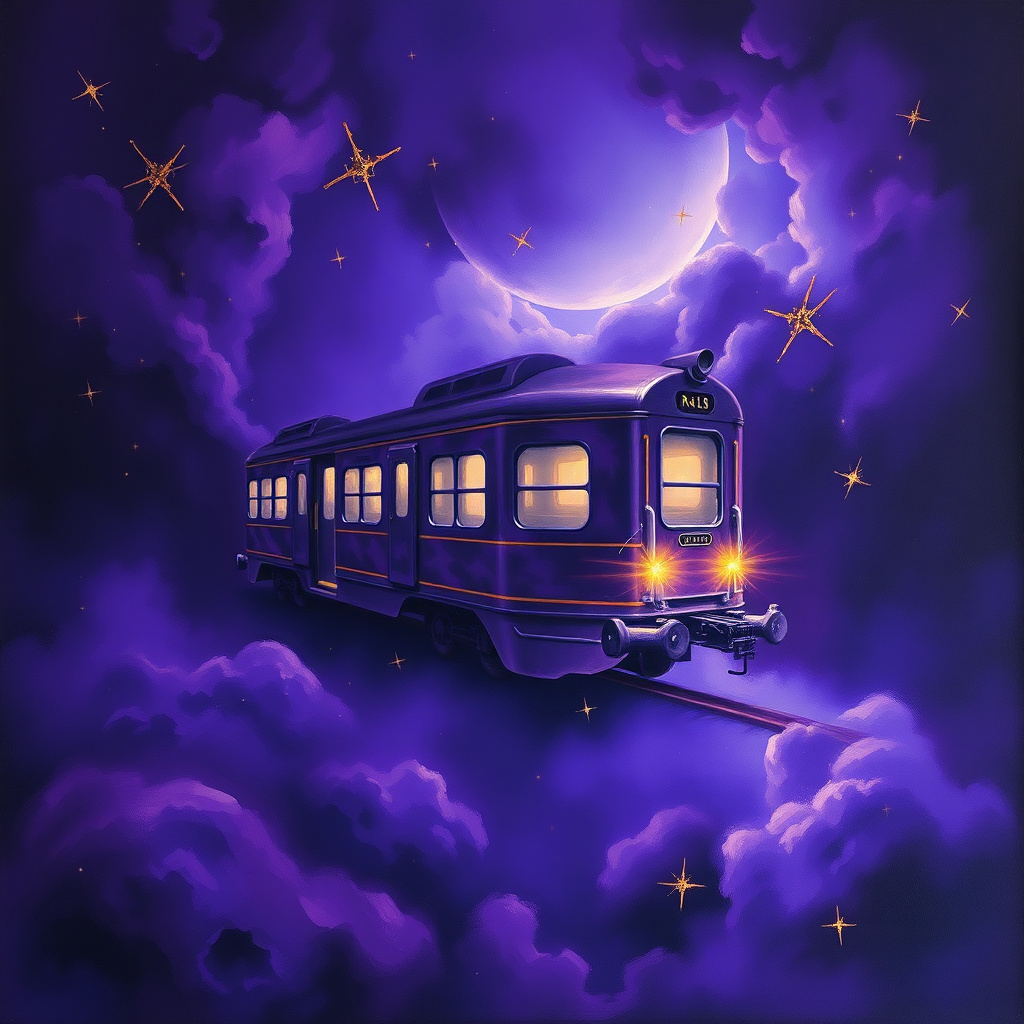
Train Dream Meaning: A Historical Evolution of Interpretation
Explore how the Train has shifted from a concept of divine momentum to a modern neurological signal through the lens of historical dream theory.
To encounter a Train in the theater of sleep is to interact with a symbol that has undergone radical semantic shifts. Unlike celestial or biological icons, the Train is a product of industrial temporalities, meaning its interpretive value is tethered to the era in which it is perceived. We cannot view this symbol through a singular lens; instead, we must trace its trajectory from the rigid predestination of antiquity to the complex cognitive processing of the current digital age, observing how the mechanics of the machine dictate the perceived weight of the vision.
What does your Train dream mean?
Select the primary movement of the symbol:
From Divine Momentum to Fatalistic Omens
In the era of ancient Greek prophetic traditions, the concept of a Train—as a linear, unstoppable force moving along a fixed path—would have been interpreted through the lens of 'Moira' or fate. While the literal steam engine did not exist, the archetypal essence of a Train—a heavy, rhythmic, and channeled movement—mirrors the ancient understanding of the inexorable passage of time and the divine decrees that govern mortal lives. To an ancient seer, the sensation of being carried by a powerful, directed force would not be viewed as a personal psychological state, but as a direct communication from the gods regarding a path already laid out by cosmic law. The tracks would represent the 'wyrd' or the inescapable lines of destiny. During the medieval period, this interpretation shifted toward the realm of the omen. The Train, as a massive entity moving through a landscape, would be categorized alongside the movement of great armies or the sudden arrival of a plague. It became a signifier of collective fate rather than individual destiny. If the movement felt chaotic or derailed, it was seen as a disruption in the divine order of the universe, a warning of impending social upheaval or a breach in the spiritual hierarchy. In these eras, the Train was never about the 'self'; it was a macrocosmic signal of how the world was moving under the gaze of the heavens. The focus was on the inevitability of the journey and the impossibility of altering the iron rails of providence that guided the soul through the earthly realm toward its ultimate, predetermined destination.
Victorian Spiritualism and the Mechanics of the Soul
The advent of the Industrial Revolution fundamentally altered the symbolic weight of the Train, particularly during the Victorian era. As steam power began to shrink the physical world, spiritualist movements began to adopt the language of the machine to explain the unseen. In this period, a Train was no longer just a divine decree or a social omen; it became a metaphor for the soul's transit through the veil between life and death. The rhythmic, repetitive motion of the wheels was often equated with the 'vibrations' of the spirit world. Victorian interpreters began to view the Train as a vessel for the consciousness, navigating the tracks of the subconscious to reach higher planes of existence. This era introduced the idea of the 'passenger'—the individual ego navigating a larger, mechanical process. The locomotive represented the driving force of willpower and the engine of progress, while the carriages represented the various compartments of the human psyche. There was a fascination with the precision of the schedule; a Train arriving on time was seen as a sign of spiritual alignment, whereas a delay suggested a blockage in one's moral or ethereal development. The symbol became deeply tied to the tension between the cold, hard reality of industrial progress and the ethereal, flowing nature of the afterlife. The Train served as a bridge between the tangible, soot-covered reality of the 19th century and the vast, mysterious territories of the séance room, reflecting a society struggling to reconcile scientific advancement with the persistent hunger for transcendental connection.
Modern Neuroscientific and Cognitive Perspectives
In the contemporary era, the interpretation of a Train has moved away from the divine and the spiritual, landing firmly within the domain of neuroscience and cognitive psychology. We no longer look to the stars or the séance to explain the Train; instead, we look to the neural pathways of the brain. Modern theorists view the Train as a manifestation of 'cognitive momentum' or the brain's attempt to process sequential data. The tracks are seen as the neural circuits—the hardwired patterns of habit, logic, and procedural memory that guide our decision-making processes. When the brain simulates a Train, it is often organizing complex, linear information or attempting to navigate a structured sequence of events in waking life. The sensation of being on a Train is interpreted as the mind's way of modeling 'directed flow'—the way thoughts move from one concept to the next in a logical progression. Unlike the Victorian view of the soul's journey, the modern perspective focuses on the efficiency and direction of mental energy. A derailed Train is viewed not as a spiritual failure, but as a cognitive dissonance or a breakdown in the brain's ability to maintain executive function and goal-oriented behavior. The symbol has been de-mystified, stripped of its cosmic weight, and repurposed as a biological metaphor for the way the human mind manages time, sequence, and the heavy, repetitive processing of environmental stimuli. It is a map of the brain's internal logistics, reflecting the highly organized, yet often mechanical, nature of modern human cognition and the structured ways in which we navigate our highly regulated, schedule-driven reality.
Frequently Asked Questions
What is the general train dream meaning?
Historically, the meaning shifts based on your perspective. It can be viewed as the unstoppable force of destiny (ancient), a vessel for the soul's progression (Victorian), or a representation of your brain's cognitive processing and logical sequencing (modern).
How do I interpret a dream about train delays?
Through a historical lens, a delay represents a disruption in the expected order. In modern terms, it often signifies a cognitive struggle with timing, executive function, or a perceived interruption in your current mental momentum and goal-directed behavior.
Is a dream about a train considered a good or bad sign?
There is no universal 'good' or 'bad.' Ancient views saw it as an omen of fate, spiritualists saw it as a sign of soul transit, and neuroscientists see it as a functional model of thought. Its value depends on the era's interpretive framework.