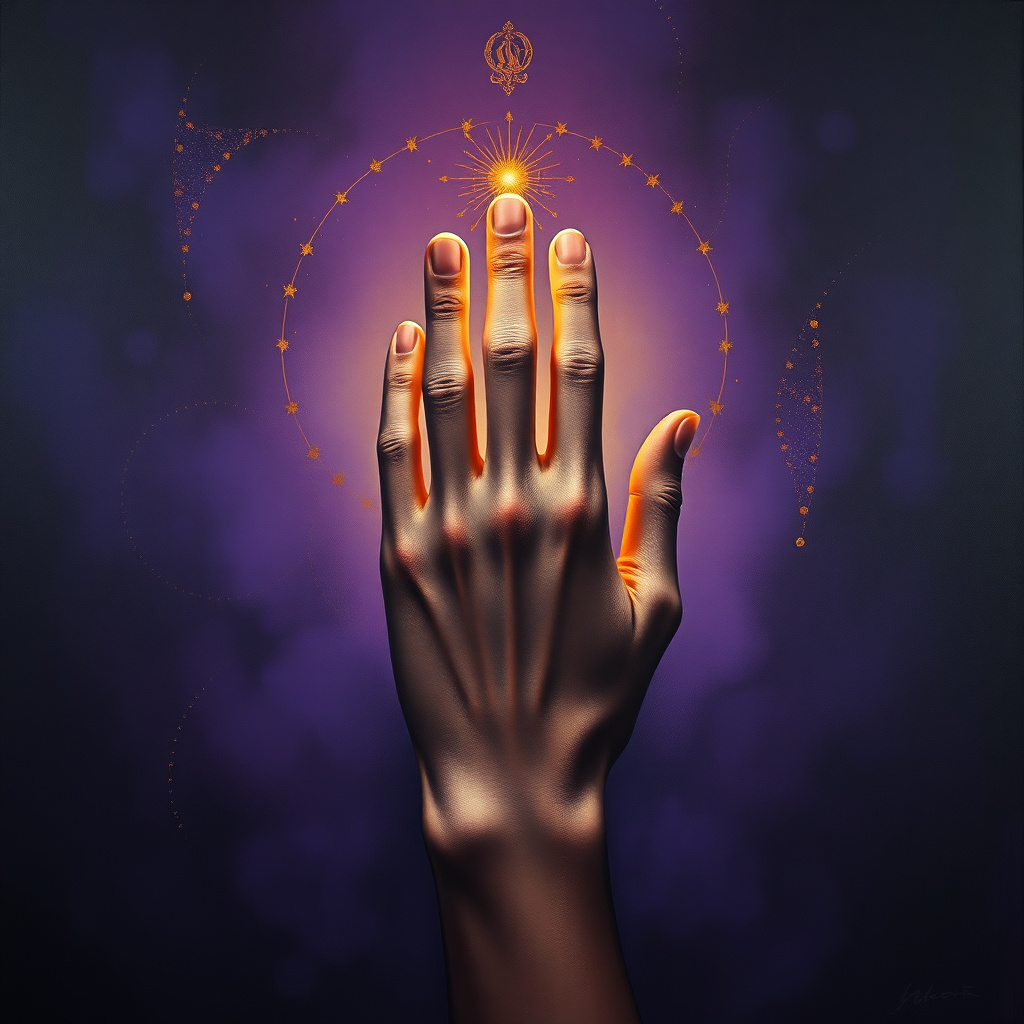
Hand Symbolism: A Chronological Evolution of Interpretation
Explore how the interpretation of the Hand symbol has shifted from ancient Greek prophecy and medieval omens to Victorian spiritualism and modern neuroscience.
The Hand serves as a foundational archetype in the human psyche, acting as the primary interface between the internal self and the external world. Throughout human history, the way we perceive the appearance or condition of the Hand in our sleep has undergone radical shifts. What was once viewed as a direct communication from the gods has transitioned into a complex study of neurological processing and psychological agency. Understanding the Hand requires looking past simple definitions to observe how different eras have assigned weight, morality, and biological significance to this specific anatomical focus.
What does your Hand dream mean?
Identify the dominant state of the Hand in your dream:
Ancient Prophecy and Medieval Omens
In the classical era of Greek prophetic traditions, the Hand was rarely viewed as a mere anatomical part; it was a vessel for divine agency. To encounter a Hand in a dream was to witness the 'Manus Dei' or the direct intervention of fate. If a Hand appeared large or luminous, it was interpreted as a sign of impending cosmic justice or a decree from the heavens. The condition of the Hand was a legible text; a steady Hand indicated stability in one's civic duty, while a trembling Hand signaled a disruption in the natural order. This era focused on the Hand as an external force acting upon the dreamer, rather than a reflection of the dreamer's internal state. As history transitioned into the medieval period, this divine perspective merged with the concept of moral omen. The Hand became a litmus test for spiritual standing. During this time, the physical integrity of the Hand in a dream was often linked to the concept of sin or sanctification. A Hand that appeared wounded or missing was not seen as a psychological stressor, but as a literal warning of spiritual decay or a loss of divine grace. The medieval mind viewed the Hand as a tool of the soul; if the tool was broken, the soul's ability to perform righteous acts was compromised. Interpretations were heavily grounded in the idea of causality—that the Hand’s state in the dreamscape was a direct consequence of one's adherence to religious law. There was no nuance of 'subconscious processing' here; there was only the Hand as a messenger of celestial consequence, signaling whether one was being blessed or cursed by the unseen forces governing the universe.
Victorian Spiritualism and the Etheric Blueprint
With the rise of the Victorian era, the interpretation of the Hand underwent a sophisticated pivot toward spiritualism and the concept of the 'etheric body.' As the Industrial Revolution distanced humanity from the agrarian rhythms of the past, the Hand began to be viewed through the lens of unseen energies and vibrations. Victorian mediums and dream theorists moved away from the blunt omens of the Middle Ages, instead suggesting that the Hand in a dream represented the dreamer's connection to the subtle planes of existence. The Hand was seen as a conductor for 'vital forces' or 'animal magnetism.' In this period, the focus shifted toward the Hand as a bridge between the physical body and the spirit world. If a dreamer observed an unusual Hand, it was often interpreted as a sign that their astral or etheric form was attempting to communicate through the physical vessel. The Hand was no longer just a symbol of divine decree, but a tool for mediumship and psychic sensitivity. This era introduced the idea that the Hand could act as a sensory organ for things beyond the five physical senses. A Hand that felt 'electric' or appeared to glow was seen as evidence of heightened spiritual receptivity. This period also saw an increasing interest in palmistry as a way to bridge the gap between the dream state and the waking self, treating the Hand as a map of potentiality. The Victorian interpretation was characterized by a fascination with the 'unseen touch,' where the Hand became a symbol of how the soul reaches out to grasp the mysteries of the afterlife and the invisible currents that flow through the universe.
Modern Neuroscience and Psychological Agency
In the contemporary era, the interpretation of the Hand has been largely reclaimed by the frameworks of neuroscience and cognitive psychology. We have moved from the 'divine hand' to the 'functional hand.' Modern science views the Hand in a dream not as a messenger from the gods or the ether, but as a manifestation of the brain's motor cortex and its relationship to agency and control. When the brain processes concepts of manipulation, creation, or defense, it utilizes the Hand as the primary symbolic proxy. Today, an emphasis is placed on the Hand as a representation of the dreamer's 'locus of control.' The Hand is seen as the psychological toolset available to the individual to navigate their environment. If the Hand is perceived as impaired or injured, modern theory interprets this as a cognitive representation of felt helplessness or a perceived lack of efficacy in waking life. The focus is entirely internal; the Hand is a mirror of the dreamer's self-efficacy and their ability to execute intentions. We look at the Hand through the lens of neuroplasticity and sensory integration. The dream is understood as the brain's way of simulating complex physical interactions to refine its understanding of the self's capacity to act. There is no longer a search for external omens; instead, we analyze how the Hand reflects the dreamer's struggle with autonomy, skill acquisition, and the physical boundaries of their own existence. The Hand has become a symbol of the biological and psychological 'grasp' we have on our own lives, moving the interpretation from the heavens and the spirit world into the complex, electrochemical reality of the human brain.
Frequently Asked Questions
What does it mean if I dream about a hand being cut off?
Historically, this was viewed as a loss of divine protection or a moral failing. In modern psychological terms, dreaming about a hand being cut off often reflects a perceived loss of agency or the sudden inability to manage a specific area of your life. It signifies a disruption in your capacity to 'handle' or manipulate your current circumstances, suggesting a feeling of powerlessness.
How should I interpret a dream about a hand injury?
From a historical perspective, a hand injury might have been seen as a warning of impending hardship. Today, it is viewed as a symbolic representation of functional impairment. It often points to a sense that your ability to perform a task, use a skill, or interact with others is being hindered by internal or external stressors.
What is the significance of dreaming about a hand in general?
The Hand serves as the primary symbol of human agency. Depending on the era of interpretation, it ranges from a divine tool to a spiritual conductor, to a modern representation of motor control and psychological efficacy. Generally, it relates to how you interact with, shape, and grasp the reality surrounding you.