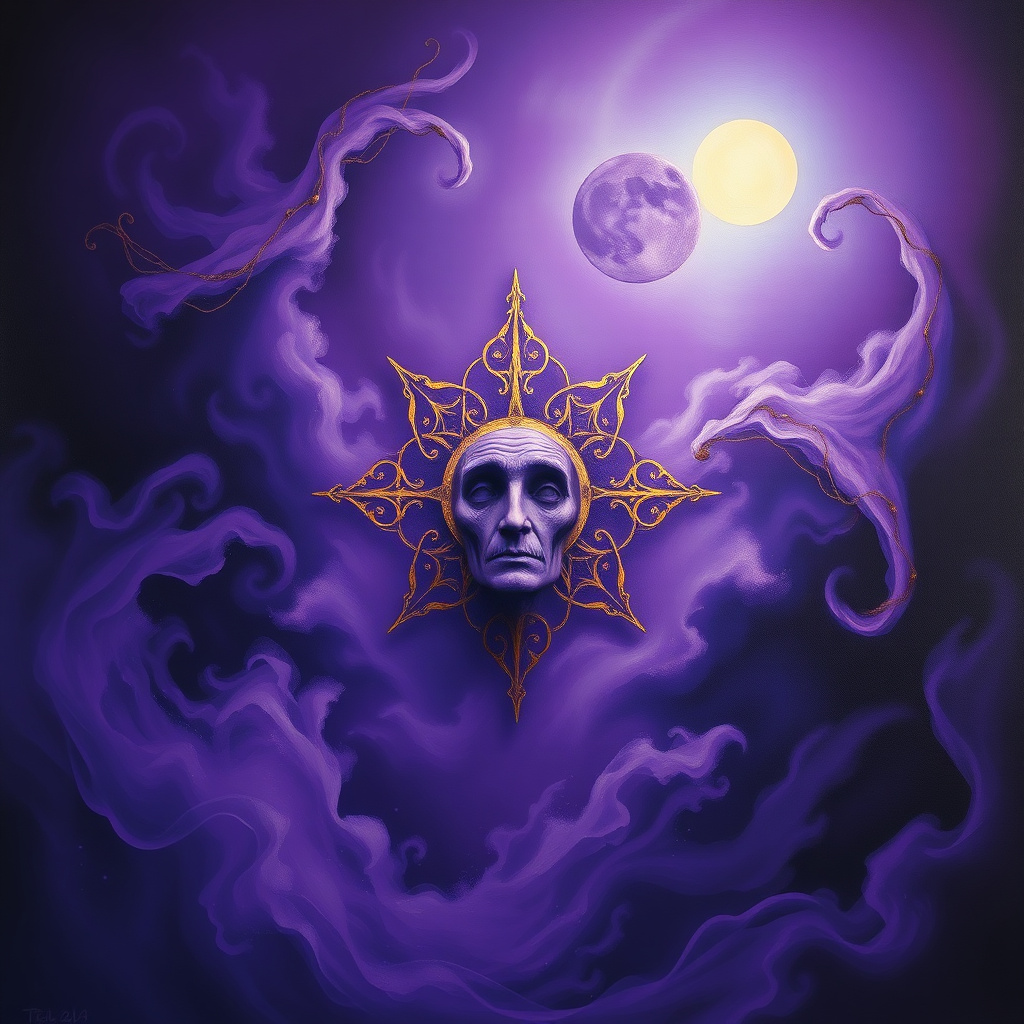
Old Dream Meaning: A Historical Evolution of Temporal Symbols
Explore the shifting interpretations of the Old symbol, tracing its journey from ancient Greek prophecy to modern neuroscience and cognitive theory.
The symbol of the Old functions as a temporal anchor in the subconscious, yet its significance is never static. To encounter the Old is to confront the concept of duration, decay, and the accumulation of existence. Throughout human history, the way we process the presence of the Old has undergone radical shifts. What was once viewed as a direct communication from the gods or a divine omen has transitioned into a psychological construct or a neurological byproduct. Understanding this symbol requires looking backward through the lens of human intellectual evolution.
What does your Old dream mean?
Identify the temporal state of the symbol:
Classical Antiquity and the Divine Weight of Antiquity
In the era of Ancient Greek prophetic traditions, the presence of the Old was rarely viewed as a personal psychological reflection. Instead, it was perceived as an externalized manifestation of Fate or the Will of the Gods. When the Old appeared in the visions of the ancients, it functioned as a bridge to the primordial past, suggesting that the dreamer was being summoned to acknowledge a cosmic order that predated their own existence. The Old was not a state of being, but a state of authority. It represented the 'unalterable laws' that governed the movement of stars and the rise of empires. In this context, the Old served as a warning or a validation of destiny; it was the weight of ancestral lineage and the inescapable gravity of mythic time. To encounter the Old was to be reminded that one's individual life was merely a brief flicker against the backdrop of eternal truths. There was no concept of 'internalizing' the Old; rather, the dreamer was a witness to a grand, external timeline. The antiquity of a symbol in a dream was an indicator of its legitimacy. A new idea lacked the gravity of the Old, which carried the weight of proven, divine truth. Consequently, the interpretation was always outward-facing, focusing on the dreamer's position within a vast, predetermined historical hierarchy rather than their personal anxieties regarding aging or obsolescence. The Old was the bedrock of reality, the immutable foundation upon which the fleeting present was built, demanding reverence and submission to the continuity of the cosmos.
Medieval Omens and Victorian Spiritualist Transitions
As human understanding moved through the Middle Ages and into the Victorian era, the interpretation of the Old underwent a profound shift in direction. During the medieval period, the Old was heavily filtered through theological frameworks, often acting as a memento mori—a reminder of mortality and the inevitable passage toward the afterlife. It was an omen of the soul's temporal limits, emphasizing the transient nature of earthly life compared to the eternal spirit. However, the Victorian era introduced a complex layer of spiritualism and romanticism. During this period, the Old began to be viewed through the lens of 'ancestral memory' and the 'veil' between worlds. The Old became a medium for communicating with the departed, acting as a psychic conduit to those who had passed. It was no longer just a warning of death, but a gateway to a different plane of existence where the past remained active and influential. This era saw the beginning of the transition from the Old as a divine decree to the Old as a lingering, spectral presence. The focus shifted from the cosmic laws of the Greeks to the emotional and spiritual connection between the living and the dead. This period bridged the gap between seeing the Old as a terrifying external force and seeing it as a meaningful, albeit haunting, connection to a lost heritage. The Victorian fascination with the 'antique' and the 'relic' meant that the Old was imbued with a sense of romantic melancholy, transforming it from a purely religious omen into a complex symbol of continuity, loss, and the thin boundary between the seen and unseen worlds.
Modern Neurobiology and the Cognitive Architecture of Time
In the contemporary era, the interpretation of the Old has been stripped of its mystical and theological garments, replaced by the rigorous frameworks of neuroscience and cognitive psychology. Today, the presence of the Old is understood through the mechanics of memory consolidation and the brain's temporal processing. Rather than a message from a deity or a ghost, the Old is viewed as a manifestation of the brain's retrieval systems. It represents the 'long-term potentiation' of neural pathways—the physical embodiment of stored information and accumulated experience. Modern theory suggests that the Old symbolizes the integration of past data into the current self-schema. When the brain processes the Old, it is often negotiating the relationship between episodic memory (specific events) and semantic memory (general knowledge). The Old becomes a metaphor for the cognitive load of the past and the way the brain categorizes 'known' versus 'novel' stimuli. From a neurobiological perspective, the Old is the byproduct of the brain's attempt to create a coherent narrative of the self by weaving together disparate temporal threads. There is no longer an external 'Fate' to consult; there is only the internal architecture of the mind attempting to organize the vast, decaying, and constantly updating library of human experience. The Old is the shadow cast by the process of learning and the biological reality of neural pruning. It is the cognitive residue of existence, a functional representation of how the mind manages the tension between what is currently being perceived and what has been etched into the biological hardware of the brain over time.
Frequently Asked Questions
In a modern context, the meaning shifts from external omens to internal cognitive processes. It is often interpreted as the brain's way of navigating stored memories, representing the integration of past experiences into your current identity and the management of accumulated knowledge.
In a modern context, the meaning shifts from external omens to internal cognitive processes. It is often interpreted as the brain's way of navigating stored memories, representing the integration of past experiences into your current identity and the management of accumulated knowledge.
Ancient views saw old objects as divine artifacts or manifestations of Fate that demanded reverence. Modern views see them as symbolic representations of long-term memory or the neurological residue of past life events, focusing on the individual's cognitive history rather than cosmic law.
Ancient views saw old objects as divine artifacts or manifestations of Fate that demanded reverence. Modern views see them as symbolic representations of long-term memory or the neurological residue of past life events, focusing on the individual's cognitive history rather than cosmic law.
Historically, yes; in Greek and Medieval traditions, the Old was often an omen regarding one's destiny or mortality. However, contemporary psychological perspectives reject the idea of omens, viewing the Old as a reflection of the past's influence on the present rather than a predictor of the future.
Historically, yes; in Greek and Medieval traditions, the Old was often an omen regarding one's destiny or mortality. However, contemporary psychological perspectives reject the idea of omens, viewing the Old as a reflection of the past's influence on the present rather than a predictor of the future.