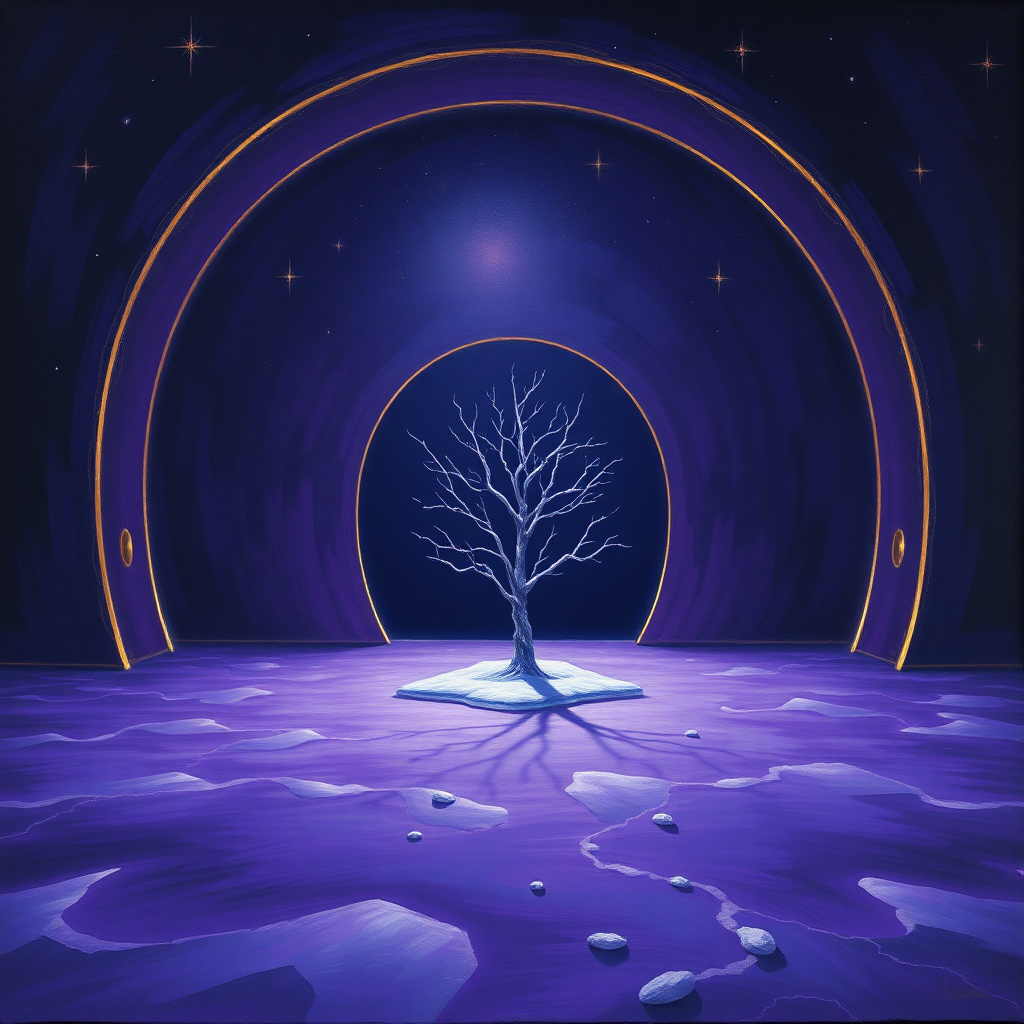
Winter Dream Meaning: A Historical Evolution of Interpretation
Explore the historical shift in Winter dream meaning, from ancient omens and medieval portents to Victorian spiritualism and modern neuroscience.
The appearance of Winter in the subconscious has never been a static concept. While the physical reality of cold, snow, and dormancy remains constant, the lens through which humanity views these elements has undergone radical shifts. To understand the weight of this symbol, one must look past contemporary psychological frameworks and examine how the perception of the frozen season has evolved. From the terrifying portents of antiquity to the biological data of the modern era, the way we decode the arrival of frost in our sleep reflects the shifting priorities of human civilization itself.
What does your Winter dream mean?
In which historical context do you most resonate with the frost?
Antiquity and the Medieval Era: Winter as Divine Portent
In the ancient Greek and Roman traditions, the arrival of Winter in a dream was rarely viewed as a personal psychological event; instead, it was treated as a macrocosmic signal. Prophetic traditions often interpreted the frost as a celestial decree, a sign from the gods that a period of scarcity or divine displeasure was approaching. The cold was not a feeling to be analyzed, but a warning of external, inevitable forces. If a dreamer encountered a frozen landscape, it was seen as a reflection of the state of the empire or the community, signaling a time of stillness that required ritualistic appeasement to prevent total stagnation or famine. This era focused on the external reality of survival, where the seasonal cycle dictated the survival of the collective. Moving into the medieval period, this interpretation solidified into a more moralistic framework. During this time, the frost was frequently utilized as a metaphor for spiritual dryness or the hardening of the heart. The lack of warmth was not merely a weather condition but an omen of religious austerity or the presence of asceticism. In medieval manuscripts and dream-lore, a landscape covered in snow served as a visual shorthand for a soul distanced from divine warmth. The interpretation shifted from the communal survival of the ancient world to the individual's spiritual temperature. The cold became a diagnostic tool for the state of one's grace, where the stillness of the season mirrored a period of penance or a lack of spiritual vitality. In both eras, the symbol was an objective truth delivered by a higher power, rather than a subjective internal state. The dreamer was a recipient of a message, not the author of the landscape.
Victorian Spiritualism: The Frost as a Liminal Veil
As the industrial revolution reshaped the world, the interpretation of Winter underwent a dramatic pivot during the Victorian era. With the rise of spiritualism, the frozen landscape began to be viewed through the lens of the veil between worlds. To the Victorian dreamer, the stillness of Winter was not a warning of famine or a sign of spiritual dryness, but a characteristic of the afterlife. The snow was seen as a shroud, a beautiful yet somber covering that separated the living from the departed. This era moved away from the terrifying omens of the past and toward a more sentimental, albeit melancholic, view of the season. The cold was interpreted as the quietude of the grave, a state of peaceful stasis where the noise of the material world was muffled by a layer of frost. This period emphasized the aesthetic and emotional qualities of the season, linking the white expanse of a snowfield to the purity of the spirit and the quietude of mourning. Dreamers were often encouraged to view the frost as a medium through which communication with the unseen could occur. The silence of the winter landscape was perceived as the necessary condition for hearing the whispers of those who had passed. This was a period of profound romanticism, where the harshness of the season was softened by the belief that the cold was merely a temporary state of being, a waiting period before a spiritual awakening. The symbol became deeply tied to the concepts of memory, loss, and the ethereal nature of existence, marking a significant shift from the communal and moralistic interpretations of previous centuries toward a highly individualized, metaphysical experience of the seasonal frost.
Modernity and Neuroscience: The Biological Cold
In the contemporary era, the interpretation of Winter has undergone perhaps its most radical transformation, moving from the metaphysical to the biological. With the advent of modern neuroscience and cognitive psychology, the focus has shifted entirely inward. We no longer look to the gods, the soul, or the spirit world to explain the presence of frost in our sleep. Instead, we look to the neural architecture of the brain. In this framework, the symbol of Winter is processed as a manifestation of cognitive states, such as emotional regulation, sensory processing, or the brain's attempt to categorize feelings of isolation or withdrawal. The cold is no longer an omen; it is a data point. Modern interpretations analyze how the brain utilizes seasonal metaphors to represent the activation or deactivation of certain neural pathways related to stress or rest. For instance, the stillness of a snow-covered field might be viewed as the brain's way of processing a period of low cognitive load or a state of psychological 'hibernation' required for recovery. The concept of 'wintering' is now understood through the lens of homeostasis—the body and mind seeking a state of equilibrium during periods of high environmental or emotional tension. While the ancient world saw a message from the heavens and the Victorians saw a veil to the afterlife, the modern observer sees a reflection of the organism's internal environment. This shift represents a total secularization of the symbol. The meaning is no longer found in the sky or the spirit, but in the complex, electrochemical signals of the prefrontal cortex and the limbic system. We have traded the terror of the gods and the melancholy of the shroud for the empirical study of how our minds map the physical sensations of temperature and silence onto our internal emotional landscapes.
Frequently Asked Questions
What is the significance of a dream about winter?
Historically, the significance has shifted from a communal warning of scarcity in ancient times to a reflection of personal psychological states in the modern era. While ancient cultures viewed it as an external omen, modern perspectives see it as an internal representation of emotional stillness or cognitive rest.
How should I understand winter dream meaning?
To understand this symbol, consider your current era of thought. Are you viewing it through a lens of spiritual transition, as the Victorians did, or as a biological indicator of your mental state, as modern neuroscience suggests? Contextualizing the symbol within your own cognitive framework is key.