Time Dream Meaning: A Jungian Archetypal Analysis
Explore the psychological depth of Time in dreams through a Jungian lens. Understand how temporal symbols relate to individuation and the collective unconscious.
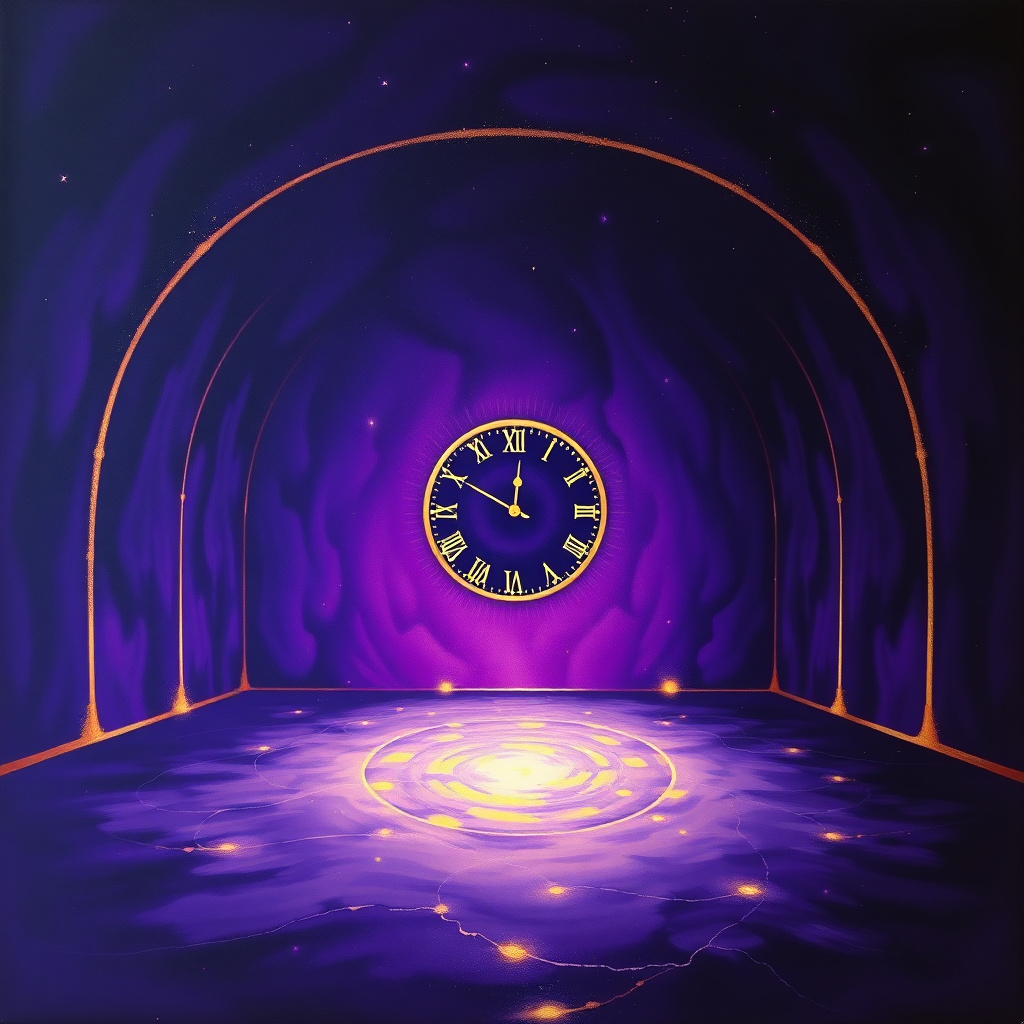
When Time emerges within the dreamscape, it functions not as a mere measurement of seconds or minutes, but as a profound psychic structure. From a Jungian perspective, Time is an archetypal force that mediates the relationship between the conscious ego and the vast, non-linear expanse of the collective unconscious. It serves as the rhythmic pulse of the individuation process, marking the tension between the finite nature of the persona and the infinite potential of the Self. To encounter Time in a dream is to confront the architecture of your own psychological development and the inevitable movement toward wholeness.
What does your Time dream mean?
How does the temporal flow manifest in your dream state?
Time as the Architect of Individuation
In the framework of analytical psychology, the movement of Time within a dream often mirrors the trajectory of individuation—the lifelong process of integrating the disparate parts of the psyche. Carl Jung posited that the psyche is not static; it is a dynamic system constantly striving for equilibrium and completeness. When Time appears as a dominant motif, it acts as a psychic regulator, signaling the urgency of integrating the Shadow or reconciling the Anima/Animus. Unlike waking-life chronometry, which serves social utility and productivity, dream-time reflects the internal tempo of psychic maturation. If the temporal flow feels fragmented or distorted, it suggests a disruption in the ego's ability to synchronize with the evolutionary demands of the Self. The psyche may be signaling that certain developmental stages are being bypassed or that the ego is resisting the necessary 'aging' required to achieve psychological depth. This is not about chronological years, but about the qualitative density of experience. A sense of rushing time might indicate an unconscious pressure to resolve a specific complex, while stagnant time may reflect a defensive ego-mechanism attempting to freeze the psyche in a state of arrested development to avoid the terror of change. By viewing Time as an archetypal driver, we see it as the medium through which the unconscious pushes the individual toward their unique destiny, demanding that the conscious mind acknowledge the rhythmic necessity of growth, decay, and eventual integration into the totality of the being.
The Temporal Shadow and the Collective Unconscious
Time can manifest as a Shadow archetype, representing the aspects of our temporal existence that we repress or fear. In waking life, humans often attempt to master time through technology, scheduling, and denial of mortality. In the dream state, the Shadow of Time emerges to confront these delusions. This shadow aspect often presents as the 'devouring' nature of temporality—the fear of loss, the decay of the physical form, or the perceived waste of life. This is not merely an anxiety about death, but a confrontation with the 'Chronos' aspect of the archetype: the linear, destructive force that consumes all things. When this Shadow is encountered, the dreamer is forced to face the limitations of the ego's control. Furthermore, Time connects the individual to the collective unconscious. While the ego experiences time as a personal narrative, the archetype of Time connects us to the primordial patterns shared by all humanity. This is the 'Aion'—the eternal, cyclical time that exists beyond human perception. When a dream utilizes vast, cosmic, or cyclical temporal symbols, it is pulling the dreamer out of their personal biography and into the deep waters of the collective. Here, Time is no longer a tool for organization but a vast, oceanic medium that contains the entire history of human experience. Recognizing this allows the dreamer to move beyond personal grievances and see their life as a single thread within a much larger, mythic tapestry, facilitating a shift from ego-centricity to a more profound, archetypal awareness.
Temporal Synchronicity and the Self
The intersection of Time and the Self occurs through the phenomenon of synchronicity—meaningful coincidences that defy linear causality. In a Jungian sense, Time in dreams often functions as a non-linear gateway. While the waking mind perceives a strict cause-and-effect sequence, the dreaming psyche operates in a realm where past, present, and future coexist. This reflects the nature of the Self, which transcends the limitations of the egoic timeline. When Time appears in dreams as a collapsed or non-sequential structure, it is often an attempt by the unconscious to demonstrate the interconnectedness of psychic events. This serves to break the ego's reliance on rational, sequential logic and introduces a more holistic way of perceiving reality. The symbol of Time thus acts as a bridge between the subjective experience of the individual and the objective reality of the psyche. It challenges the dreamer to perceive 'Kairos'—the opportune, qualitative moment—rather than just 'Chronos'—the quantitative, ticking clock. In the pursuit of psychological wholeness, the dreamer must learn to navigate these different temporal dimensions. Mastery over the dream's temporal symbols does not mean controlling time, but rather learning to align the ego's movements with the deeper, more meaningful rhythms of the unconscious. This alignment is essential for navigating life's major transitions, as it allows the individual to act not out of reactive fear, but out of a profound, intuitive understanding of the 'right time' for psychic expansion and integration.
Frequently Asked Questions
What is the significance of a dream about time?
A dream about time typically signals a confrontation with the process of individuation. It suggests that your psyche is addressing the tension between your current ego-state and the necessary developmental shifts required to reach psychological wholeness. It is less about your schedule and more about your internal evolutionary tempo.
How does time dream meaning relate to the shadow?
When Time appears as a threatening or overwhelming force, it often represents the 'Shadow of Temporality.' This is the repressed fear of decay, loss, and the ego's inability to control the inevitable progression of life, forcing a confrontation with mortality and the limits of personal agency.
Why does time feel distorted in my dreams?
Distorted time indicates a disconnect between your conscious perception and the non-linear nature of the collective unconscious. The psyche uses temporal distortion to break down the ego's reliance on logical, linear causality, encouraging a more holistic, archetypal perspective on your life events.