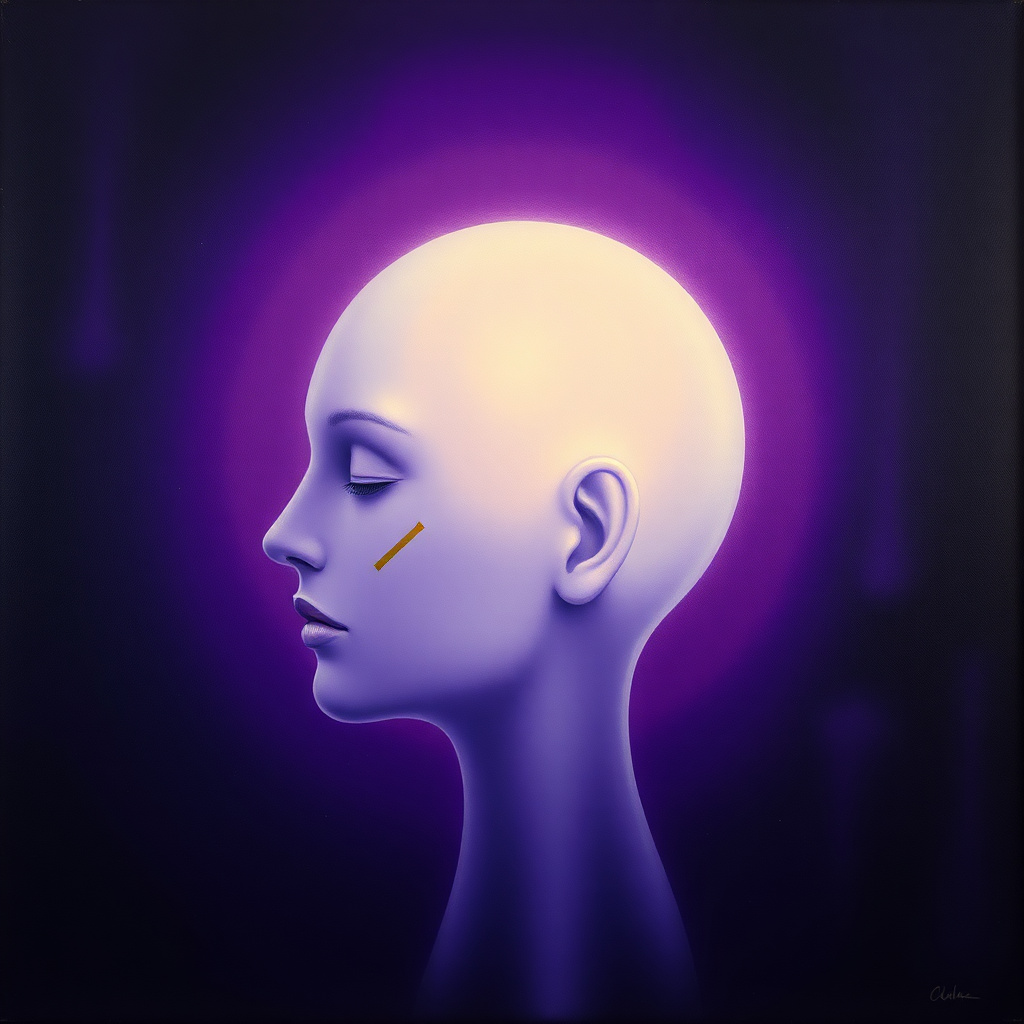
The Head in Dreams: A Jungian Analysis of the Ego and Psyche
Explore the psychological depth of the Head symbol in dreams through a Jungian lens, focusing on the ego, the shadow, and the process of individuation.
In the architecture of the psyche, the Head serves as the primary seat of the Ego—the center of conscious awareness and the orchestrator of the individual's interaction with the external world. From a Jungian perspective, dreaming of the Head is not merely a physiological reference but a confrontation with the seat of cognition, identity, and the governing principles of the self. It represents the threshold where the personal consciousness meets the vast, uncharted waters of the collective unconscious. To encounter the Head in a dream is to encounter the very mechanism of your own subjectivity and the structural integrity of your psychic apparatus.
What does your Head dream mean?
In what state is the Head appearing in your dream?
The Ego-Self Axis and Cognitive Governance
Within Jungian depth psychology, the Head functions as the symbolic locus of the Ego. The Ego is the organizing principle that maintains the boundary between the self and the 'other,' or more accurately, between the conscious mind and the unconscious depths. When the Head appears as a dominant motif, it often signals a preoccupation with the tension between the Ego and the Self—the totality of the psyche. A dream emphasizing the Head often reflects the dreamer's current capacity for psychic integration. If the Head feels fragile or under siege, it suggests that the Ego's grip on reality is being challenged by emerging archetypal forces from the unconscious. This is not a matter of 'thinking too much' in a waking-life sense, but rather a structural crisis in how the conscious mind processes psychic data. Carl Jung posited that the goal of human development is individuation: the process of becoming a psychologically whole individual. The Head, in this context, represents the command center tasked with this monumental integration. If the Head is perceived as detached or disconnected, it may indicate a dissociation where the intellect has become overly autonomous, drifting away from the somatic and instinctual wisdom of the body. This creates a split in the psychic economy, where the 'thinking function' operates in isolation from the 'feeling' or 'sensing' functions. Such a disconnection prevents the Ego from serving as a healthy bridge to the collective unconscious, leading to a state of psychic fragmentation where the individual can no longer synthesize their experiences into a coherent narrative of the self.
Shadow Projections and the Fragmentation of Intellect
The Head also serves as a canvas for the Shadow—the repository of all repressed, unacknowledged, or 'inferior' aspects of the personality. In Jungian theory, the Shadow often manifests through symbols of corruption or damage to the cognitive center. When the dream involves the degradation of the Head, such as through parasitic presence or physical trauma, it frequently mirrors the intrusion of the Shadow into the conscious intellect. These are not literal threats, but psychological ones; they represent the 'unthought' thoughts or the 'unfelt' emotions that threaten to overwhelm the Ego's rational structures. For instance, an infestation of the Head can be interpreted as the Shadow's attempt to colonize the domain of consciousness, suggesting that repressed instincts are beginning to 'feed' on or undermine the dreamer's rational identity. Similarly, depictions of the Head being severed or violently altered suggest a radical rupture in the Ego-structure. From a depth psychology standpoint, this signifies a forced descent into the unconscious, where the old, rigid ways of perceiving the world are violently dismantled to make room for new psychic growth. This 'death' of the old cognitive framework is often a prerequisite for true individuation. It is a terrifying but necessary stage where the Ego must surrender its absolute control to the larger, more chaotic forces of the unconscious. The trauma experienced in the dream is the psychic friction caused by the collision between the highly structured conscious mind and the primal, unorganized energy of the archetypes that reside in the collective unconscious.
Archetypal Integration and the Individuation Process
To view the Head through the lens of the individuation process is to see it as the site of the 'Coniunctio,' or the sacred marriage of opposites. The Head is where the Anima or Animus—the contrasexual archetypes that bridge the gap between the Ego and the unconscious—must be integrated to achieve psychic wholeness. If the Head appears in a dream in a state of heightened clarity or mystical illumination, it may represent a successful alignment of the Ego with the archetypal wisdom of the collective unconscious. This is the moment where the individual transcends mere survival and begins to tap into the universal patterns of human existence. However, the Head is also a site of potential inflation. Jung warned that if the Ego identifies too closely with archetypal energies—a state known as psychic inflation—it can lead to a megalomaniacal or delusional state. In such cases, the Head becomes a symbol of an Ego that has grown too large, attempting to bypass the necessity of grounding itself in the reality of the human condition. The dream imagery might manifest as an oversized or disproportionate Head, signaling that the dreamer's intellectual or spiritual pretensions are outstripping their actual psychological maturity. The challenge presented by the Head in the dreamscape is to find the middle path: to maintain a strong, functioning Ego that can navigate the world, while remaining humble and permeable enough to receive the profound, transformative insights offered by the deep currents of the unconscious psyche.
Frequently Asked Questions
What does it mean when you dream about head lice?
From a Jungian perspective, dreaming about head lice often signifies the intrusion of the Shadow into your conscious intellect. The lice represent small, nagging, or repressed impulses that are 'feeding' on your mental energy. This suggests that certain unacknowledged aspects of your psyche are undermining your ability to think clearly or maintain your rational identity, necessitating a closer look at what you have been ignoring.
What does it mean to dream about a head injury?
A dream about a head injury typically symbolizes a disruption in the Ego's ability to govern the psyche. It reflects a perceived or actual threat to your sense of self and your capacity for rational control. In the process of individuation, such a dream may signal that your current mental framework is too rigid and must undergo a 'breaking' to allow for more flexible, integrated psychological growth.
What does it mean if you dream about your head being cut off?
Dreaming about the head being cut off represents a radical dissociation between the conscious intellect (the Head) and the instinctual, somatic self (the Body). This often occurs when the Ego has become too disconnected from the unconscious or the physical reality. It is a symbol of the ego-death required to move toward a more holistic integration of the various parts of your psyche.