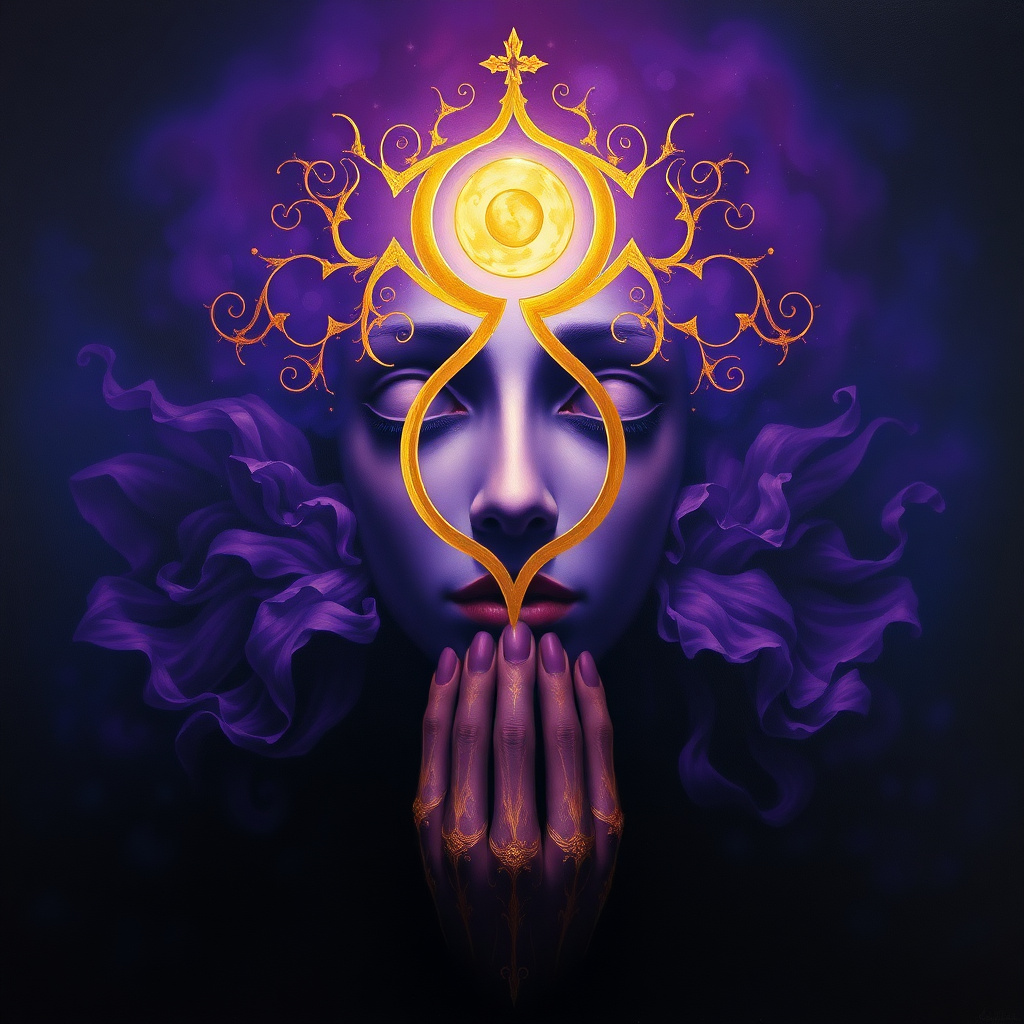
The Face in Dreams: Mythological Archetypes and Cultural Masks
Explore the Face through the lens of ancient folklore, religious iconography, and mythological archetypes. Uncover the sacred and profane meanings of the visage.
In the tapestry of human myth, the Face serves as the threshold between the seen and the unseen. It is the site of the 'persona,' a term derived from the Latin for theatrical masks used in ancient drama to signal divinity or character. Across civilizations, the visage has been treated as a vessel for the soul, a divine mirror, or a deceptive veil. To encounter the Face in the realm of sleep is to engage with the ancient traditions of identity, lineage, and the sacred masks used to commune with ancestors or gods.
What does your Face dream mean?
In which mythological realm does the Face appear?
The Visage as Divine Mask and Sacred Veil
In many ancient traditions, the Face is not a static biological feature but a shifting canvas for the divine. In Greek mythology, the gods often appeared with altered visages to test mortals, using their facial features to signal their presence or their wrath. To witness a Face changing or morphing is to encounter the fluid nature of the Olympian deities, who refused to be bound by a single human likeness. This concept extends to the use of ceremonial masks in various African and Asian cultures, where the mask does not hide the wearer but allows the spirit of an ancestor or a deity to inhabit the physical plane. When the Face appears in a dream, it may evoke these ritualistic traditions, suggesting a moment where the boundary between the mundane and the celestial is thinning. In some Eastern philosophies, the Face is the 'mirror of the heart,' a reflection of one's karmic standing. A Face that is disfigured or altered in a mythological context often points to a breach in ritual purity or a disruption in the cosmic order. Rather than personal insecurity, such imagery draws from the archetype of the 'Broken God' or the 'Fallen Hero,' where the loss of a recognizable countenance signifies a loss of divine favor or a descent into a chaotic, primordial state. This connection to the sacred suggests that the visage is the primary interface through which humans negotiate their status within the celestial hierarchy, acting as a bridge between the mortal flesh and the eternal spirit.
The Ancestral Lineage and the Peeling of Identity
Folklore frequently treats the Face as the ultimate repository of lineage and ancestral honor. In many East Asian traditions, the concept of 'face' is tied to social standing, reputation, and the honor of one's forebears. To have the Face peel or fall away in a mythological narrative is to witness the dissolution of one's connection to the ancestral line. It is the shedding of the skin of the past. In various mythologies, the shedding of a facial layer or the appearance of a new, different visage represents a rite of passage, much like the metamorphosis of Proteus or the shedding of skins in serpent-based creation myths. This is not merely a physical event but a spiritual transition where the old identity is cast aside to make room for a new incarnation or a different stage of existence. If the Face is seen as breaking or swelling, it can be viewed through the lens of ancient omens, where such physical distortions were interpreted as signs of impending social upheaval or the displeasure of the spirits. The Face becomes a site of struggle between the individual's current life and the heavy weight of their heritage. In the context of folklore, a Face that is being obscured or masked suggests the presence of a trickster archetype—figures like Loki or Anansi—who use the art of deception and the manipulation of appearance to disrupt the established order of the world. The visage is thus the battlefield where the truth of the soul meets the necessity of the social mask.
The Archetype of the Grotesque and the Fallen Visage
The history of art and literature is replete with the 'Grotesque,' a category of the Face that defies the classical ideals of beauty to reveal deeper, often darker, truths. From the gargoyles of Gothic cathedrals to the distorted countenances in Dante’s Inferno, a Face that is swelling, breaking out, or disfigured serves as a visual shorthand for moral or spiritual decay. In mythological storytelling, the loss of a symmetrical or 'perfect' Face often coincides with a character's hubris or their descent into the underworld. The Face becomes a landscape of suffering or a testament to a curse. For instance, in many legends, a curse manifests physically upon the countenance, making the internal state visible to all. A Face that appears to be peeling off or falling away can be seen as the crumbling of a facade—the literal stripping away of the ego to reveal the raw, unadorned essence beneath, which may be terrifying to the uninitiated. This mirrors the shamanic journey, where the seeker must undergo a symbolic death of their social identity to perceive the true nature of reality. The disfigured Face is not a symbol of ugliness in the modern sense, but a symbol of the 'unmasked' reality that lies behind the polite illusions of civilization. It represents the confrontation with the chthonic forces of the earth and the underworld, where the polished surfaces of the world are eroded by the relentless forces of time, fate, and divine judgment.
Frequently Asked Questions
What is the meaning of a face swelling up in a mythological sense?
In folklore, a swelling Face often mirrors the concept of 'divine inflation' or an omen of excess. It can represent a character's hubris or an accumulation of spiritual energy that the mortal frame cannot contain, similar to how ancient myths describe gods whose presence causes the physical world to warp or expand.
How do I interpret a face peeling or skin peeling off?
This imagery aligns with ancient rites of metamorphosis and rebirth. Much like the shedding of a serpent's skin in creation myths, the peeling of the Face suggests the shedding of an old identity or the removal of a veil to reveal a new, perhaps more primal, spiritual state or ancestral truth.
What does a face tattoo signify in cultural narratives?
A Face tattoo draws from the tradition of ritual marking and tribal identity. In many cultures, such markings are not mere decoration but sacred inscriptions that denote status, protection from spirits, or a permanent connection to a specific deity or ancestral lineage, serving as a visible covenant.
What if the face is changing or being disfigured?
A changing Face invokes the archetype of the Trickster or the Protean nature of the gods. Disfigurement, in a mythological context, often symbolizes a breach of sacred law, a curse, or the visible manifestation of a soul's internal struggle with fate and moral transgression.