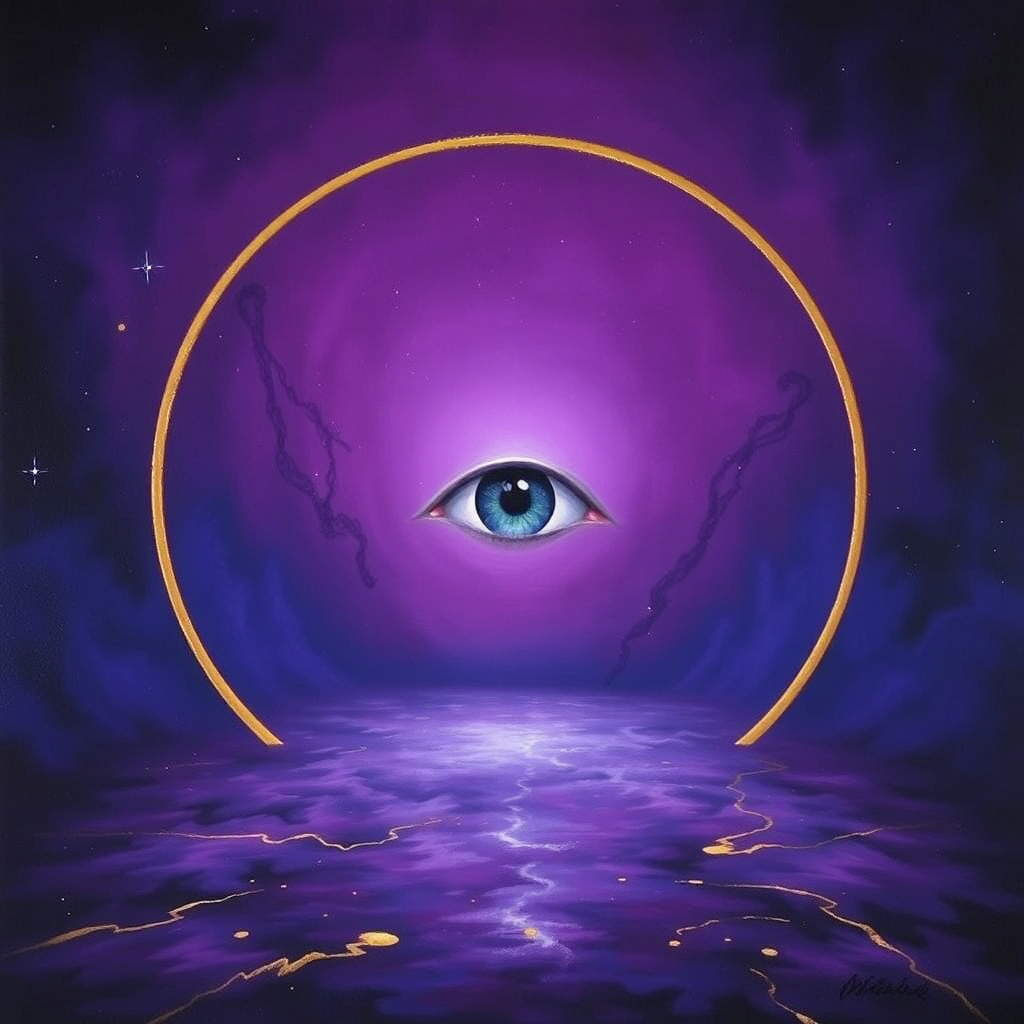
The Eye: A Historical Evolution of Dream Interpretation
Explore how the interpretation of the Eye in dreams has shifted from ancient Greek omens and medieval mysticism to Victorian spiritualism and modern neuroscience.
The Eye serves as one of the most profound anatomical focal points in the history of human subconscious inquiry. Across various epochs, the way we perceive the presence of an Eye in a dream state has undergone radical shifts. It has moved from being viewed as a literal window to the divine or a vessel for prophetic truth, to a psychological metric of self-perception, and finally to a biological byproduct of neurological processing. To understand the Eye is to trace the movement of human consciousness through time, observing how our cultural lens dictates the perceived significance of sight and observation.
What does your Eye dream mean?
Which historical era's perspective most resonates with your current view of the Eye?
Classical Antiquity and the Era of Prophetic Omens
In the ancient Greek and Mediterranean traditions, the Eye was rarely viewed as a mere anatomical feature; instead, it was treated as a potent conduit for divine intervention. To encounter an Eye in a dream during this period was often interpreted through the lens of 'the evil eye' or as a manifestation of a deity's gaze. If a dreamer witnessed an Eye that appeared unnaturally large or piercing, it was frequently categorized as a direct communication from the gods, signaling that one's actions were being monitored by celestial authorities. The concept of 'the gaze' was not a psychological phenomenon but a metaphysical reality. An Eye appearing in a dream might signify a warning of impending fate or a sign of divine favor, depending on the clarity and brightness of the organ. During this era, the physical state of the Eye in a dream—whether it was clear, clouded, or weeping—was read as a literal omen regarding the dreamer's standing with the cosmos. There was no distinction between the internal dream world and the external spiritual world; the Eye was a bridge. Consequently, the presence of an Eye was a heavy, externalized force that imposed itself upon the dreamer, demanding recognition of a higher order. This era prioritized the Eye as an instrument of external judgment, where the act of being seen was synonymous with being judged by the fabric of reality itself, leaving little room for the individual's subjective emotional response to the sight.
Medieval Mysticism and Victorian Spiritualism
As history progressed into the Middle Ages and later the Victorian era, the interpretation of the Eye underwent a complex stratification. In the medieval period, the Eye was deeply entwined with religious allegory and the struggle between light and darkness. Dreaming of an Eye often related to the concept of spiritual vigilance or the 'all-seeing' nature of a higher power. It was a period of intense symbolism where the Eye served as a moral compass, often associated with the clarity of one's soul or the corruption of sin. However, by the Victorian era, the focus shifted toward spiritualism and the unseen realms. During the 19th century, the Eye became a symbol of the 'third eye' or the ability to perceive the veil between the living and the dead. Victorian dream interpretation often focused on the Eye as a medium for mediumship or psychic sensitivity. If an Eye appeared in a dream, it was frequently discussed in the context of clairvoyance or the soul's ability to witness the ethereal plane. This era moved away from the strictly communal and religious omens of the past and toward a more individualistic, albeit still supernatural, exploration of perception. The Eye was no longer just a tool of divine judgment but a potential tool for personal spiritual expansion. This period bridged the gap between the purely external omens of antiquity and the internal, psychological explorations that would follow, treating the Eye as a sensory organ capable of accessing dimensions beyond the physical constraints of the waking world.
The Modern Shift Toward Neuroscience and Psychodynamics
In the contemporary era, the interpretation of the Eye has been largely reclaimed by the realms of neuroscience and modern psychodynamics. We have moved away from the celestial and the spectral, placing the Eye firmly within the architecture of the brain and the mechanics of the self. Today, a dream about an Eye is frequently analyzed through the lens of cognitive processing and the way the brain manages visual information and self-awareness. From a neurobiological perspective, the Eye in a dream can be seen as a reflection of the brain's ongoing attempts to synthesize visual stimuli or process sensory data from the waking world. Psychologically, the focus has shifted to the 'internal gaze'—the way we observe ourselves and how we perceive our own identity. Instead of an external god or a spiritual medium, the Eye is now viewed as a representation of the ego, the superego, or the subconscious observer. We look at the Eye to understand how we perceive our environment and how we monitor our own behavior. The focus is on the subjective experience: the feeling of being watched, the sensation of losing sight, or the clarity of vision as a metaphor for cognitive awareness. This modern approach deconstructs the Eye from a mystical entity into a functional, psychological symbol. It treats the imagery not as a message from the outside, but as a reflection of the internal neural and emotional landscape, focusing on how the dreamer's own mind uses the concept of sight to navigate the complexities of human consciousness and self-regulation.
Frequently Asked Questions
What does a dream about eye injury or eye pain signify historically?
Historically, an eye injury was often viewed as a devastating omen of losing one's 'vision' or guidance in life. In ancient contexts, it could signal a loss of divine protection, while in modern psychological terms, it often reflects a perceived threat to one's clarity of thought or a fear of being unable to face a difficult reality.
How is a dream about eye contact interpreted?
From a historical perspective, intense eye contact in dreams could represent a confrontation with a deity or a powerful social force. In contemporary interpretations, it is viewed as a reflection of social awareness, the need for connection, or the feeling of being scrutinized by others in your waking life.
What is the meaning of a dream about eye color change?
In various eras, a change in eye color has been seen as a sign of shifting character or spiritual transformation. While ancient traditions might see it as a change in one's destiny, modern views often interpret it as a shift in perspective or a change in how one perceives their own identity and personality.