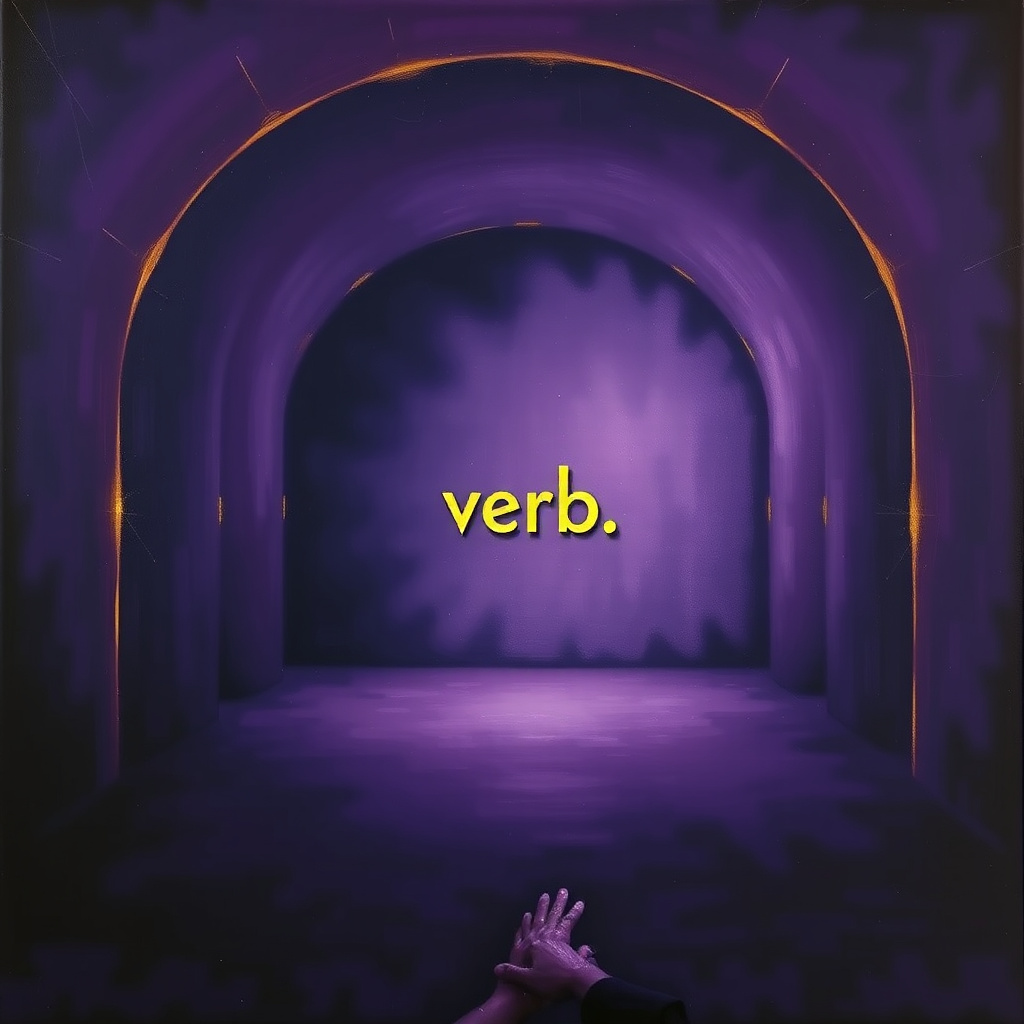
Verb: A Jungian Analysis of Psychic Kineticism
Explore the Verb as a psychological archetype of psychic movement, individuation, and the dynamic tension within the collective unconscious.
In the architecture of the psyche, the Verb functions not as a static noun or a fixed identity, but as the primordial impulse of the libido—the psychic energy that drives all movement. From a Jungian perspective, a Verb represents the transition from being to becoming. It is the kinetic expression of the psyche's internal forces, marking the threshold where the ego encounters the active currents of the unconscious. To encounter the Verb is to encounter the very mechanism of psychic agency, the force that propels the individual through the complex stages of psychological development.
What does your Verb dream mean?
Identify the primary quality of the psychic movement:
The Verb as the Engine of Individuation
Within the framework of Carl Jung’s theory of individuation, the Verb serves as the structural representation of the teleological drive—the inherent tendency of the psyche to move toward wholeness. While the ego often seeks stability through fixed concepts and defined roles (the nouns of life), the Verb signifies the necessary disruption of these static structures. It is the active principle that forces the personality to expand beyond its current boundaries. When the psyche presents the concept of an action rather than an object, it is signaling a shift from a state of stasis to a state of process. This is the essence of the individuation process: a continuous sequence of psychological movements that integrate the disparate parts of the self. The Verb acts as the bridge between the conscious ego and the emerging potential of the Self. In waking life, we often mistake our titles or possessions for our essence, but the psychological Verb reminds us that our true nature is found in the movement of our psychic energy. This kinetic quality is what prevents the ego from becoming a closed system. Without the constant influx of 'doing' or 'becoming' driven by the unconscious, the psyche would succumb to entropy. Therefore, the Verb is the signature of a living, evolving consciousness that refuses to be categorized or contained by the rigid definitions of the social persona. It represents the vital tension required to navigate the path from fragmentation toward the realization of a unified psychic totality, acting as the rhythmic pulse of the soul's ongoing journey.
Dynamic Tension and the Anima/Animus Axis
The Verb also manifests as the active tension between the archetypal figures of the Anima and Animus. In Jungian thought, these figures serve as the mediators between the ego and the collective unconscious. The Verb represents the communicative and transformative energy that flows through this axis. If the Anima/Animus is the bridge, the Verb is the act of crossing. This is not merely a movement in space, but a movement in quality—a shift in the psychic tone. When the Verb appears as a dominant psychological structure, it highlights the active engagement of these archetypes in the dreamer's psychic life. It suggests that the unconscious is not merely a reservoir of symbols, but an active participant in the construction of reality. The Verb embodies the 'active imagination' technique proposed by Jung, where the individual enters into a dynamic dialogue with their archetypal contents. Instead of observing a symbol as a fixed entity, the psyche experiences it as a force. This reflects the dialectical nature of the psyche, where opposites—such as consciousness and unconsciousness, or instinct and intellect—are held in a state of productive tension. The Verb is the expression of this tension; it is the 'action' that occurs when two opposing psychic forces meet. In the context of the collective unconscious, the Verb represents the universal patterns of movement and interaction that transcend individual experience, mirroring the rhythmic cycles found in nature and the structural dynamics of human mythology and cultural evolution.
The Shadow and the Impulse of Kinetic Disruption
The Shadow, comprising the repressed and unacknowledged aspects of the personality, often communicates through the Verb in ways that disrupt the ego's carefully constructed stability. While the ego seeks to maintain a predictable and 'noun-like' existence—stable, defined, and controlled—the Shadow utilizes the Verb to introduce volatility and unscripted movement. This is the 'action' that the ego cannot account for in its logical planning. The Shadow's use of the Verb is often characterized by an intensity that feels alien or overwhelming to the conscious mind, representing the raw, unrefined energy of the instinctual drives. This kinetic disruption is not inherently destructive, though it may feel so; rather, it is a necessary corrective to the stagnation of a one-sided personality. By forcing the ego into unplanned actions or unexpected psychological shifts, the Shadow prevents the psyche from becoming calcified. This mirrors the concept of the 'chaos' that must precede new order in many mythological structures. In a psychological sense, the Verb acts as the agent of the Shadow's intrusion, breaking the inertia of the persona. This encounter forces the individual to confront the reality of their own complexity. The Verb, in this capacity, serves as a catalyst for integration, demanding that the ego move from a state of passive observation to one of active, albeit difficult, engagement with the darker, more primal currents of the collective unconscious.
Frequently Asked Questions
What is the verb dream meaning in a Jungian context?
In Jungian psychology, the meaning of a verb in a dream relates to the kinetic energy of the libido. It signifies the movement of psychic forces toward individuation. Rather than focusing on what things 'are', the verb focuses on what the psyche is 'doing' or 'becoming', indicating a transition in the dreamer's psychological development.
How does a dream about verb indicate psychological growth?
A dream centered on a verb suggests that the psyche is moving away from static, ego-centered identities and toward a more dynamic engagement with the unconscious. It indicates that the process of individuation is active, signaling that the dreamer is navigating the tensions between the persona, the shadow, and the self.
Can the Verb represent the collective unconscious?
Yes. As a symbol of pure movement and procedural patterns, the Verb can represent the archetypal rhythms found within the collective unconscious. It reflects the universal, repetitive processes of psychic transformation that characterize the human experience across different cultures and eras.