Driving: A Jungian Analysis of Psychic Autonomy and Ego Control
Explore the psychological archetypes of driving. Understand how the act of driving reflects ego-control, the Shadow, and the process of individuation.
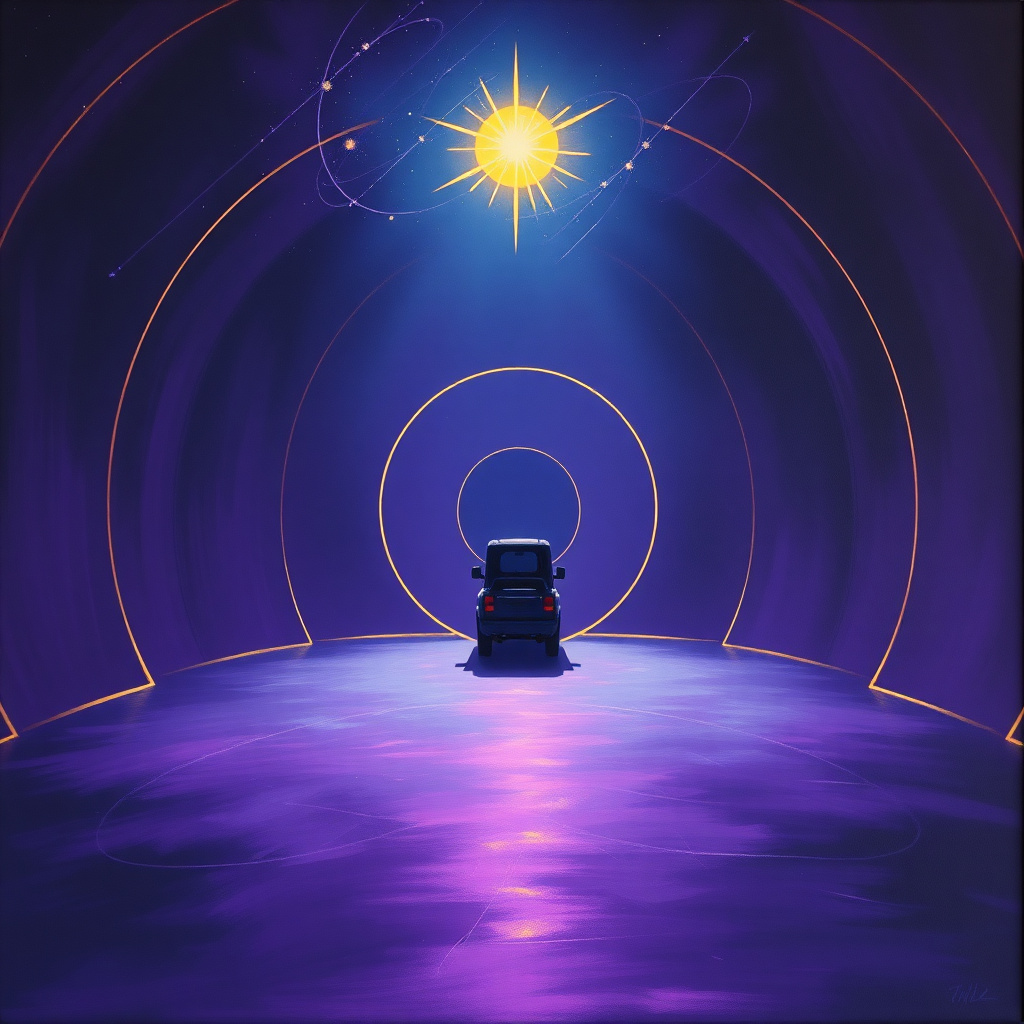
In the realm of depth psychology, the act of driving serves as a profound metaphor for the movement of the ego through the landscape of the unconscious. Rather than a mere reflection of daily life, driving functions as a structural representation of how the conscious mind navigates the tension between instinctual drives and societal constraints. From a Jungian perspective, the vehicle and the act of steering relate to the psychic energy (libido) and the individual's capacity to direct their own development toward wholeness, or individuation, amidst the vast, unpredictable currents of the collective unconscious.
What does your Driving dream mean?
How would you describe your level of agency during the drive?
The Ego-Vehicle and the Mechanics of Psychic Agency
When examining the psyche through a Jungian lens, the act of driving represents the ego's attempt to maintain directionality within the vastness of the unconscious. The vehicle is not merely a tool; it is a temporary container for the personality, a boundary-setting mechanism that allows the ego to traverse the psychic terrain. The degree of control experienced while driving correlates to the strength and stability of the ego-consciousness. A person who feels they are in command of the driving process is exercising their agency, attempting to integrate various psychic functions into a coherent direction. However, this agency is always in dialogue with the archetypal forces that lie beyond the windshield. If the vehicle feels heavy, unresponsive, or overly powerful, it may suggest that the ego is struggling to manage the influx of energy from the unconscious. Jung emphasized that the ego must be strong enough to withstand the pressures of archetypal inundation, yet flexible enough to respond to the unconscious's guidance. Driving a specific type of vehicle, such as a large truck or a small motorcycle, can reflect the scale of the ego's current projection into the world. A truck might represent a more cumbersome, heavy-handed approach to life's responsibilities, whereas a motorcycle suggests a more direct, albeit more vulnerable, engagement with the elements. Ultimately, the driving experience serves as a diagnostic tool for the current state of the individual's psychic autonomy and their ability to mediate between the conscious will and the underlying currents of the soul.
Shadow Projections and the Loss of Directional Control
The experience of losing control while driving—such as failing brakes or being unable to steer—often signals an encounter with the Shadow. The Shadow consists of those parts of the personality that the ego has rejected, repressed, or deemed unacceptable. When the driving becomes chaotic or dangerous, it is frequently a manifestation of these repressed elements surging forward to demand recognition. A descent into water or off a cliff during the act of driving is not a literal prediction of catastrophe, but a symbolic descent into the depths of the unconscious. In Jungian theory, water is a primary symbol for the collective unconscious; thus, driving into water represents a surrender of ego-control to the overwhelming, primordial forces of the psyche. Similarly, driving off a bridge or a cliff may represent a sudden, uncontrolled leap into a new stage of psychological development or a terrifying collapse of the ego's current structure. When an individual dreams of driving drunk or recklessly, they are witnessing the Shadow's disruption of the ego's carefully constructed order. This lack of inhibition is the psyche's way of expressing the tension between the persona—the social mask we wear—and the raw, unmediated drives that reside beneath the surface. These moments of 'accidents' or 'failures' in the driving process are often necessary ruptures that force the individual to confront the limitations of their current psychological orientation, paving the way for a more integrated and authentic way of being.
Individuation and the Path of the Archetypal Journey
The long-term trajectory of driving can be viewed as the process of individuation—the lifelong psychological journey toward becoming a whole, undivided self. The road itself is the path of life, but it is also the psychic pathway through which the various archetypes, including the Anima or Animus, manifest. Driving toward a specific destination or through difficult terrain, such as a steep hill or snowy landscape, reflects the arduous nature of this developmental work. A steep hill represents the resistance one meets when attempting to ascend to a higher level of consciousness or when integrating difficult, complex aspects of the self. The snow may symbolize a state of psychic stasis or a period of 'numbing' where the ego is insulated from the intense emotional currents of the unconscious. Furthermore, the presence of others in the vehicle—whether they are passengers or people one is driving for—can indicate how much of the individual's psychic energy is being invested in social roles versus the internal journey. Driving someone else's vehicle may suggest a temporary adoption of another's psychic structure or a struggle to find one's own unique path within the collective. To drive one's 'dream car' is to align the ego with the ideal self, a powerful moment of psychic harmony where the instrument of movement perfectly matches the soul's intent. Through the continuous act of navigating, adjusting, and occasionally surviving the turbulence of the drive, the individual gradually integrates the conscious and unconscious, moving closer to the realization of the Self.
Frequently Asked Questions
What does it mean when you dream about driving and the brakes don't work?
In a Jungian context, failing brakes represent a loss of ego-control over repressed impulses. It suggests that the 'braking mechanism' of your conscious will is no longer sufficient to contain the rising energy of the Shadow. This indicates a need to address underlying tensions before they manifest as a complete psychic crisis.
What is the significance of driving into water?
Driving into water symbolizes a direct immersion into the collective unconscious. Water represents the vast, emotional, and instinctual depths of the psyche. This movement suggests that your ego is being drawn into a transformative encounter with the primordial forces that lie beneath your conscious awareness.
Does dreaming about driving someone else's truck have a specific meaning?
Driving another person's vehicle suggests that you may be operating within a psychic structure or a set of values that is not your own. It can indicate that you are currently navigating life through the persona or the expectations of others, rather than through your own authentic psychological agency.