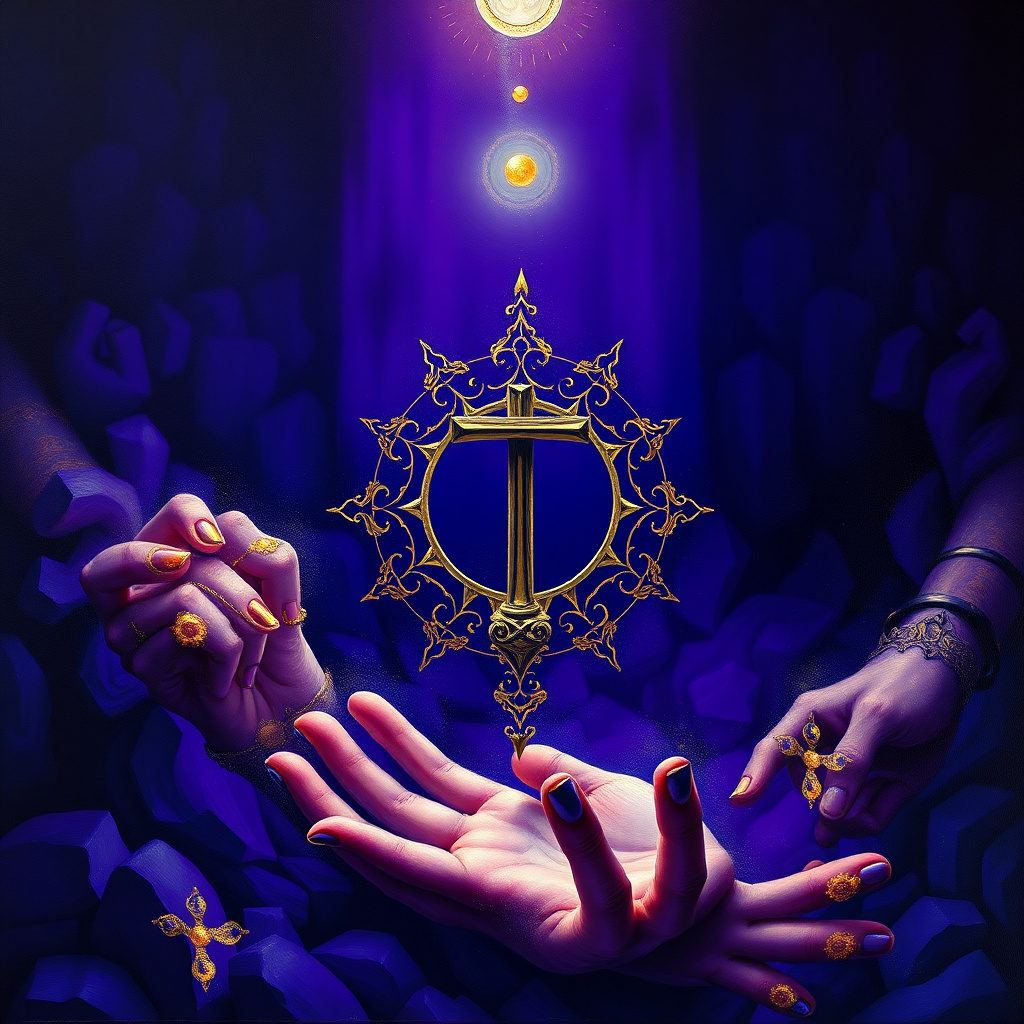
The Use Symbol: Mythological and Cultural Interpretations
Explore the cultural and mythological significance of Use. Discover how ancient folklore and sacred narratives interpret the concept of utility and function.
In the tapestry of human heritage, the concept of Use transcends mere utility to become a divine mandate. It is the intersection where purpose meets existence, a bridge between the potentiality of a spirit and its manifestation in the physical realm. To encounter Use in a cultural context is to face the question of one's station within the cosmic order. Whether viewed through the lens of liturgical service, the forging of legendary artifacts, or the fulfillment of ancestral decrees, Use dictates the rhythm of life and the inevitable duty of every entity to serve a higher design.
What does your Use dream mean?
Which archetype of function resonates most with your current state?
The Liturgical Mandate and Divine Purpose
Within the framework of ancient religious traditions, Use is rarely a choice; it is a sacred vocation. In Biblical hermeneutics, the concept of being 'used' by the divine implies a vessel being hollowed out to accommodate a higher will. This is not a matter of personal agency but of alignment with a celestial blueprint. Just as a clay jar is crafted for a specific liquid, the soul is perceived as having a predetermined function within the grand architecture of creation. To find one's Use is to find one's place in the divine hierarchy, moving from the chaos of unformed matter to the order of consecrated service. In many Eastern traditions, this mirrors the concept of Dharma, where the inherent nature of a being dictates its righteous path. To neglect this path is to exist in a state of cosmic friction, a misalignment with the natural laws that govern the universe. The mythological weight of Use suggests that every element of the cosmos—from the smallest grain of sand to the most powerful deity—serves a functional role in maintaining the balance of the world. In this light, Use is the mechanism of cosmic stability. It is the difference between a tool lying dormant in the dust and a tool performing its sanctified task. The cultural narrative suggests that to be without Use is to be non-existent in the eyes of the gods, a shadow drifting without the substance of purpose. Therefore, the concept is inextricably linked to the idea of being 'called' or 'chosen' to fulfill a specific, unchangeable role in the unfolding drama of the eternal.
Archetypal Instruments and the Forge of Legend
In the realm of epic literature and heroic folklore, Use is embodied by the legendary artifact. Consider the Greek myth of Hephaestus, the divine smith; here, the Use of a tool is what separates the mundane from the miraculous. A sword is not merely metal, but a vessel for the Use of justice or destruction. The archetype of the 'Master Tool' suggests that objects possess a latent destiny that can only be realized through correct application. In Norse mythology, the function of runes is not merely to represent sounds, but to be used as conduits for the fundamental forces of the world. The Use of these symbols is what grants the practitioner power over fate itself. This perspective shifts the focus from the object to the application; the potency lies in the execution of the intended function. In Shakespearean tragedy, characters often grapple with the Use of their inherited roles—the crown, the throne, or the bloodline. They are caught in the tension between their personal desires and the functional requirements of their social and political stations. This creates a tension between the 'being' and the 'doing.' The mythic archetype suggests that even the most powerful figures are ultimately subjects to the Use demanded by their circumstances. A king's Use is to rule, a warrior's Use is to defend, and a martyr's Use is to transform. When an entity fails to meet the requirements of its archetypal Use, the narrative structure of the myth often collapses into chaos, signaling a breakdown in the natural or social order that governs the human experience.
Ancestral Continuity and the Utility of Tradition
In many indigenous and ancestral-focused cultures, Use is the thread that binds the living to the dead. Traditions, rituals, and ancestral names are not mere relics; they are active instruments of continuity. The Use of ritual is to maintain the connection between the terrestrial and the ethereal, ensuring that the wisdom of the forefathers is applied to the challenges of the present. In Asian ancestor worship, the Use of offerings and specific temporal rites is a functional necessity to appease spirits and secure blessings. Here, Use is a form of reciprocal economy: the living provide the ritual function, and the ancestors provide the spiritual protection. This cultural lens views Use as a method of preserving the integrity of the lineage. To abandon the Use of these customs is to sever the lifeline of the community, leading to a state of spiritual wandering. Furthermore, the concept of 'ancestral Use' implies that one inherits not just property, but a set of duties. A person is born into a legacy of Use, where their actions are measured against the functional successes of those who came before. This creates a profound sense of historical weight, where every action is seen as a continuation of a long-standing cultural process. Use, in this context, is the engine of survival and the guardian of identity. It ensures that the collective knowledge of a people is not lost to time but is actively applied to sustain the life of the tribe, the clan, or the nation through the ages.
Frequently Asked Questions
What is the use dream meaning in a cultural context?
In a cultural sense, this refers to the realization of one's social or spiritual vocation. It pertains to how an individual fits into the established hierarchies of their community, whether through religious service, ancestral duty, or the fulfillment of a specific social role defined by tradition.
How does a dream about use relate to mythology?
Mythologically, it relates to the activation of sacred tools or the fulfillment of a divine mandate. It often reflects the tension between an entity's potential and its actualized function within the cosmic order, much like a hero wielding a destined weapon or a deity performing a cosmic task.