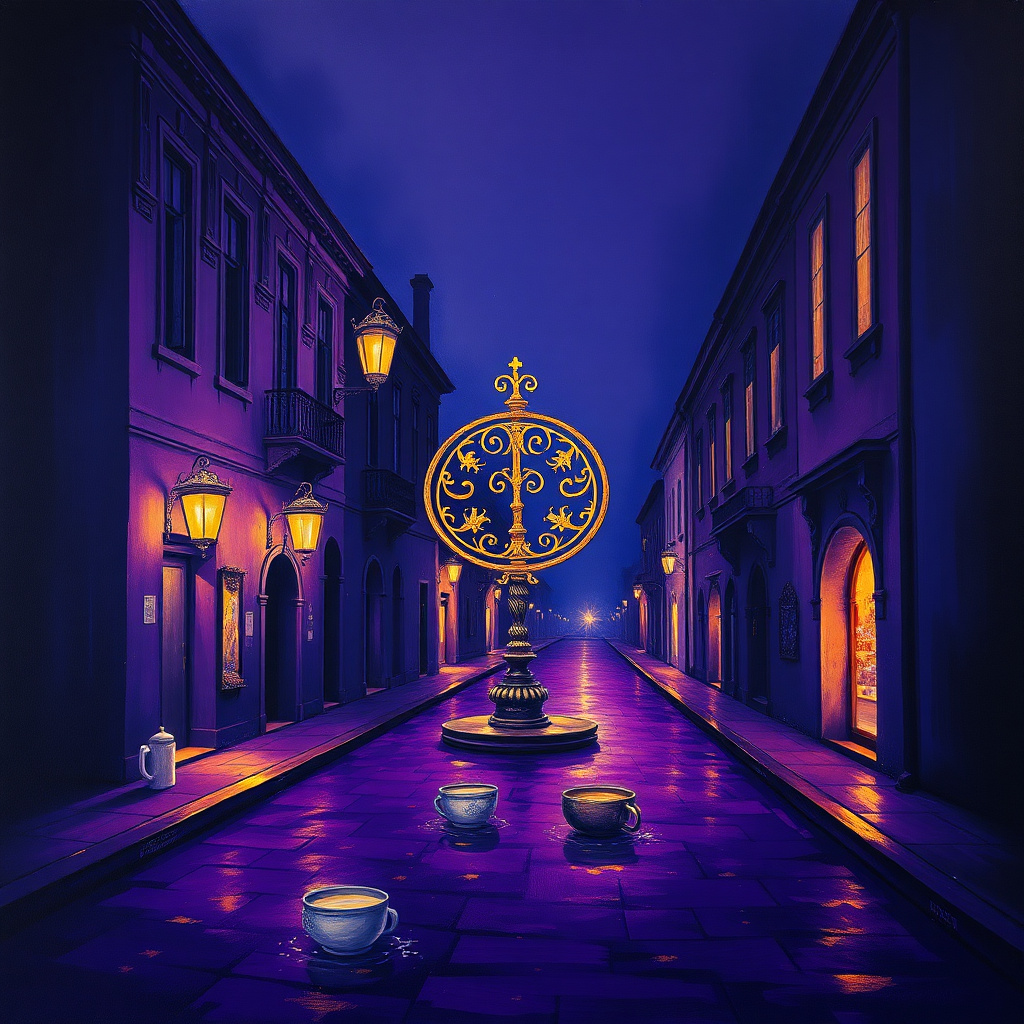
Street Symbolism: A Jungian Archetypal Analysis
Explore the psychological depth of the Street symbol through a Jungian lens, focusing on individuation, the shadow, and the pathways of the collective unconscious.
In the architecture of the psyche, the Street serves as more than a mere setting; it functions as a structural conduit for the movement of the soul. From a Jungian perspective, a Street is not a physical location but a psychic trajectory—a manifestation of the libido's flow toward a specific psychological destination. It represents the established patterns of behavior and the linear progression of the ego as it navigates the tension between the conscious mind and the vast, uncharted territories of the unconscious. To encounter a Street is to encounter the very topography of one's own developmental process.
What does your Street dream mean?
What is the primary character of the Street?
The Street as the Path of Individuation
Carl Jung proposed the concept of individuation as the central process of psychological development, wherein the ego moves toward integration with the Self. Within this framework, the Street acts as the delineated boundary of this journey. It is the 'way' that separates the known from the unknown. A well-defined, straight Street suggests a highly structured ego-consciousness that follows a predetermined social or moral script, perhaps adhering too closely to the Persona. Conversely, a street that is winding, fractured, or disappearing suggests the psychic instability inherent in the individuation process. When the ego encounters a street that deviates from its expected course, it is often a signal from the unconscious that the current life-path is insufficient for the integration of the totality of the personality. This is not about 'making choices' in the waking sense, but about the teleological pull of the psyche toward wholeness. The street provides the necessary tension between the instinctual drive to wander and the ego's need for direction. If the street is paved and orderly, it may represent the dominance of the rational intellect; if it is overgrown or crumbling, it points to the encroachment of primordial forces that demand recognition. In the context of analytical psychology, the street is the longitudinal axis of the personality, tracing the movement of psychic energy through the various stages of maturity and self-realization. It is the stage upon which the drama of the ego's confrontation with the unconscious unfolds, marking the distance between the current state of being and the eventual realization of the Self.
Shadow Projections and the Street's Periphery
The periphery of the Street—the alleys, the shadows cast by buildings, and the unlit corners—serves as the primary theater for the Shadow archetype. In Jungian theory, the Shadow consists of those repressed or denied aspects of the personality that the ego finds unacceptable. When the psyche presents a Street, the attention is often drawn to what lies just beyond the illuminated path. These peripheral spaces represent the 'unlived life' or the qualities that have been cast into the darkness to maintain a coherent social identity. A street characterized by heavy shadows or claustrophobic enclosures suggests a psyche that is currently struggling to integrate these repressed elements. The tension felt when moving through such a street is the psychic friction caused by the ego's resistance to the Shadow's emergence. Furthermore, the Street can be seen as a boundary between the Persona—the public face we present to the world—and the hidden depths of the unconscious. While the street itself represents the socialized, navigable aspect of our existence, the darkness surrounding it contains the raw, instinctual energies that have been marginalized. To move through a street in a state of psychological tension is to engage in a direct confrontation with these unacknowledged parts of the self. The structural integrity of the street reflects the strength of the ego's defenses; a street that is being overtaken by darkness or debris indicates that the Shadow is beginning to exert influence over the conscious direction of the individual's life, necessitating a psychological reckoning to prevent total fragmentation.
The Collective Unconscious and the Archetypal Way
Beyond the individual's personal history, the Street can function as a manifestation of the Collective Unconscious. This layer of the psyche contains the inherited structures and patterns common to all humanity. In this sense, a Street is not just 'your' path, but a representation of the archetypal 'Way' or 'Tao' that all humans must traverse. It connects the individual experience to the universal human condition. When a street appears in a way that feels ancient, mythic, or otherworldly, it is signaling an encounter with these collective patterns. This might manifest as a street that seems to lead toward a temple, a labyrinth, or a void—structures that are themselves archetypes. This connection to the collective means that the Street can act as a bridge between the personal ego and the vast, impersonal forces of human history and myth. It is the medium through which the Anima or Animus might communicate, guiding the individual through symbolic landscapes that transcend personal logic. The movement along such a street is a movement through the layers of human experience, where the individual's struggle becomes a microcosm of the universal struggle for meaning. The Street, therefore, is a psychic artery, circulating the energies of the collective unconscious into the individual's conscious awareness. It reminds the psyche that while the ego feels isolated in its journey, it is actually traveling along a path that has been trodden by the collective spirit of humanity since time immemorial, participating in a grand, cyclical pattern of emergence and return.
Frequently Asked Questions
What is the street dream meaning in a psychological context?
In psychology, specifically Jungian analysis, the street signifies the trajectory of the ego and the process of individuation. It represents the direction of your psychic energy and the tension between your conscious social identity (Persona) and your unconscious drives. The condition of the street reflects the stability or turbulence of your current psychological development.
How should I interpret a dream about street conditions?
The physical state of the street indicates the quality of your psychic movement. A smooth, clear street suggests a period of ego-alignment and directed purpose. A broken, blocked, or chaotic street indicates resistance from the unconscious, often due to unintegrated Shadow elements or a disruption in the flow of libido toward your developmental goals.
Why do I see many streets in my dreams?
Seeing multiple streets suggests a state of psychic fragmentation or a crossroads in the individuation process. It may indicate that the ego is struggling to choose a singular path of integration, or that the collective unconscious is presenting various archetypal possibilities for how you might reorganize your personality.