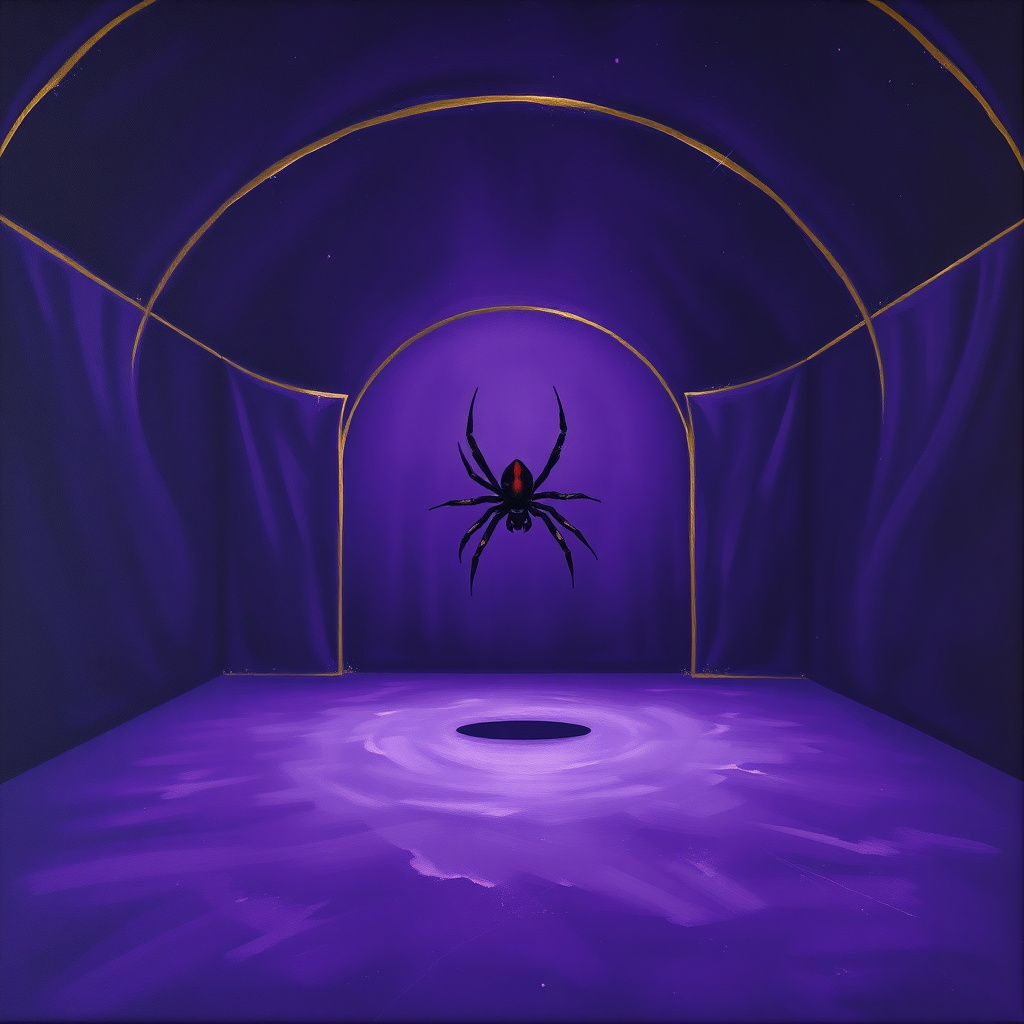
Spider Symbolism: Mythological and Folklore Interpretations
Explore the ancient cultural significance of the Spider. From Arachne's hubris to Anansi's wit, discover what this creature signifies in global mythology.
To encounter a Spider in the realm of sleep is to engage with one of the oldest archetypes in human history. Across disparate continents and millennia, this eight-legged architect has served as a bridge between the mortal and the divine. It is rarely viewed as a mere biological entity; instead, it functions as a vessel for stories regarding the very fabric of reality. Whether viewed as a divine weaver, a trickster deity, or a creature of tragic hubris, the Spider carries a weight of historical narrative that transcends simple biological observation, pulling the dreamer into a tapestry of ancient lore.
What does your Spider dream mean?
Which mythological archetype does the creature most closely resemble?
The Weaver of Fate and Cosmic Order
In many ancient cosmologies, the Spider is the primary architect of existence, responsible for spinning the threads that bind time and space. In various West African traditions, the trickster deity Anansi utilizes his cunning and his web to navigate the complexities of the spirit world and the earthly realm. Anansi is not merely a predator; he is a collector of stories, using the silk to capture wisdom and distribute it among humanity. This perspective frames the creature as a master of intellect and a keeper of oral history, where the web represents the interconnectedness of all living narratives. Similarly, in several Indigenous American mythologies, Grandmother Spider is revered as a creator figure who spun the universe into being, providing the structural blueprint for life itself. When one considers these cultural lenses, the presence of the creature suggests a confrontation with the fundamental mechanics of destiny. It is the hand that pulls the string, the eye that watches the pattern emerge from the void. Rather than focusing on individual agency, these myths emphasize the vast, inescapable geometry of a predestined universe. The web is the map of causality, a complex lattice where every vibration is felt across the entire structure. To witness this process is to see the mechanism of the universe in motion, a silent, rhythmic construction of reality that operates far beyond the comprehension of the fleeting, mortal observer. In this light, the creature is a sacred engineer, a being that exists at the intersection of chaos and structured design, turning the raw materials of the void into a coherent, albeit fragile, reality.
Hubris and the Divine Punishment of Arachne
The Greco-Roman tradition offers a starkly different narrative, focusing on the themes of mortal pride and the terrifying justice of the gods. The myth of Arachne serves as the quintessential cautionary tale regarding the Spider. A mortal weaver of unparalleled skill, Arachne dared to claim her talent surpassed that of Athena, the goddess of wisdom and crafts. Her subsequent transformation into a spider was not a mere change of form, but a divine decree—a permanent state of existence where she must continue her craft, but in a diminished, misunderstood capacity. This mythological lens views the creature as a symbol of the thin line between supreme excellence and catastrophic arrogance. The Spider becomes a living monument to the consequences of challenging the celestial hierarchy. In classical literature, the creature often evokes the tension between human creativity and the overwhelming power of the divine. It represents the artist who is consumed by their own obsession, or the individual whose pursuit of perfection leads to social or spiritual isolation. The web, in this context, is a symbol of the intricate traps laid by fate or the self-imposed cages of one's own making. It is a testament to the idea that skill, when divorced from humility, becomes a mechanism for one's own entrapment. The tragedy of Arachne is etched into every strand of silk, serving as a perennial reminder in Western art and thought that the structures we build to showcase our greatness can easily become the instruments of our eternal subjugation to the laws of the gods.
Ancestral Spirits and the Guardians of the Threshold
In several Eastern and Oceanic traditions, the Spider occupies a liminal space, acting as a guardian or a messenger between the world of the living and the realm of the ancestors. It is often seen as a creature that inhabits the 'in-between'—the corners of rooms, the edges of forests, and the thresholds of sacred spaces. In these cultural frameworks, the Spider is not an intruder, but a sentinel. Its ability to sense vibrations through its web makes it a perfect metaphor for the subtle communications of the spirit world. Some folklore suggests that the Spider's silk is a physical manifestation of ancestral connections, a way for the dead to remain tethered to the living through the invisible threads of lineage and memory. To encounter such a figure is to be reminded of the unseen lineages that support one's current existence. The creature acts as a gatekeeper of knowledge, requiring the seeker to navigate the complexities of their heritage before moving forward. This is not a predatory relationship, but a pedagogical one; the Spider demands patience and an awareness of the subtle movements in the environment. In these narratives, the creature is a symbol of the enduring continuity of the bloodline, weaving the past into the present. It serves as a reminder that no individual exists in isolation, but is part of a vast, multi-generational web of influence. The presence of the weaver signals a time for reflection on one's place within the grander ancestral design, acknowledging the silent, watchful eyes of those who came before, who continue to spin their influence through the fabric of the modern world.
Frequently Asked Questions
In a cultural context, the meaning shifts from personal psychology to collective myth. Depending on the tradition, it may represent a creator deity like Anansi, a symbol of divine punishment like Arachne, or an ancestral guardian that maintains the connections between the living and the dead through its intricate web.
...
A dream about a spider can be seen as an encounter with mythological archetypes. You might be interacting with the 'weaver of fate' who controls the cosmic design, or experiencing the cautionary tale of hubris, where the creature represents the intersection of human skill and divine law.
...