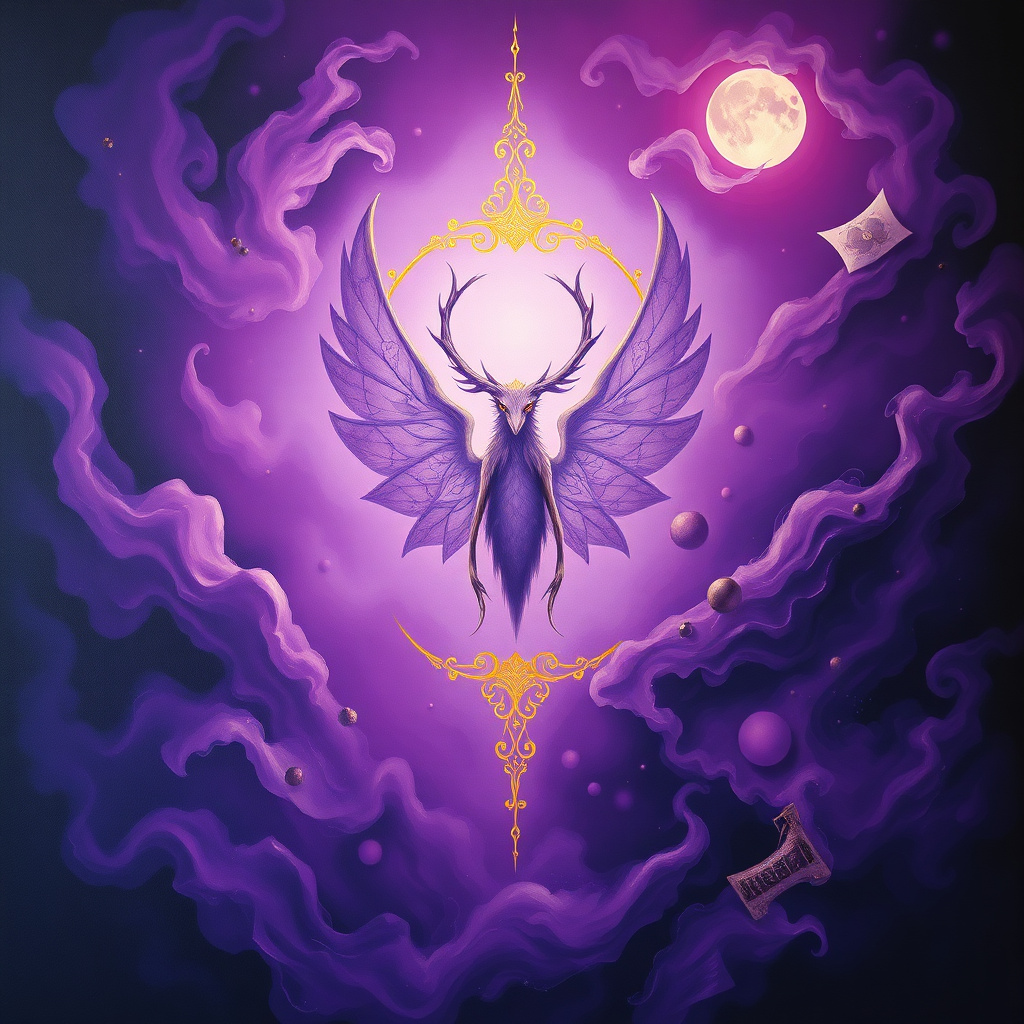
Creature Dream Meaning: A Historical Evolution of Interpretation
Explore the shifting historical meaning of the creature symbol, from ancient divine omens to modern neurological perspectives on the dreaming mind.
The appearance of a creature in a dream carries a weight that fluctuates depending on the era in which the dreamer resides. Far from being a static concept, the creature serves as a mirror to the prevailing intellectual and spiritual frameworks of human history. Whether viewed as a messenger from the gods, a moral warning, or a byproduct of neural firing, the creature is a vessel for the unknown. To understand its presence, one must look backward through the lineage of human thought to see how our perception of the 'other' has fundamentally altered.
What does your Creature dream mean?
Select the creature's primary physical state:
Classical Antiquity and the Prophetic Creature
In the landscapes of ancient Greek and Roman thought, a creature was rarely seen as a mere figment of the individual psyche. Instead, it was understood through the lens of divine intervention and external prophecy. Within the context of oneiromancy, a creature appearing in a dream was often interpreted as a manifestation of a deity or a specific omen sent to disrupt the course of human affairs. The creature was an objective reality that existed outside the dreamer, a herald of fate that demanded immediate ritualistic or civic response. If a dreamer encountered a hybrid creature, it was not analyzed for personal neuroses, but rather for its mythological correspondences. A lion-like being might signal a coming upheaval in a city-state, while a serpentine entity might suggest a specific curse or a blessing from a subterranean power. The focus was strictly outward; the creature was a bridge between the mortal realm and the divine architecture of the cosmos. Interpretations were communal and structured, relying on established mythological lexicons rather than subjective feeling. The creature functioned as a linguistic tool used by the gods to communicate destiny, making the dream a site of political and spiritual importance. To encounter a creature was to be addressed by the universe itself, necessitating a movement toward action—sacrifice, prayer, or preparation for war—rather than a movement toward introspection. The dreamer was a recipient of a cosmic signal, and the creature was the medium of that signal, carrying a message that was as much about the fate of kingdoms as it was about the individual's immediate future.
Medieval Omens and Victorian Spiritualism
As the centuries progressed, the interpretation of the creature underwent two distinct shifts. During the Medieval period, the creature was heavily codified by religious morality. It became a symbol of the grotesque, often representing the chaotic or the demonic. In this era, a creature was a visual manifestation of sin or the struggle between the soul and the profane. The creature was a cautionary figure, an externalization of the spiritual dangers lurking in the shadows of the world. The focus was on the creature's alignment with divine order; a monstrous form suggested a breach in the moral fabric. However, by the Victorian era, the creature underwent a radical transformation through the lens of spiritualism. As the industrial revolution reshaped the world, the creature began to be viewed as a potential medium for the afterlife. Rather than purely demonic, a creature could be a 'spirit form' or an ethereal visitor from a non-physical plane. This era introduced a sense of the uncanny, where the creature was a bridge to the 'other side,' reflecting the Victorian preoccupation with death, séances, and the unseen energies of the universe. While the Medieval view saw the creature as a warning of moral decay, the Victorian view saw it as a window into the transcendental. This period moved the creature away from the strictly communal religious dogma and toward a more individualized, albeit still supernatural, experience. The creature became a way to navigate the tension between the burgeoning scientific materialism of the age and a lingering, profound desire to connect with the ghosts of a departed world.
The Modern Neurological Paradigm
In the contemporary era, the interpretation of the creature has been largely stripped of its supernatural and prophetic veneers, replaced by the rigorous scrutiny of neuroscience and cognitive psychology. Today, a creature is viewed as a complex byproduct of the brain's internal processing. From a neurological standpoint, the appearance of a creature is often linked to the activation of the amygdala and the brain's threat-detection systems during REM sleep. Rather than a messenger from a god or a spirit from the beyond, the creature is seen as a 'biological hallucination'—a way for the brain to rehearse survival responses or process unresolved emotional stimuli. Modern theory suggests that the creature is a projection of the dreamer's own cognitive architecture, a way for the mind to categorize and externalize abstract fears, stressors, or sensory data. The 'meaning' is no longer found in a mythological dictionary, but in the dreamer's waking-life physiological and psychological state. The creature becomes a metaphor for the brain's attempt to make sense of chaotic neural firing. While this shift removes the sense of cosmic wonder found in antiquity, it offers a new kind of profound intimacy. The creature is no longer an external invader, but a deeply internal phenomenon. It is a mirror of the self's biological reality, a manifestation of the complex, often irrational, machinery that governs human consciousness. In this light, the creature is not a signal from the gods, but a signal from the self, reflecting the intricate dance between the conscious mind and the primal, subconscious structures that drive human behavior and survival.
Frequently Asked Questions
What is the dream about creature significance?
The significance of a dream about a creature depends heavily on the historical and psychological lens applied. Historically, it could range from a divine omen to a moral warning. In modern terms, it is often viewed as a projection of internal stressors or the brain's way of processing biological survival mechanisms.
How do I understand a creature dream meaning?
To understand a creature dream meaning, one should look beyond the form of the creature itself and consider the context of your current waking life. Are you experiencing high stress, or are you navigating a period of significant personal growth? The creature often acts as a container for emotions that lack a direct verbal expression.
Is a creature in a dream always a bad sign?
Not necessarily. While historical interpretations often focused on omens or demons, modern neuroscience views the creature as a neutral biological event. Its 'quality' is subjective; it can represent a challenge to be overcome or simply a manifestation of the brain's creative and complex neural activity during sleep.