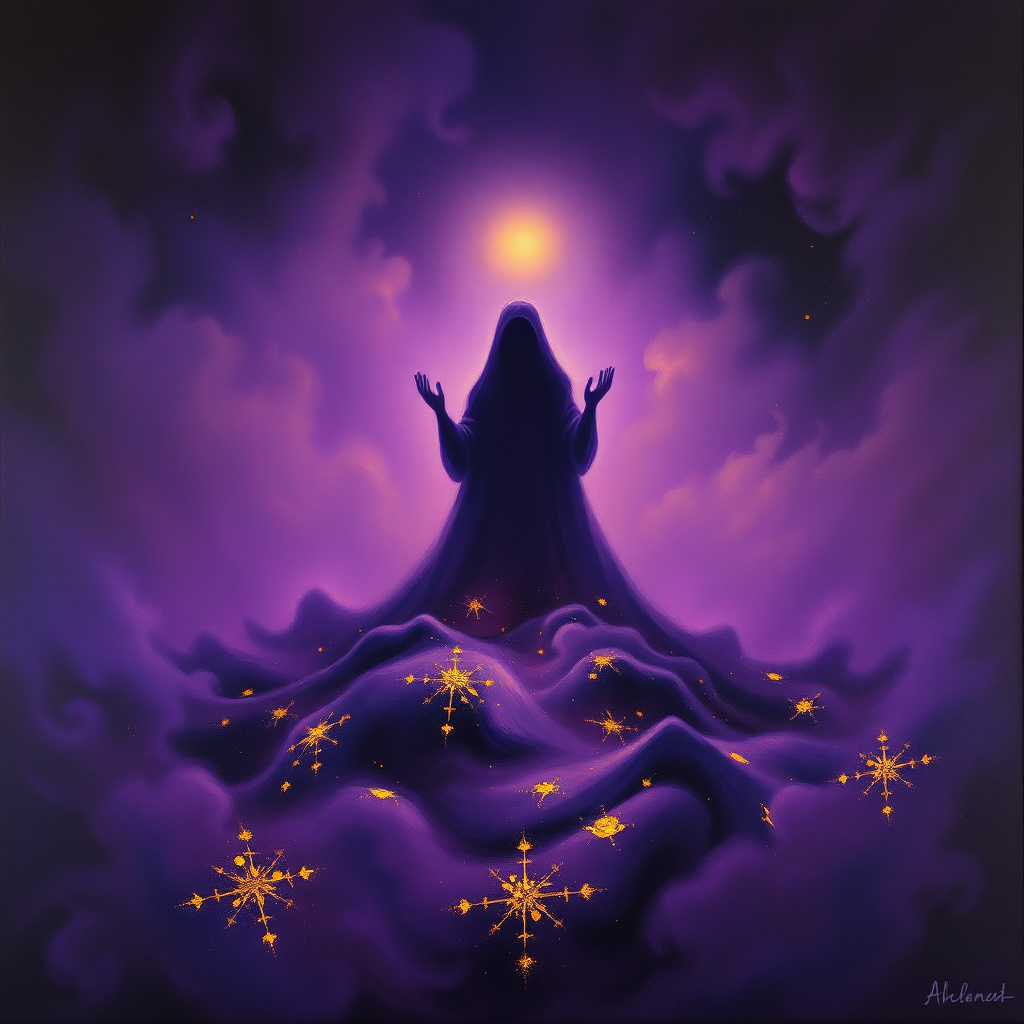
Shadow Dream Meaning: A Historical Evolution of Interpretation
Explore the historical evolution of the Shadow symbol, from ancient omens and Victorian spiritualism to modern neurological perspectives.
The Shadow has long served as a mirror to the human condition, yet its perceived nature has undergone radical shifts as human understanding of the cosmos and the mind evolved. To encounter a Shadow in a dream is to engage with a symbol that has migrated from the realm of divine warning to the frontiers of clinical psychology. By examining how this silhouette has been interpreted across distinct eras, we can better grasp why it remains one of the most persistent and evocative archetypes in the collective human experience.
What does your Shadow dream mean?
Identify the primary quality of the Shadow encountered:
Ancient Prophecy and the Medieval Omen
In the classical era, specifically within Greek and Roman thought, the Shadow was rarely viewed as an internal psychological construct. Instead, it functioned as an externalized manifestation of the divine or the underworld. To witness a Shadow in a nocturnal vision was often interpreted as a 'skia'—a spectral visitation or a precursor to a physical event. It was an omen, a thin veil between the mortal plane and the realm of Hades. The interpretation was strictly predictive; a Shadow was not something you carried within, but something that arrived to announce a change in fortune or the presence of a deity. During the Middle Ages, this externalized perspective hardened into a moralistic framework. The Shadow became synonymous with the 'umbra,' a spiritual weight associated with sin or the presence of demonic influence. Within the medieval worldview, the darkness was a battlefield between celestial light and terrestrial corruption. If a person experienced a Shadow, it was not an invitation to self-reflection, but a warning of spiritual peril or a sign of divine displeasure. The symbol was a messenger from the unseen world, acting as a boundary marker between the sanctity of the soul and the chaos of the abyss. Unlike modern views that seek to integrate the dark, the medieval mind sought to cast it out through ritual and prayer. The Shadow was a thief of light, a tangible evidence of the metaphysical struggle occurring beyond the visible spectrum. It was a signifier of what lay outside the self, rather than what lay hidden within the subconscious layers of the individual personality.
Victorian Spiritualism and the Emergence of the Ethereal
As the world transitioned into the 19th century, the interpretation of the Shadow underwent a fascinating metamorphosis driven by the rise of Spiritualism and the fascination with the unseen forces of the ether. The Victorian era moved away from the strictly religious dread of the Middle Ages, replacing it with a pseudo-scientific curiosity about the 'astral plane.' During this period, a Shadow was often interpreted as an 'ectoplasmic' residue or a lingering imprint of a departed soul. The focus shifted from the Shadow as a harbinger of doom to the Shadow as a medium of communication. It was seen as a bridge between the living and the dead, a silhouette of the soul that could be perceived by those with heightened sensitivity. This era introduced the idea that the Shadow possessed a form of energy or essence that could be studied through séances and occult practices. While the Shadow still held a sense of mystery, it was no longer purely a symbol of sin; it was a vessel for the afterlife. This period also saw the early stirrings of the tension between empirical science and the paranormal, where the Shadow occupied the liminal space between a biological phenomenon and a supernatural entity. The Victorian interpretation treated the Shadow as a ghostly artifact, a visual echo of a person's essence that remained after their physical presence had vanished. This shift marked the beginning of the transition from the Shadow as a divine warning to the Shadow as a phenomenon tied to the individual's personal history and the lingering traces of their existence in the cosmic fabric.
The Modern Shift: From Freud to Neuroscience
In the 20th and 21st centuries, the interpretation of the Shadow underwent its most profound revolution, moving inward from the cosmos and the ether into the architecture of the brain. With the advent of psychoanalysis, specifically the work of Carl Jung, the Shadow was internalized. It was no longer an external demon or a ghostly visitor, but a component of the psyche—the repository for all the qualities, impulses, and traits that the conscious ego rejects or fails to recognize. This 'psychological Shadow' turned the symbol into a tool for integration rather than a reason for exorcism. However, as the century progressed, even this psychological model was challenged by the rise of neuroscience. Today, the perception of a Shadow in a dream is often analyzed through the lens of neurobiology and sleep architecture. Modern researchers look at how the brain processes visual stimuli during REM sleep and how the amygdala—the brain's fear center—might project dark, indistinct shapes to simulate perceived threats. The interpretation has moved from the metaphysical to the biological; the Shadow is seen as a byproduct of the brain's attempt to make sense of fragmented sensory data or as a manifestation of cognitive dissonance. We now view the symbol through a dual lens: the Jungian perspective of personal growth through the confrontation of the unknown, and the neurological perspective of neural firing patterns and evolutionary survival mechanisms. The Shadow has come full circle, starting as an external force of the gods and ending as an internal mechanism of the mind, reflecting our evolving understanding of where the 'self' actually resides.
Frequently Asked Questions
What is the shadow dream meaning in a modern context?
In a modern context, the Shadow is primarily viewed through a psychological or neurological lens. It often represents the 'unconscious' aspects of your personality—traits or desires you may be suppressing. Alternatively, from a scientific perspective, it may be a manifestation of the brain processing visual ambiguity or fear responses during REM sleep.
How do I interpret a dream about shadow if it feels threatening?
If the Shadow feels threatening, historical and psychological interpretations suggest you are encountering something you have not yet reconciled. While ancient views might see this as an omen of external change, modern psychology suggests it is a call to acknowledge a suppressed part of your own identity that requires attention.
Is a shadow dream meaning always negative?
Not necessarily. While historically viewed as an omen of darkness or sin, modern interpretations emphasize that encountering the Shadow is a vital step toward psychological wholeness. The goal is not to avoid the Shadow, but to understand it, turning a perceived threat into a source of self-awareness and growth.