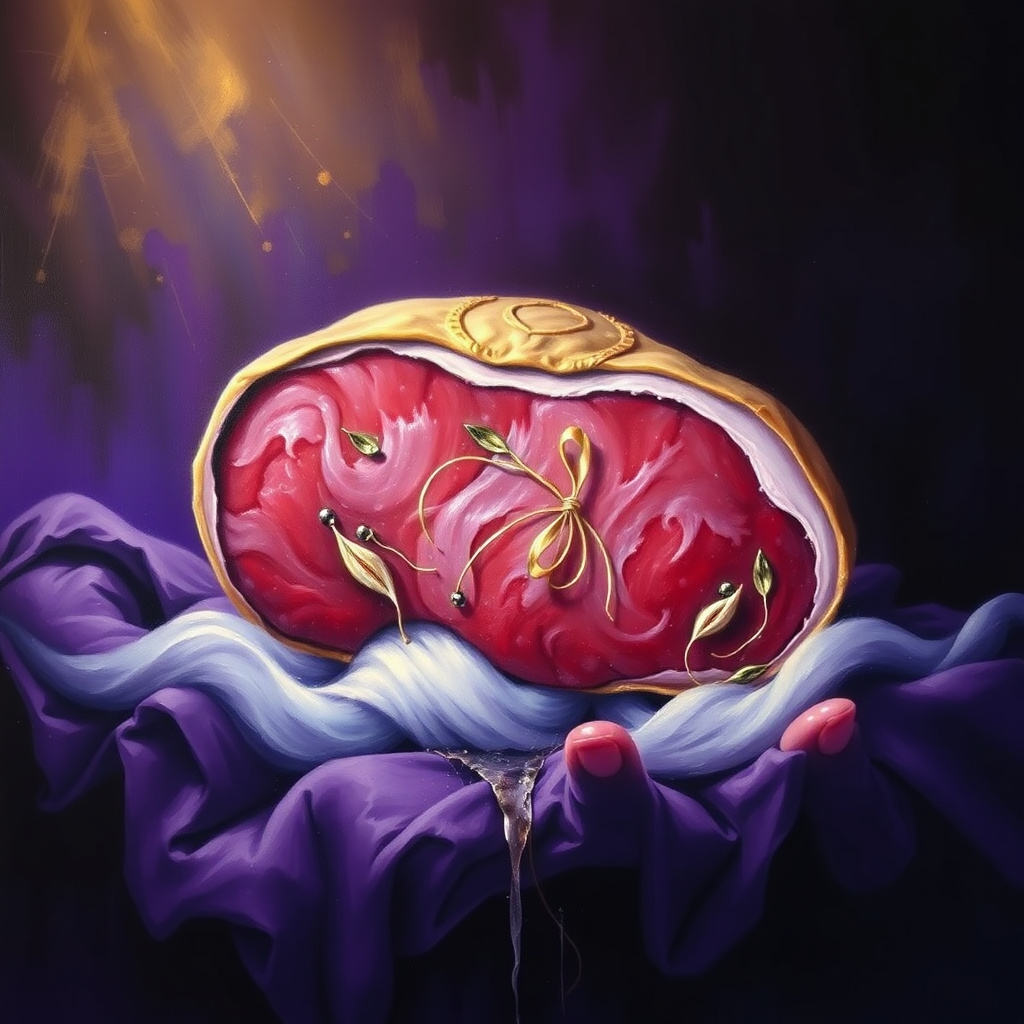
Meat Dream Meaning: Cultural and Mythological Interpretations
Explore the meat dream meaning through the lens of ancient mythology, sacred offerings, and cultural folklore. Discover the primal archetypes of meat.
To encounter meat in the theater of the mind is to step into the realm of the primordial. Across human history, meat has never been merely sustenance; it is the substance of sacrifice, the currency of ritual, and the physical manifestation of life force and mortality. From the blood-soaked altars of antiquity to the ancestral feasts of folklore, meat serves as a bridge between the mortal coil and the divine. Understanding this symbol requires looking past modern nutrition and into the heavy weight of cultural narrative and mythic tradition.
What does your Meat dream mean?
In which mythological realm does the meat appear?
The Sacrificial Offering and Divine Communion
In the tapestry of ancient religious practice, meat functions as the essential medium of communication between humanity and the gods. In many Mediterranean and Near Eastern traditions, the act of slaughter and the subsequent offering of meat were central to maintaining the cosmic order. To see meat in a cultural context is to witness the material of a covenant. When the ancients offered meat to the heavens, they were not merely disposing of excess; they were providing the gods with the very essence of vitality to ensure continued favor and seasonal stability. This ritualistic aspect suggests that meat carries an inherent weight of transaction. It is the substance that is traded for protection, rain, or victory in battle. In various liturgical histories, the preparation of meat is a sanctified process, separating the profane from the sacred through the precision of the blade and the heat of the flame. This perspective views meat as a vessel of potency. It represents the bridge between the physical world of the living and the ethereal realm of the divine. When one considers the mythological weight of this symbol, it is tied to the concept of 'life-debt'—the idea that life must be surrendered to sustain the spiritual equilibrium of the universe. Therefore, within a mythological framework, the presence of meat evokes the gravity of a pact, the solemnity of a temple rite, and the ancient necessity of returning vitality to the source from which all life flows. It is the heavy, tangible evidence of a cosmic exchange that has been practiced since the dawn of organized belief systems.
Ancestral Spirits and the Feast of the Dead
In many Eastern and indigenous traditions, meat is inextricably linked to the veneration of ancestors and the continuity of the lineage. In many Asian cultures, the ritual preparation of meat is a cornerstone of ancestral worship, where the essence of the food is offered to the spirits of the departed to nourish their presence in the afterlife. Here, meat acts as a tether between the living and the dead, a way to invite the wisdom and protection of those who came before. It is not a symbol of consumption, but of communion. The meat becomes a medium through which the lineage remains unbroken, a physical manifestation of the family's enduring strength and respect for the past. Furthermore, in various folklore traditions, meat is often associated with the 'shadow self' or the primal ancestors—the wild, untamed versions of our lineage that reside in the dark forests of myth. These archetypes represent the raw, unrefined power of the bloodline. To encounter meat through this lens is to face the visceral reality of one's heritage, including the primal instincts and the ancient survival mechanisms passed down through generations. It is the weight of the blood that connects the individual to a vast, historical continuum of survival and feast. This cultural narrative frames meat as a link in a chain, representing both the nourishment provided by the ancestors and the heavy responsibility of carrying their biological and spiritual legacy forward into the future, ensuring that the fire of the lineage never truly extinguishes.
The Hamlet Archetype and the Fragility of Flesh
In Western literary traditions and classical drama, meat often serves as a stark reminder of the 'memento mori'—the inevitability of decay and the frailty of the human condition. Drawing from the Shakespearean archetype, where characters often contemplate the 'unweeded garden' or the physical corruption of the body, meat represents the vulnerability of the mortal form. It is the substance that is subject to the passage of time, the rot of corruption, and the inevitability of the grave. In this literary sense, meat is stripped of its divinity and reduced to its most basic, transient state: mere matter. This perspective aligns with the philosophical inquiries of the Renaissance, where the distinction between the eternal soul and the decaying flesh was a central preoccupation. Meat becomes a symbol of the heavy, earthly burden of existence. It represents the visceral reality of being trapped in a body that is both a source of strength and a vessel of inevitable dissolution. In mythological tales of heroes and monsters, the consumption or presence of meat often marks a descent into the more animalistic or tragic aspects of the human experience. It highlights the tension between the lofty aspirations of the spirit and the grounded, often messy reality of the flesh. By viewing meat through this lens, we see it as a symbol of the paradox of life: the very substance that provides us with the strength to act is the same substance that marks our mortality and our eventual return to the earth.
Frequently Asked Questions
What is the meat dream meaning in a ritual sense?
In a ritualistic or mythological context, meat signifies a cosmic transaction or an offering. It represents the substance used to bridge the gap between the human and the divine, suggesting a period of negotiation with higher powers or the fulfillment of a spiritual pact or debt.
How does a dream about meat relate to ancestry?
Culturally, meat is often tied to ancestral veneration and the continuity of bloodlines. It can represent the nourishment received from one's lineage or the heavy, primal responsibility of carrying the biological and spiritual legacy of one's forebears through the generations.
Does meat represent mortality in folklore?
Yes, in many literary and folkloric traditions, meat serves as a 'memento mori.' It emphasizes the vulnerability of the physical body and the inevitability of decay, highlighting the tension between the enduring spirit and the transient, earthly nature of human flesh.