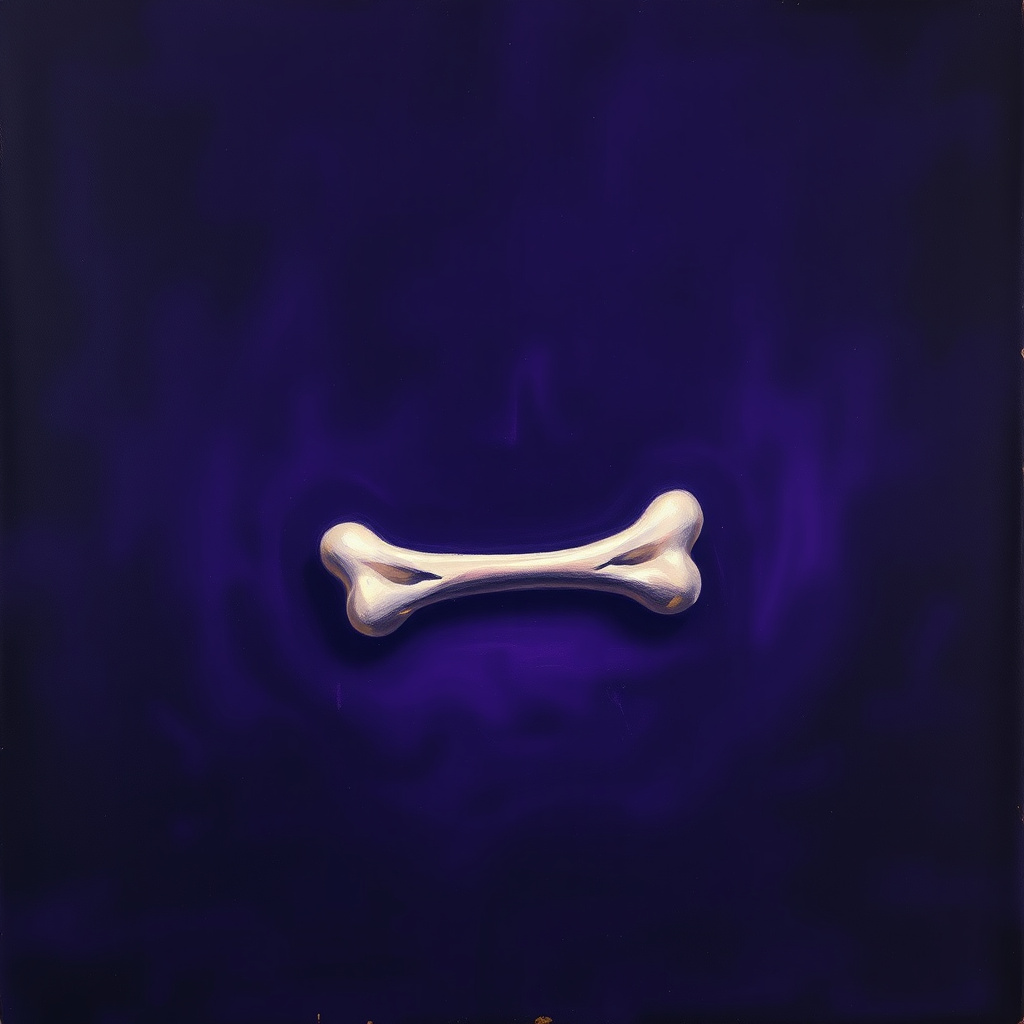
Bone Symbolism: Ancient Mythological and Ancestral Interpretations
Explore the Bone through the lens of folklore, religious myth, and ancestral spirits. Discover what this ancient relic signifies in cultural history.
In the tapestry of human history, the Bone serves as the ultimate testament to what survives the ravages of time. Unlike the fleeting flesh, the Bone is the enduring architecture of existence, a relic that bridges the gap between the mortal realm and the eternal. Across various civilizations, it has functioned as a vessel for ancestral spirits, a sacred relic in religious rites, and a memento mori in classical literature. To encounter a Bone is to engage with the fundamental remains of a lineage, invoking the weight of tradition, the sanctity of the dead, and the immutable laws of the cosmos.
What does your Bone dream mean?
What is the state of the Bone in your cultural vision?
The Ancestral Vessel and Spirit Communication
In many Eastern and indigenous traditions, the Bone is viewed not as a remnant of death, but as a conduit for the living connection to the lineage. In various Asian folkloric traditions, the concept of ancestor worship hinges on the idea that the essence of a forebear resides within their skeletal remains. The Bone acts as a physical anchor for a wandering spirit, allowing the deceased to influence the prosperity or misfortune of their descendants. To hold or witness a Bone in a cultural context is to stand at the threshold of the family tree, acknowledging that the bloodline is supported by the calcified strength of those who came before. This is not a matter of psychological memory, but of metaphysical continuity. In these narratives, the Bone is a sacred object that must be treated with ritualistic precision; to disrespect the Bone is to invite the wrath of an entire lineage. It is the hard, unyielding truth of one's origins. Furthermore, in some shamanic practices, the Bone is used as a tool to pierce the veil between worlds. By utilizing the skeletal remains of specific animals or venerated humans, the practitioner seeks to tap into the primal wisdom stored within the marrow. The Bone carries the 'memory' of the species or the individual, acting as a biological archive that transcends the decay of soft tissue. It is the structural truth that remains when all illusions of the physical world have been stripped away, serving as a permanent record of a soul's journey through the material plane.
Sacred Relics and Biblical Archetypes
Within the Abrahamic traditions and Western religious history, the Bone occupies a space of profound sanctity and terrifying judgment. In the Biblical narrative, bones are often linked to the concept of resurrection and the ultimate restoration of the divine order. The prophecy of the Valley of Dry Bones in the Book of Ezekiel presents the Bone as a symbol of dormant potential and the miraculous breath of life that can reanimate even the most desolate of circumstances. Here, the Bone is the fundamental unit of the human form, waiting for the divine command to assemble into a living whole. This religious lens frames the Bone as a signifier of the inevitable encounter with the divine will. In the hagiography of the saints, the 'relic'—often a small fragment of a Bone—is a source of immense spiritual power, capable of performing miracles and mediating between the saint and the faithful. This elevates the Bone from a mere biological scrap to a holy object of veneration, a piece of the sacred that has survived the transition from the earthly to the celestial. In the context of classical literature, particularly in the Shakespearean tradition, the Bone serves as a stark memento mori. The image of the skull or the fractured Bone is used to confront the audience with the vanity of earthly power and the leveling nature of mortality. It is a literary device that strips away the pretenses of kings and peasants alike, reducing the complexity of human ambition to the stark, white reality of the skeletal frame, reminding the observer that all worldly structures eventually collapse into dust and calcium.
Mythological Guardians and Primordial Foundations
In the creation myths of various global cultures, the Bone is frequently the foundational material from which the world or its inhabitants are constructed. From the Norse myths where the world is fashioned from the remains of the primordial giant Ymir, to various mythologies where the first humans are carved from bone, the substance represents the raw, elemental building blocks of reality. In these narratives, the Bone is not something that was once alive, but rather the primordial substance that possesses the inherent blueprint for life itself. It is the 'first matter' that provides structure to the chaos of the void. This mythological perspective treats the Bone as a symbol of cosmic order and the laws of physics and metaphysics that govern existence. It is the unshakeable foundation upon which the theater of life is built. In some folklore, particularly in Mediterranean and Middle Eastern myths, bones are also associated with the concept of 'the law'—the rigid, unbending rules that cannot be broken without catastrophic consequences. The hardness of the Bone mirrors the hardness of divine decree. To encounter a Bone in these mythic frameworks is to encounter the core of a mystery, the central axis around which the spinning world turns. It is the indestructible element that survives the Great Flood, the fire, and the end of an age. While flesh may succumb to the elements, the Bone remains as the silent witness to the passage of eons, acting as the enduring witness to the cyclical nature of creation, destruction, and rebirth that defines the mythological cosmos.
Frequently Asked Questions
What does a dream about bone sticking out mean in a cultural sense?
In many folklore traditions, a Bone sticking out from the flesh suggests a rupture in the protective barrier between the physical and spiritual worlds. It can be viewed as an ancestral truth or a hidden lineage attempting to assert itself forcefully, breaking through the 'skin' of current social pretenses to reveal a more primal, inescapable reality.
How do different religions view the Bone?
Religions vary from seeing the Bone as a sacred relic of saints that holds divine power, to a symbol of resurrection and the promise of eternal life in the face of death, to a memento mori that reminds the faithful of their mortality and the necessity of spiritual preparation.
Is the Bone a symbol of life or death in mythology?
In mythology, the Bone is paradoxically both. It is the remnant of death, yet it is also the essential, indestructible foundation required for life to exist. It represents the eternal structure that survives the transition from one state of being to another, serving as the bridge between the two.