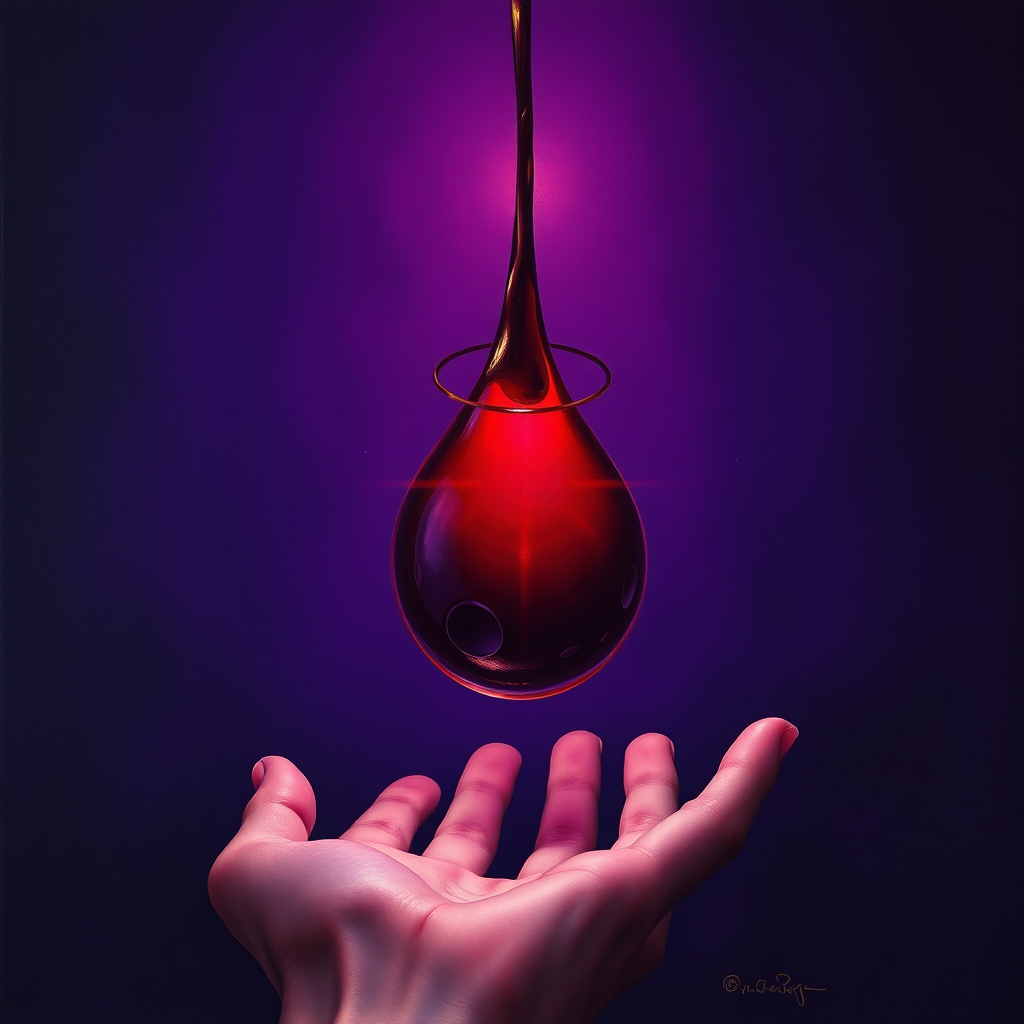
The Evolution of Blood in Dream Interpretation: From Omens to Neuroscience
Explore how the meaning of blood in dreams has shifted from ancient Greek prophecies and medieval omens to Victorian spiritualism and modern neuroscience.
To dream about blood is to engage with one of humanity's most primal biological realities. Throughout history, the perception of this fluid has undergone radical shifts, moving from the divine realm of prophecy into the structured halls of medicine and psychology. Understanding why you dream about blood requires more than looking at a single definition; it necessitates a chronological journey through how different eras have assigned weight to this vital substance. Whether viewed as a messenger from the gods or a byproduct of neural firing, the historical context of blood defines its interpretive value.
What does your Blood dream mean?
In which historical era does your current perspective of the dream align most?
Ancient Prophecy and the Divine Omen
In the classical era, particularly within Ancient Greek thought, dreams were not viewed as internal psychological constructs but as external communications from the divine. When an individual encountered blood in a dream, it was rarely interpreted as a reflection of their personal anxiety. Instead, it was treated as a portent or a 'theophany'—a manifestation of a deity's will. The sight of blood was often linked to the concept of 'miasma,' or ritual pollution, suggesting that the dreamer had inadvertently offended the gods or that a great upheaval was approaching the city-state. In this context, the fluid was a heavy, external force. If a dreamer saw blood flowing from a wound, it might be interpreted as a specific warning of impending conflict or a requirement for sacrificial atonement. The Greeks viewed the body as a vessel for the soul, and any disruption of the vital fluid in the dreamscape was a sign of cosmic imbalance. There was no distinction between the biological reality of the fluid and its spiritual significance; the two were inextricably linked. To dream about blood was to receive a message written in the language of life and death, demanding immediate ritualistic or civic action. This era focused on the 'what' of the future rather than the 'why' of the internal self. The fluid served as a bridge between the mortal realm and the capricious whims of the Olympians, acting as a terrifying but necessary signal that the natural order was under threat or required realignment through tradition and sacrifice.
Medieval Fatalism and Victorian Spiritualism
As human history transitioned through the Middle Ages and into the Victorian era, the interpretation of blood shifted from cosmic omens to moral and spiritual signifiers. During the medieval period, the presence of blood in dreams was heavily filtered through religious dogma. It became a symbol of the covenant, martyrdom, or the weight of sin. A dream about blood might be parsed through the lens of penance, where the fluid represented the necessity of purification or the stains of transgression. The focus moved from the Greek 'external fate' to a more 'internalized morality.' By the time the Victorian era emerged, the interpretation took another turn through the lens of spiritualism and early psycho-analysis. In the Victorian mindset, blood was often linked to the 'vital force' or the 'ether.' Spiritualists believed that seeing blood in dreams could indicate a connection to the afterlife or a thinning of the veil between worlds. However, this was often shadowed by a fascination with the macabre and the biological. The Victorian era sat at a strange crossroads where the romanticized notion of 'life essence' met an increasing obsession with anatomy and hygiene. A dream about blood might be interpreted as a sign of repressed vitality or a spiritual crisis, reflecting the era's tension between strict social decorum and the burgeoning understanding of the body's hidden, pulsing realities. This period bridged the gap between the purely supernatural and the burgeoning scientific, treating the fluid as a medium through which both the soul and the hidden impulses of the psyche could communicate their presence to the conscious mind.
The Modern Shift Toward Neuroscience and Biological Processing
In the contemporary era, the interpretation of blood in dreams has undergone a profound secularization. We have moved away from the idea of blood as a messenger from gods or spirits, moving instead toward the frameworks of neuroscience and cognitive psychology. Today, when people ask why they dream about blood, the primary lens is often one of biological processing and emotional regulation. Modern neuroscience suggests that dreams are often the brain's attempt to consolidate memories or process intense physiological states. A dream about blood might be interpreted as the brain's response to actual physical sensations—such as a drop in blood pressure, a minor injury, or even hormonal fluctuations—translated into a visual metaphor. From a psychological standpoint, the fluid is no longer a divine omen but a cognitive symbol of high-arousal states. It is seen as a manifestation of the 'fight or flight' response or a neural representation of intense emotional stress. The focus is entirely on the internal mechanics of the observer. We look at how the brain uses the imagery of blood to categorize concepts of vulnerability, vitality, or loss. The 'meaning' is found in the dreamer's current neurological and emotional landscape rather than in an external destiny. This era treats the dream as a data point in a complex system of biological feedback. While we have lost the sense of the 'sacred' that characterized the ancient world, we have gained a granular understanding of how the brain utilizes such high-impact imagery to signal the importance of certain waking-life stressors, treating the dream as a sophisticated biological diagnostic tool.
Frequently Asked Questions
What does it mean when you dream about blood all over your bed?
Historically, this would be seen as a sign of a major life disruption or a loss of sanctity in one's private life. In modern psychological terms, the bed represents your most vulnerable, private space. Seeing blood there often reflects an intrusion of intense stress or a feeling of being emotionally 'exposed' in your most intimate or restful environments.
What does it mean to dream about blood coming out of your mouth?
From a historical perspective, this was often viewed as a warning regarding one's words or a loss of vital speech. Today, it is frequently interpreted as a sign of suppressed communication or the feeling that something 'toxic' or painful is being expressed, reflecting a struggle to process difficult truths or spoken conflicts.
Why did I dream about blood clots?
In ancient views, this might suggest a blockage in one's destiny or a spiritual stagnation. In a modern context, blood clots in a dream are often interpreted as symbols of emotional or mental 'stagnation'—areas in your life where progress has stopped, or where suppressed emotions are causing a sense of internal pressure or obstruction.