You dreamed you couldn't move.
Your body wasn't broken. Your mind was showing you where you feel powerless.
Quick interpretation
Which one sounds like your dream?
Tap the one that resonates most
Select one to see what your subconscious might be saying
Recently decoded on SlumberVision
“I woke up but couldn't move, and a dark figure stood at the foot of my bed just watching me silently”
AI reading excerpt
“The watching figure represents a part of yourself observing your vulnerability. It isn't threatening you — it's waiting for you to acknowledge feelings you've been suppressing during waking hours.”
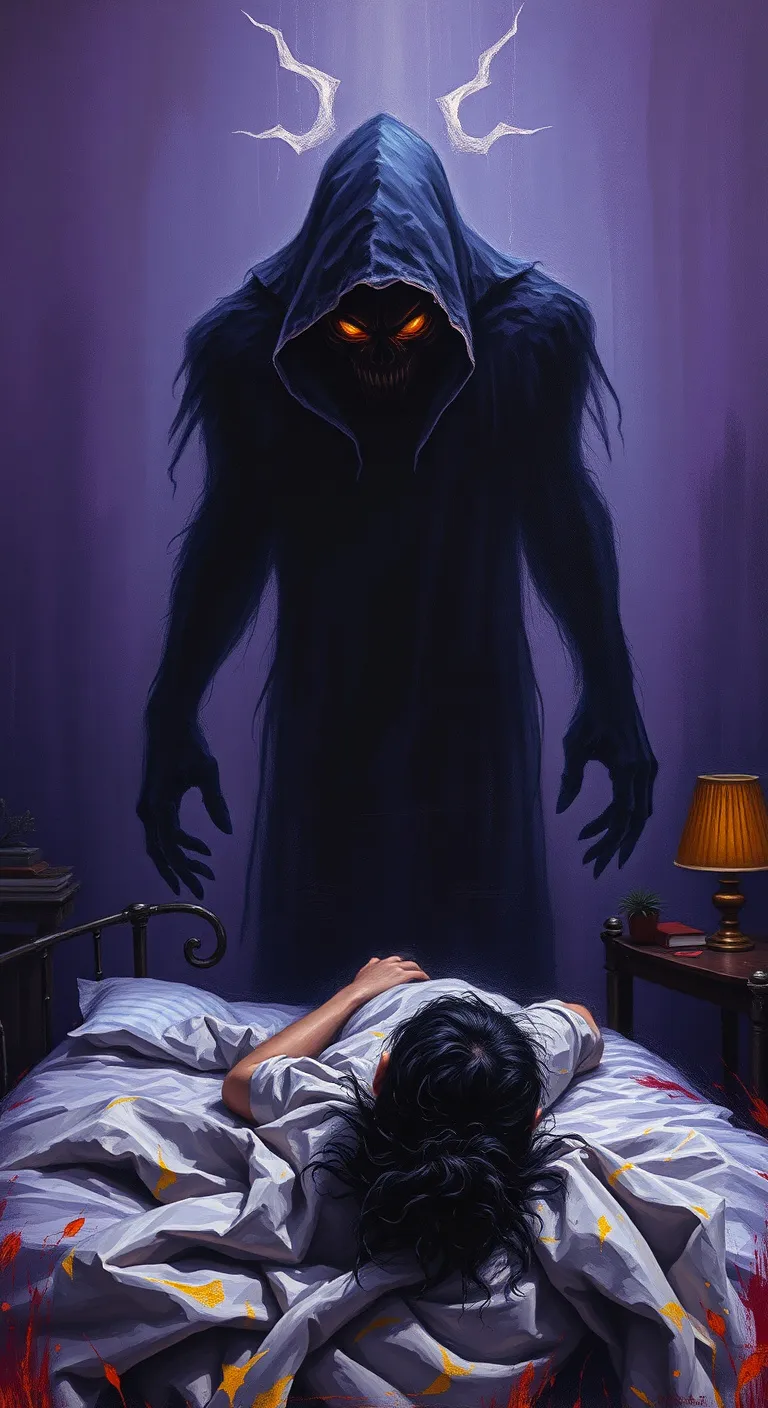
Sleep Paralysis
“Paralysis dreams freeze your body to force your mind to confront what it's been running from.”
Everything in your free reading
Symbol analysis
Ancient + modern interpretation of your dream symbols
6-axis emotional map
Visual radar of your emotional & intuitive state
Unique dream card
AI-generated artwork capturing your dream's essence
Life guidance
What your dream suggests about your waking life
Sample Dream Card
“Paralysis dreams freeze your body to force your mind to confront what it's been running from.”
Three traditions, one reading
2nd Century
Artemidorus
Oneirocritica
20th Century
Freud & Jung
Modern Psychology
2,500 Years
Zhou Gong
Eastern Dream Classic
Why this dream keeps coming back
Sleep paralysis dreams recur because they sit at the intersection of neuroscience and psychology. Physiologically, during REM sleep your body enters atonia — voluntary muscles are temporarily paralyzed to prevent you from acting out dreams. Sometimes consciousness returns before atonia releases, creating the terrifying experience of being awake but immobile. Psychologically, Jung interpreted paralysis as the ego's encounter with overwhelming unconscious material — you freeze because what you're facing is too large to fight or flee. These episodes recur during periods of high stress, disrupted sleep schedules, or when you're suppressing emotions that demand expression. The repetition means the underlying pressure hasn't been relieved.
What your subconscious is processing
Your subconscious uses paralysis to process feelings of powerlessness, suppression, and the inability to act in situations that demand response. Zhou Gong's tradition associates being frozen in place with obstacles that require patience rather than force. Modern sleep science confirms that sleep paralysis frequency increases with sleep deprivation, irregular schedules, and elevated stress hormones. The shadow figures many people report aren't supernatural — they're hypnagogic hallucinations created by a brain caught between sleep and wakefulness. Psychologically, these figures often represent the Shadow archetype: repressed fears, anger, or desires that feel threatening when confronted directly. The paralysis forces you to face what you'd normally avoid.
The patterns most people miss
People focus on the terror, but the most important question is: what were you trying to do when you became paralyzed? Trying to scream suggests suppressed communication. Trying to run suggests avoidance being forcibly confronted. Trying to reach for someone suggests connection anxiety. Freud connected paralysis dreams to repressed desires — the body freezes because the mind forbids the action it wants to take. The most missed insight: sleep paralysis episodes often decrease when people learn to recognize them as harmless. This cognitive shift mirrors the psychological lesson — powerlessness loses its grip when you stop fighting it. The shadow figure dissolves when you understand it's a part of yourself asking for acknowledgment, not an external threat.
Sample from a real reading
Your reading might say...
“Your paralysis dream reflects a situation where you feel unable to act despite knowing what needs to be done. The frozen state is your subconscious dramatizing the gap between awareness and action — the solution begins with acknowledging what's holding you back.”
“Your dream froze you in place because something needed you to stop running and start looking. The shadow was never the enemy.”
Takes 30 seconds · No sign up · 3 free readings per day
Other common dreams