You dreamed you looked into a mirror.
What stared back wasn't your face. It was the self you've been avoiding.
Quick interpretation
Which one sounds like your dream?
Tap the one that resonates most
Select one to see what your subconscious might be saying
Recently decoded on SlumberVision
“I looked in the mirror and my reflection was smiling even though I was crying, and it felt deeply unsettling”
AI reading excerpt
“The disconnect between your emotion and your reflection reveals a pattern of masking pain with a positive exterior. Your subconscious is flagging the cost of performing happiness.”
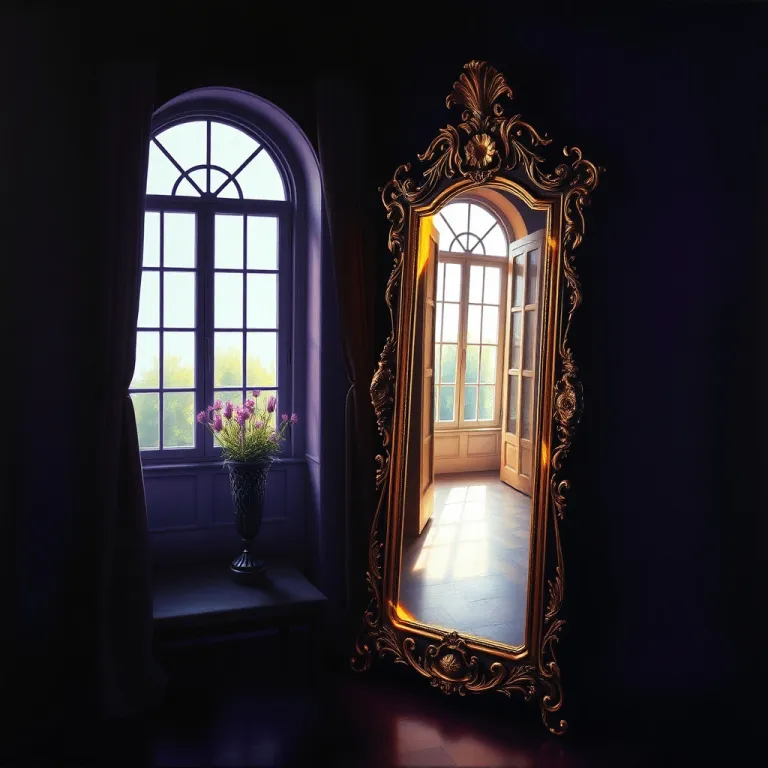
Mirrors & Reflections
“Mirror dreams show you the face behind the face — the one only your subconscious knows.”
Everything in your free reading
Symbol analysis
Ancient + modern interpretation of your dream symbols
6-axis emotional map
Visual radar of your emotional & intuitive state
Unique dream card
AI-generated artwork capturing your dream's essence
Life guidance
What your dream suggests about your waking life
Sample Dream Card
“Mirror dreams show you the face behind the face — the one only your subconscious knows.”
Three traditions, one reading
2nd Century
Artemidorus
Oneirocritica
20th Century
Freud & Jung
Modern Psychology
2,500 Years
Zhou Gong
Eastern Dream Classic
Why this dream keeps coming back
Mirror dreams recur when there's a growing gap between how you present yourself and who you actually are. The mirror is one of the most powerful dream symbols across cultures — it represents self-confrontation. Jung saw mirror encounters as meetings with the Shadow, the hidden aspects of personality you've repressed or denied. These dreams intensify during identity shifts: adolescence, midlife, after trauma, or when living inauthentically. The recurring nature means your unconscious is insisting on self-examination. If the reflection is distorted, your self-image is unreliable. If it's clear, you're approaching integration. Your psyche uses the mirror because it's the one object designed purely for seeing yourself.
What your subconscious is processing
Your subconscious uses mirror imagery to process self-perception, authenticity, and hidden truths. Zhou Gong's dream tradition associates mirrors with clarity and the revelation of deception — either self-deception or others' dishonesty. Neuroscience has shown that self-referential processing intensifies during REM sleep, and mirror dreams often occur during these peaks. A cracked mirror suggests fragmented self-image. A foggy mirror means you can't see yourself clearly right now. Seeing someone else's face means you're identifying with qualities that aren't originally yours. The most unsettling mirror dreams — where your reflection moves independently — signal that your unconscious self is acting autonomously, with its own agenda.
The patterns most people miss
Most people focus on what they looked like in the mirror, but the emotional reaction is far more diagnostic. Freud connected mirror dreams to narcissism and the development of ego — but modern researchers see them as sophisticated self-assessment tools. The most missed detail: the frame of the mirror. An ornate frame suggests self-image shaped by cultural expectations. No frame means raw, unfiltered self-perception. Bathroom mirrors indicate private self-assessment. Public mirrors suggest concern about social image. The most revealing pattern is what you did after looking — did you turn away, lean closer, or break the mirror? Each response maps to a different relationship with self-knowledge: avoidance, curiosity, or rejection.
Sample from a real reading
Your reading might say...
“Your mirror dream is an invitation to self-honesty. The unfamiliar reflection represents qualities you possess but haven't acknowledged — your subconscious is asking you to integrate what you've been keeping in the dark.”
“Your dream held up that mirror because something in you is ready to be seen. The question is whether you'll look.”
Takes 30 seconds · No sign up · 3 free readings per day
Other common dreams