You dreamed of a place beyond — luminous, peaceful, and impossibly real.
Afterlife dreams aren't about death. They're about what your soul is reaching toward in life.
Quick interpretation
Which one sounds like your dream?
Tap the one that resonates most
Select one to see what your subconscious might be saying
Recently decoded on SlumberVision
“I walked through clouds into a warm golden room where everyone I'd ever lost was sitting together smiling at me”
AI reading excerpt
“Your dreaming mind gathered every severed connection into one space — this is your psyche's way of affirming that love persists even when physical presence doesn't.”
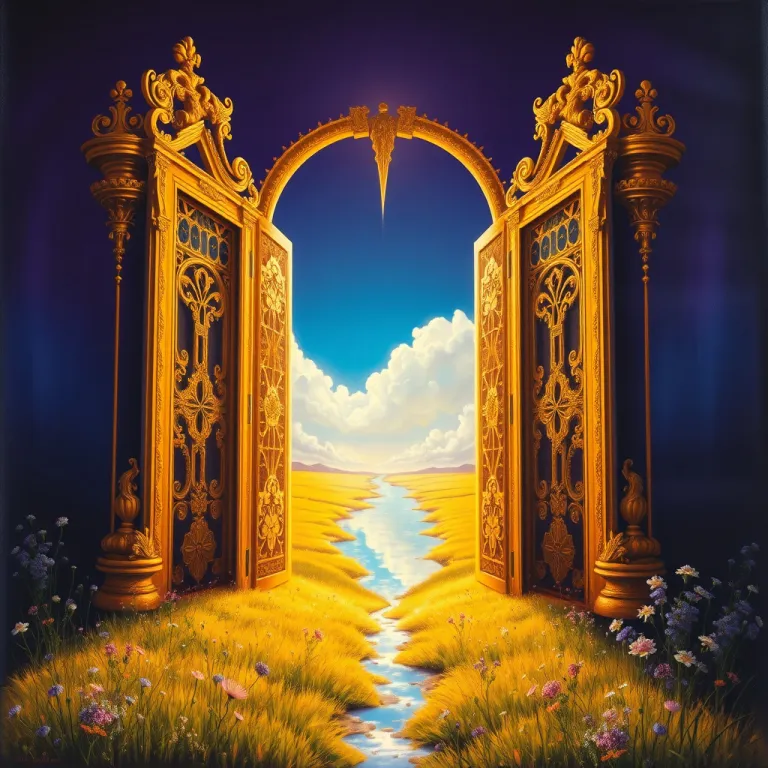
Heaven & the Afterlife
“You glimpsed paradise — and it looked exactly like what you've been missing.”
Everything in your free reading
Symbol analysis
Ancient + modern interpretation of your dream symbols
6-axis emotional map
Visual radar of your emotional & intuitive state
Unique dream card
AI-generated artwork capturing your dream's essence
Life guidance
What your dream suggests about your waking life
Sample Dream Card
“You glimpsed paradise — and it looked exactly like what you've been missing.”
Three traditions, one reading
2nd Century
Artemidorus
Oneirocritica
20th Century
Freud & Jung
Modern Psychology
2,500 Years
Zhou Gong
Eastern Dream Classic
Why this dream keeps coming back
Heaven and afterlife dreams typically emerge during three psychological windows: after losing someone you love, during existential questioning, and at moments of profound peace that your waking life cannot sustain. Your dreaming mind constructs these transcendent spaces using your deepest templates for comfort, beauty, and belonging. Jung described such dreams as encounters with the Self — the archetype of wholeness that feels divine because it represents total psychological integration. These dreams recur because they address your most fundamental questions: Does existence have meaning? Will connection survive loss? Is peace actually possible? Your unconscious keeps answering yes.
What your subconscious is processing
When your dreaming mind builds heaven, it reveals your personal definition of fulfillment. Some people dream of golden cities — achievement and grandeur. Others dream of gardens — growth and natural harmony. Many dream of reunion with the deceased — love as the thing that transcends everything. Psychologically, these dreams serve as emotional regulation during grief or existential anxiety. Research on near-death and transcendent dream experiences shows they produce lasting positive effects on mood and death anxiety, regardless of the dreamer's religious beliefs. Your brain is not predicting the afterlife; it's showing you what wholeness looks like so you can pursue it while alive.
The patterns most people miss
The specific version of heaven your mind constructs is deeply personal and diagnostically rich. If your afterlife is populated with people, your primary need is connection. If it's a landscape of impossible beauty, you're craving awe and wonder in daily life. If a deceased loved one appears with a message, your grief process is actively working — the dream is part of healing, not a departure from reality. Many dreamers overlook the boundary moment: how did you arrive? Walking through a door suggests willing transition. Sudden transport suggests longing for instant relief. Being guided suggests you trust that support exists even when you can't see it. The entry point reveals your relationship with hope itself.
Sample from a real reading
Your reading might say...
“Your dream of a sunlit garden where your grandmother waited for you reflects active grief processing combined with deep comfort-seeking. Your psyche chose this specific setting because gardens represent ongoing growth — your relationship with her memory is still evolving, not frozen.”
“Your dream showed you heaven — built from everything your heart knows it needs.”
Takes 30 seconds · No sign up · 3 free readings per day
Other common dreams