You dreamed about a car accident. — and your mind hit the brakes for you.
When life speeds up, your dream may stage a crash to demand your attention.
Quick interpretation
Which one sounds like your dream?
Tap the one that resonates most
Select one to see what your subconscious might be saying
Recently decoded on SlumberVision
““I dreamed I was merging onto a highway, but everyone sped up and I got sideswiped. I kept apologizing even though it wasn’t my fault.””
AI reading excerpt
“Your dream highlights a pattern of self-blame when you’re pressured to keep up with other people’s pace. The sideswipe suggests a boundary breach—your life is asking you to merge on your terms, not through apology.”
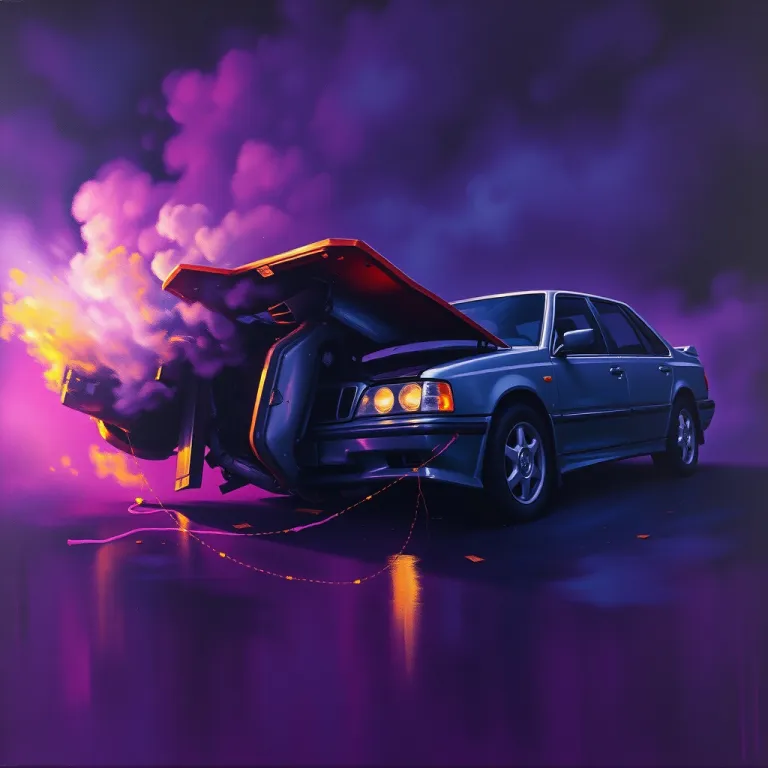
Car Accidents
“Sometimes the wreck is just your psyche trying to save the driver.”
Everything in your free reading
Symbol analysis
Ancient + modern interpretation of your dream symbols
6-axis emotional map
Visual radar of your emotional & intuitive state
Unique dream card
AI-generated artwork capturing your dream's essence
Life guidance
What your dream suggests about your waking life
Sample Dream Card
“Sometimes the wreck is just your psyche trying to save the driver.”
Three traditions, one reading
2nd Century
Artemidorus
Oneirocritica
20th Century
Freud & Jung
Modern Psychology
2,500 Years
Zhou Gong
Eastern Dream Classic
Why this dream keeps coming back
Car accident dreams often repeat when you’re living in “autopilot” mode—doing a lot, deciding fast, and quietly ignoring the cost. Psychologically, cars commonly symbolize agency: how you move through life, how much control you feel, and whether your direction is truly yours. Jung wrote about vehicles as expressions of the ego’s steering—your conscious plan—while the crash reveals where that plan is outpaced by anxiety, fatigue, or conflicting needs. In older symbolic traditions like Zhou Gong’s dream interpretations, travel mishaps were read as warnings to adjust timing and choices, not as predictions. Your brain isn’t forecasting literal danger; it’s rehearsing consequences so you’ll slow down, set boundaries, or change course. The “impact” is your nervous system saying: something is too much, too fast, or not aligned.
What your subconscious is processing
Details matter because your dream builds the crash from your real pressure points. Were you driving, or were you a passenger? If you were driving, you may feel responsible for outcomes you can’t fully control—work performance, family stability, a relationship’s direction. If you were a passenger, you might be adapting to someone else’s choices, or to a timeline you didn’t set. Did the brakes fail, did visibility vanish, or did you look away for “just a second”? Those versions often mirror burnout, unclear priorities, or divided attention. Who did you hit—or who hit you? That can point to a boundary problem: resentment, people-pleasing, or fear of confrontation. Ask yourself: Where do you feel rushed lately? Who sets the pace? What decision have you been avoiding because it feels irreversible?
The patterns most people miss
This dream frequently appears at transitions: starting a new job, moving, ending a relationship, becoming a caregiver, or taking on debt—any time your “life speed” increases while your inner capacity stays the same. The overlooked clue is emotional tone. If the dream is pure terror, you may be ignoring a genuine overload signal—too many responsibilities, not enough recovery. If it’s strangely numb or matter-of-fact, you might be emotionally dissociating to keep functioning, which can look like productivity but feel like emptiness. If you feel guilt after the crash, you may be carrying an unrealistic standard of perfection, believing one mistake will ruin everything. If relief comes after impact, the dream might be confessing a hidden wish to stop—an unconscious longing for permission to rest, change lanes, or let someone else drive for a while.
Sample from a real reading
Your reading might say...
“You were driving at night, and the road narrowed without warning—your mind’s way of showing how your options feel tighter lately. The crash didn’t mean you’re doomed; it meant you’re tired of holding everything together alone. This dream is urging you to reduce your load, ask for support, and make one clear decision that restores your sense of control.”
“Your dream remembered you before you remembered yourself. If it staged a crash, it’s asking you to choose safety, not speed.”
Takes 30 seconds · No sign up · 3 free readings per day
Other common dreams