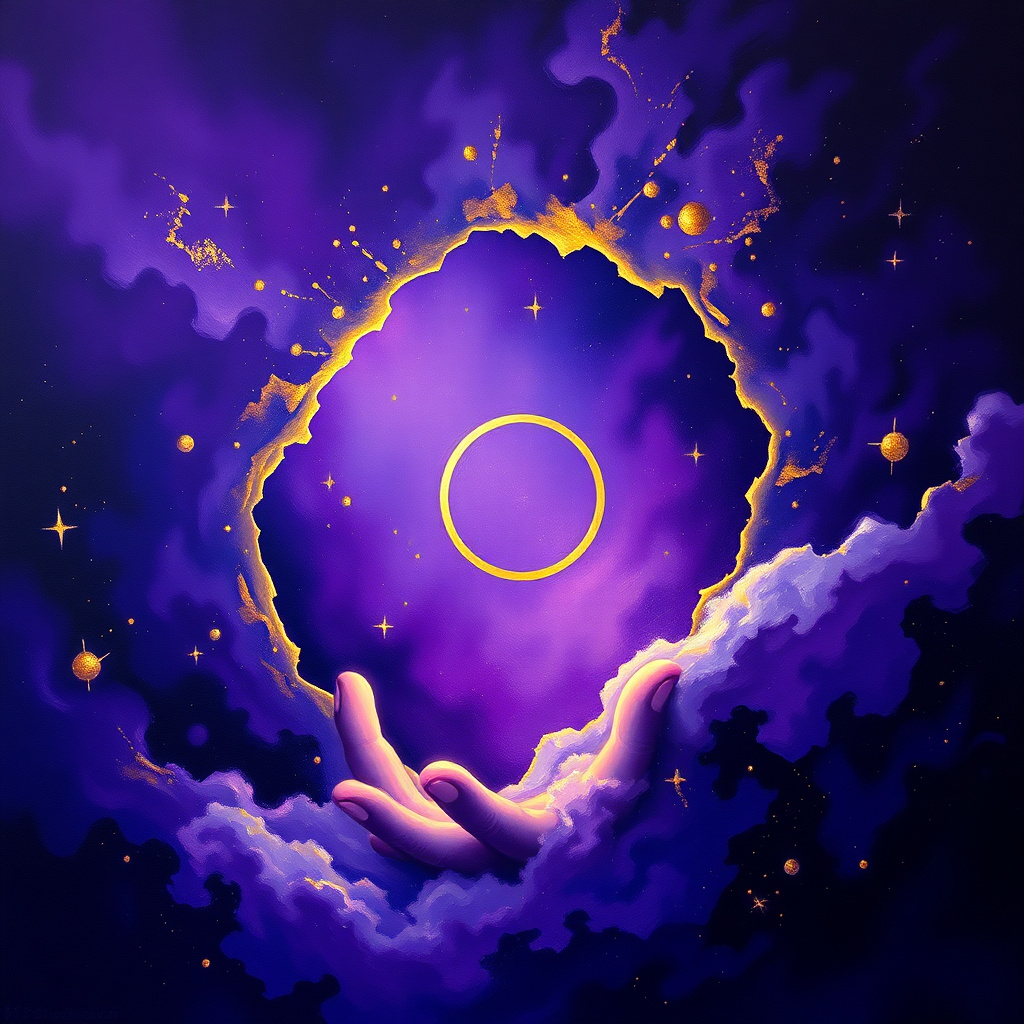
Open: A Jungian Analysis of Psychic Thresholds
Explore the psychological depth of the 'Open' symbol through a Jungian lens, examining its role in individuation, the shadow, and the collective unconscious.
In the architecture of the psyche, the concept of being 'Open' transcends mere accessibility; it functions as a fundamental state of psychic permeability. From a Jungian perspective, an 'Open' state signifies the breakdown of ego-defenses to allow for the influx of archetypal energies. It is the moment where the boundary between the ego-consciousness and the vast, uncharted territories of the unconscious becomes porous. Rather than a simple physical state, 'Open' represents a structural readiness within the psyche to encounter the contents of the collective unconscious and engage in the arduous process of individuation.
What does your Open dream mean?
In what psychic dimension is the 'Open' state manifesting?
The Permeability of the Ego and the Shadow
When the psyche manifests an 'Open' quality, it often signals a shift in the relationship between the ego and the Shadow. In Jungian theory, the Shadow comprises the repressed, unacknowledged aspects of the personality that the ego deems unacceptable. An 'Open' state suggests that the rigid psychic barriers constructed to keep these elements at bay are thinning. This is not a sign of vulnerability in the colloquial sense, but rather a necessary stage of psychological maturation. For the ego to expand, it must allow the Shadow to be seen and integrated, rather than merely suppressed. If the psyche is closed, the Shadow remains a chaotic, destructive force lurking in the periphery. However, an 'Open' psychic structure permits a controlled encounter with these darker complexities. This openness facilitates the movement of energy from the unconscious into the light of consciousness, allowing the individual to recognize their own multifaceted nature. In waking life, this is analogous to a scholar moving from dogmatic certainty to an investigative stance, where they are willing to admit the limits of their current knowledge to accommodate new, perhaps unsettling, truths. The 'Open' symbol thus serves as a marker of the ego's willingness to relinquish its totalizing control in favor of a more complex, integrated reality. It is the prerequisite for the alchemy of the soul, where the leaden weight of repression is transmuted into the gold of self-awareness. Without this permeability, the psyche remains a closed system, prone to stagnation and the eventual eruption of repressed material in neurotic outbursts.
Anima/Animus and the Openness to the Other
The 'Open' symbol also functions as a bridge to the Anima or Animus—the contra-sexual archetypes that mediate between the ego and the collective unconscious. Jung posited that these figures act as gatekeepers to the deeper layers of the soul. An 'Open' psychic state indicates that the individual is becoming receptive to the qualities embodied by these archetypes. For the masculine psyche, this might manifest as an openness to the emotional, intuitive, and relational depths of the Anima. For the feminine, it involves an openness to the logical, assertive, and directional aspects of the Animus. This openness is critical for the process of individuation, as it allows the individual to achieve a psychic equilibrium that transcends gendered social conditioning. In a sociological context, this mirrors the movement from a monolithic identity to one that can empathize with and integrate 'the other.' When the psyche is 'Open,' it is no longer a fortress defending a singular identity; it becomes a vessel capable of containing the dialectical tension between opposites. This tension is the engine of growth. An 'Open' state facilitates the 'conjunction of opposites' (coniunctio), a central concept in Jungian alchemy where the fragmented parts of the self are brought into a sacred union. This is not a merging that erases individuality, but a synthesis that creates a more profound, holistic sense of being. Therefore, the symbol of 'Open' acts as a psychic invitation to engage with the internal archetypal figures that drive our deepest motivations and most profound creative impulses, moving us toward a state of psychological wholeness.
Individuation and the Collective Unconscious
At its most expansive level, the 'Open' symbol relates to the individual's connection to the collective unconscious. Jung described the collective unconscious as a layer of the psyche shared by all humanity, populated by universal archetypes. To be 'Open' in this sense is to move beyond the personal history and the immediate egoic concerns into the realm of the primordial. This is the ultimate goal of individuation: to become a unique, integrated individual while simultaneously being deeply rooted in the universal human experience. An 'Open' state signifies that the psychic gates are receptive to the archetypal currents that flow through the collective. This can be a daunting experience, as it involves encountering forces that are much larger than the self, such as the Hero, the Mother, or the Wise Old Man. In the context of human development, this is similar to a philosopher realizing that their personal philosophy is but a single thread in a vast, ancient tapestry of thought. The 'Open' symbol indicates a transition from a provincial, ego-centered existence to a cosmic, archetype-centered existence. It marks the moment where the individual ceases to fight the currents of the unconscious and begins to navigate them. This requires a high degree of psychic strength; to be 'Open' to the collective unconscious is to risk being overwhelmed by its vastness. Yet, it is only through this radical receptivity that the individual can achieve true autonomy. By acknowledging the universal patterns that govern their life, they are no longer merely reacting to external stimuli but are consciously participating in the unfolding of their own destiny within the larger framework of human existence.