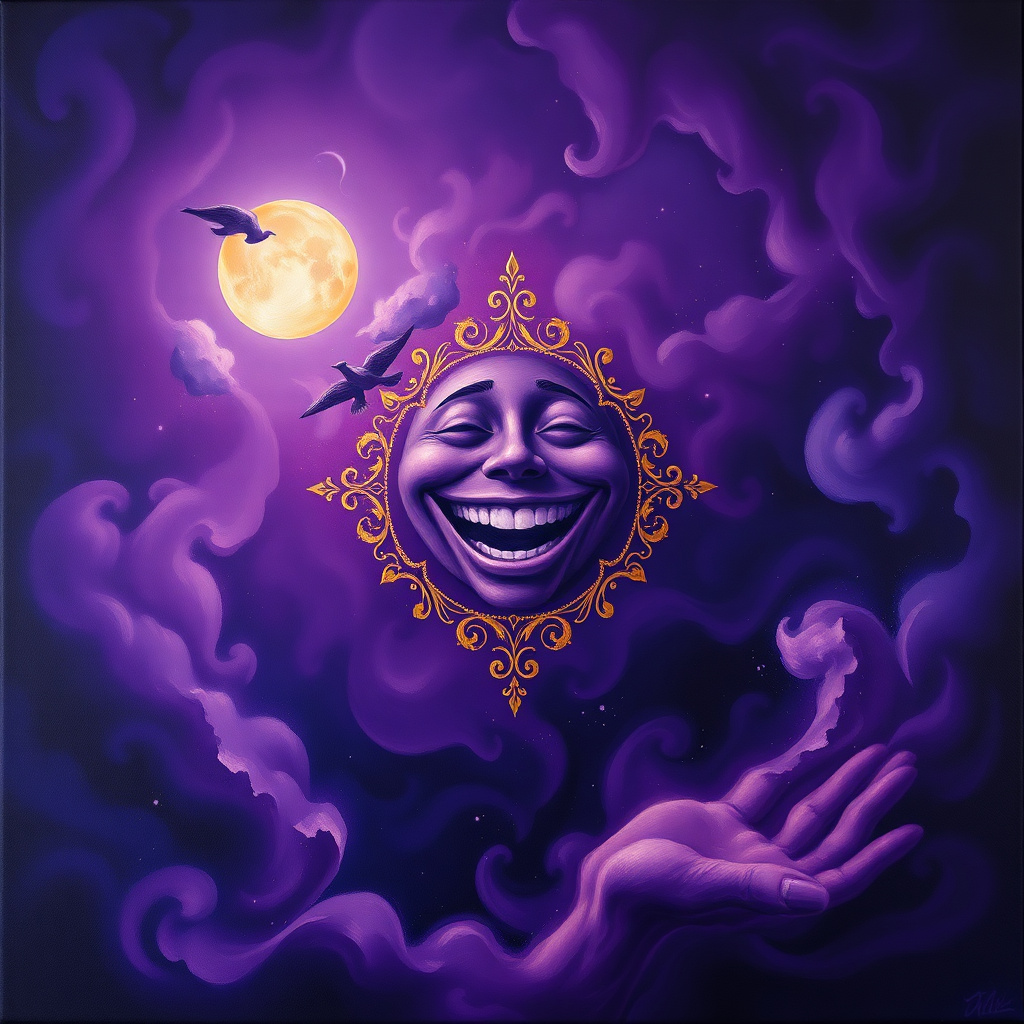
Laugh Dream Meaning: A Scenario-Walkthrough Guide
Explore the different layers of a laugh dream meaning through specific scenarios. Understand why you laugh, hear laughter, or feel mocked in your sleep.
Encountering a laugh during sleep can trigger a wide spectrum of waking emotions, ranging from pure euphoria to profound social anxiety. Unlike a steady emotional state, a laugh is an active, kinetic event. It is a burst of energy that disrupts the silence of the subconscious. To understand why this sound or action appears, one must look past the simple definition of humor and examine the mechanics of the scenario. Whether the laughter is directed at you, shared with you, or erupting from within, the context determines if it signals psychological release or a defensive mechanism.
What does your Laugh dream mean?
How did the laughter feel during the dream?
Scenarios of Being the Target of Laughter
When you find yourself in a dream where others are laughing at you, the experience often mirrors social friction found in professional or academic environments. Imagine a scenario where you are standing on a stage or in a crowded room, and a group of strangers begins to laugh uncontrollably at your presence. In waking life, this sensation often correlates with 'imposter syndrome' or the fear of being exposed as inadequate. The laughter acts as a sonic representation of judgment. It is not necessarily about a joke, but about the perceived gap between your public persona and your private insecurities. If the laughter feels mocking or sharp, it may reflect a period of heightened self-consciousness where you feel your mistakes are being amplified by your social circle. Conversely, if the laughter is muffled or distant, it might suggest a feeling of being misunderstood or sidelined in your community. This scenario forces a confrontation with how much weight you grant to the opinions of others. In sociology, laughter is often used as a tool for social policing; in your dream, this manifests as a way to process feelings of exclusion or the dread of losing face. You are not reacting to a funny event, but to the vibration of perceived ridicule. Analyzing the intensity of the laughter helps distinguish between a temporary lapse in confidence and a deeper, more systemic feeling of being alienated from your peer groups. The more piercing the sound, the more urgent the need to address your internal critic.
Scenarios of Uncontrollable Self-Laughter
Experiencing a scenario where you cannot stop laughing—even when the situation is serious or tragic—shifts the focus from social judgment to internal tension release. Imagine dreaming of a somber event, such as a funeral or a formal ceremony, and suddenly being gripped by an unstoppable, hysterical laugh. In psychological theory, this is often viewed as a 'release valve' for accumulated pressure. If you are carrying heavy responsibilities or suppressed stress in your waking life, the dream uses the laugh to vent that kinetic energy. It is a biological absurdity: the body performing a high-energy, joyous action in a low-energy, somber setting. This mismatch highlights a disconnect between your conscious attempts to remain composed and your subconscious need to break free from constraints. Another variation is the 'manic laugh,' where the laughter feels hollow or disconnected from any actual humor. This scenario often occurs when you feel you are 'faking it' in your daily life, maintaining a smile while feeling internally depleted. The laugh becomes a mask that has grown too heavy to wear. Instead of representing happiness, this uncontrollable laughter represents a loss of control over your own emotional regulation. It is the psyche's way of signaling that the current level of emotional suppression is no longer sustainable. When you laugh at something that isn't funny in a dream, you are witnessing the friction between your external requirements and your internal reality, using the absurdity of laughter to bridge the gap.
Scenarios of Shared or Echoing Laughter
A scenario involving shared laughter, where you are laughing in unison with a friend, partner, or a crowd, typically points toward social cohesion or the desire for belonging. Imagine walking through a vibrant, sunlit landscape where every person you pass shares a brief, joyous laugh with you. This scenario reflects a sense of synchronicity and alignment with your environment. In the context of interpersonal relationships, this suggests a period of high rapport and emotional resonance. You are 'in tune' with the frequency of those around you. However, if the laughter is echoing—where you hear a laugh and it repeats infinitely through a hallway or a forest—the meaning shifts toward the concept of repetition and obsession. An echoing laugh can feel disorienting, representing a thought or a social interaction that you cannot stop ruminating on. It is a loop of sound that refuses to resolve. If the laughter is coming from an inanimate object or an empty room, it suggests a feeling of loneliness or the haunting presence of a past joy that no longer feels accessible. While shared laughter is a tool for bonding in human culture, the dream version uses it to measure your level of connection to the world. Are you a participant in the joy, or are you merely a witness to a sound that you cannot join? This distinction helps clarify whether your current social state is one of genuine integration or one of isolated observation.
Frequently Asked Questions
What is the laugh dream meaning when it feels scary?
When laughter feels menacing or 'wrong,' it usually indicates a perceived threat to your social standing or a fear of being mocked. In waking life, this often translates to anxiety regarding how others perceive your competence. The fear stems from the unpredictability of the sound and the sense that you are being targeted by an unseen force or a group of judgmental observers.
I keep having a dream about laugh sessions with friends. Why?
Frequent dreams of laughing with friends typically reflect your current level of social satisfaction and emotional safety. It suggests that your subconscious views these relationships as vital sources of relief and connection. It is a positive indicator of psychological well-being and social integration, highlighting a healthy 'release valve' for your daily stresses through communal joy.
What does it mean if I am laughing alone in a dream?
Laughing alone in a dream can be interpreted in two ways: as a moment of profound self-sufficiency and inner peace, or as a sign of emotional isolation. If the laughter feels liberating, you are likely finding joy in your own company. If it feels manic or lonely, it may suggest that you feel unable to share your true emotions with the people in your waking life.