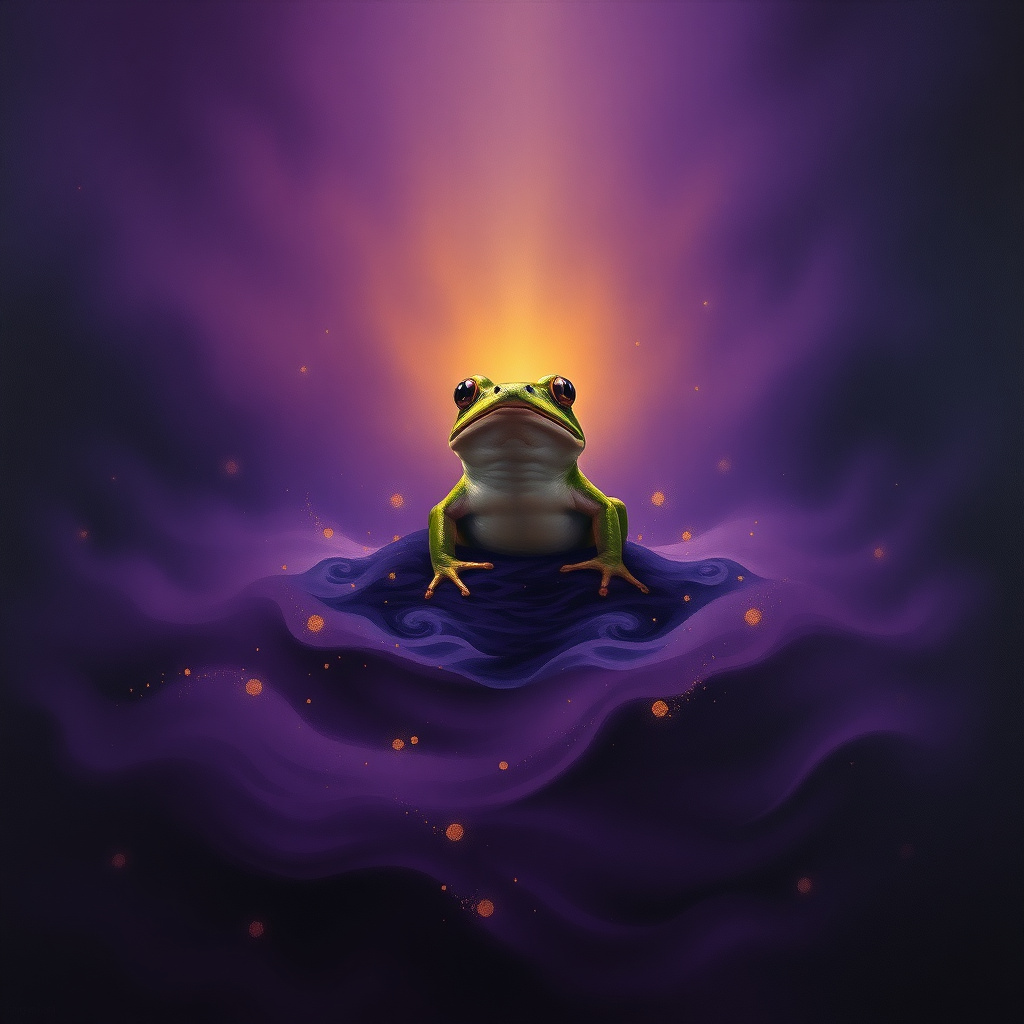
Frog Dream Meaning: A Historical Evolution of Interpretation
Explore the shifting meanings of dreaming about a frog, from ancient Greek prophecies and medieval omens to Victorian spiritualism and modern neuroscience.
To dream about a frog is to encounter a symbol that has migrated through the collective human psyche for millennia. Rather than possessing a fixed definition, the frog has functioned as a mirror for the era's prevailing intellectual framework. What one century viewed as a divine messenger or a dark omen, another viewed as a spiritual medium or a mere firing of neurons. Understanding the frog in a dream requires tracing this chronological lineage, moving from the externalized gods of antiquity to the internalized biological processes of the contemporary mind.
What does your Frog dream mean?
What was the primary lens of your dream's atmosphere?
Ancient Prophecy and Medieval Omens
In the classical era, specifically within the framework of Greek and Roman dream interpretation, a frog was rarely viewed as a personal psychological quirk. Instead, it was perceived as a cosmic signifier. If a dreamer encountered a frog, it was often interpreted through the lens of environmental or civic shifts. In some Mediterranean traditions, the presence of these amphibians in a dream was linked to the abundance of water or the arrival of seasonal shifts that would dictate the success of a harvest. It was an externalized communication from the gods regarding the physical world. The dream was a window into the state of the polis or the health of the land. As we transitioned into the medieval period, the interpretation of the frog underwent a significant moralistic shift. The religious hegemony of the Middle Ages recontextualized the creature. No longer a simple indicator of seasonal change, the frog became an emblem of the grotesque or the untamed. In the dream-logic of the medieval mind, the amphibian’s ability to exist in both water and mud made it a subject of suspicion. It was frequently associated with the damp, shadowy corners of the world, often used in hagiographies or moral allegories to represent the base, unrefined aspects of earthly existence. To dream of a frog in this era was to engage with a symbol of the tension between the celestial and the terrestrial. It was a warning of spiritual stagnation or an encounter with the murky, unwashed elements of the mortal coil, reflecting a worldview where every animal served as a moral lesson or a divine warning sent to guide the soul through a landscape of sin and sanctity.
Victorian Spiritualism and the Ethereal Medium
By the 19th century, the interpretation of the frog shifted away from both the civic prophecy of the ancients and the moralistic warnings of the medievals. The Victorian era, characterized by a fascination with the unseen and the burgeoning movement of spiritualism, viewed the frog through a more nuanced, almost ghostly lens. During this period, the concept of the 'astral plane' and communication with the departed began to permeate the popular consciousness. A dream about a frog was often interpreted as a sign of a subtle, rhythmic connection to the unseen forces of nature or the spirit world. The frog’s unique life cycle—moving from a submerged state to an air-breathing one—became a metaphor for the soul's journey or the thinning of the veil between worlds. Rather than being seen as a creature of 'mud' in a derogatory sense, the Victorian dreamer might have seen the frog as a creature of dualities, capable of navigating different planes of existence. This era saw the symbol move closer to the individual's internal experience, though it remained tethered to the idea of external spiritual guidance. The frog was a quiet, pulsing presence in the dreamscape, representing the subtle vibrations of the universe that the sensitive individual could perceive. It was an emblem of the liminal space—the threshold between the known and the unknown. This period laid the groundwork for viewing the frog not as a sign of public harvest or personal sin, but as a marker of the individual's sensitivity to the spiritual currents that flowed beneath the surface of mundane reality, signaling a readiness to perceive the hidden rhythms of the cosmos.
Modern Neuroscience and the Biological Interior
In the contemporary era, the interpretation of a dream about a frog has undergone its most radical transformation: the inward turn of neuroscience. We have largely abandoned the idea of the frog as a messenger from gods, spirits, or moral authorities. Instead, modern psychological and neurological frameworks view the frog as a byproduct of the brain's complex architecture. When a dreamer experiences a frog, current theory suggests it is a manifestation of the 'threat detection' systems or the 'associative networks' within the subconscious. The frog is no longer an external entity; it is a cognitive construct. The brain uses the image of the frog to process latent emotions, sensory memories, or unresolved tensions. For instance, the suddenness of a frog's movement might be the brain's way of simulating a startle response or a sudden realization. The focus has shifted from 'what is the frog telling me about the world?' to 'what is my brain doing with this specific visual archetype?' We now analyze the frog through the lens of neuroplasticity and emotional regulation. A dream about a frog is seen as the mind's attempt to categorize and integrate disparate pieces of information or to express an affective state through symbolic imagery. The 'meaning' is found in the individual's unique neural associations rather than in a universal cultural lexicon. This shift represents the final stage of the symbol's journey: from a divine herald in the ancient world, to a moral omen in the medieval, to a spiritual medium in the Victorian, and finally to a biological signal in the modern age. The frog has been internalized, becoming a piece of the very machinery that perceives it.
Frequently Asked Questions
What does it mean when you dream about frog chasing me?
From a modern neurological perspective, being chased by a frog in a dream often reflects the brain's processing of an avoidance mechanism. It suggests that your subconscious is utilizing a startling, unexpected stimulus to mirror a sense of being pursued by a minor but persistent stressor or an unresolved task in your waking life.
What is the meaning of a dream about frog in the house?
Historically, finding a frog in a domestic setting has shifted from a medieval omen of unwelcome spiritual presence to a modern psychological indicator of boundary issues. It may represent an intrusion of 'wild' or unmanaged emotions into your private, structured mental space, signaling a need to address internal disruptions.
What does it mean to dream about frog biting me?
A dream about a frog biting you can be interpreted as a sudden 'wake-up call' from the subconscious. While ancient interpretations might have seen this as a sharp warning from the gods, modern cognitive theory views it as the brain's way of using a sharp, tactile sensation to draw attention to a specific emotional discomfort.
What does it mean if I dream about frog jumping on me?
Experiencing a frog jumping on you in a dream often relates to the suddenness of life's changes. While Victorian spiritualists might have seen this as a sudden contact with the ethereal, today we view it as the mind simulating a sudden shift in sensory input or a reaction to an unexpected development in your personal environment.