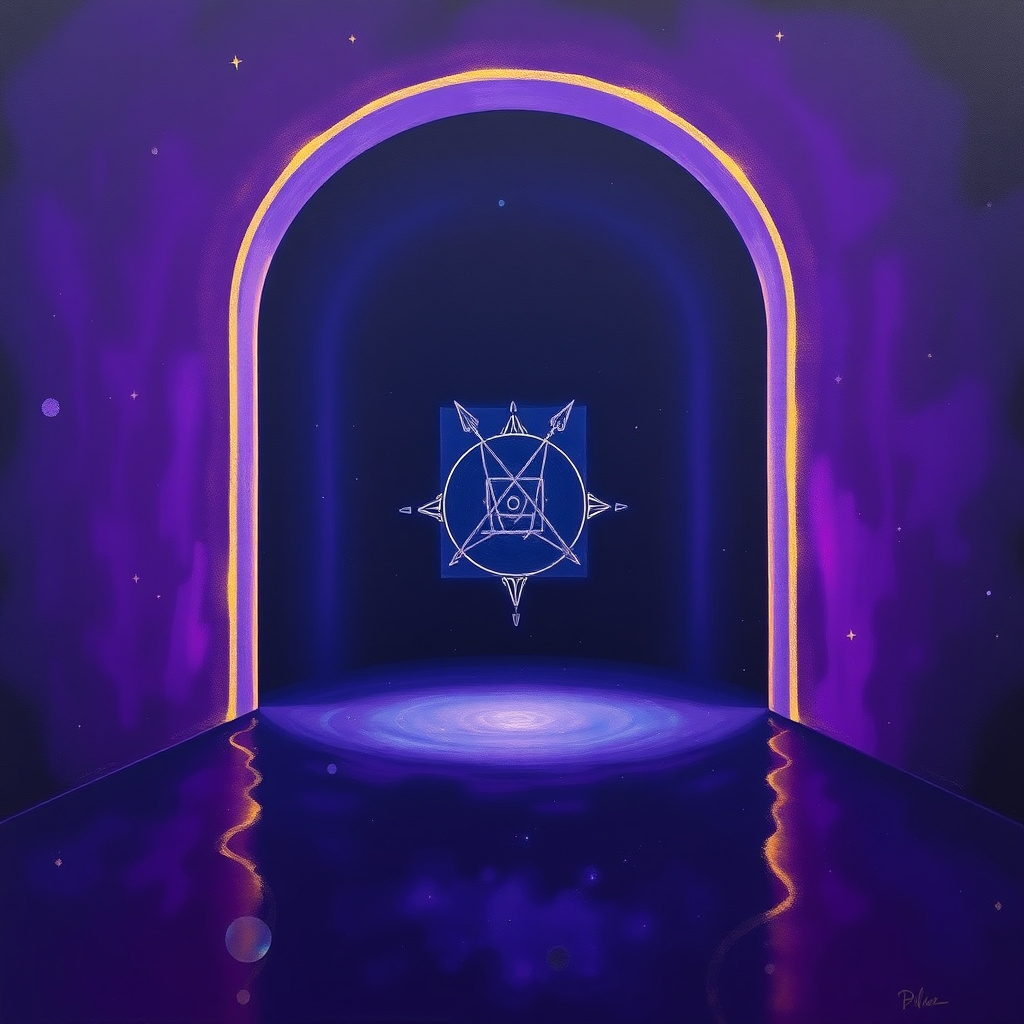
Dream: The Jungian Architecture of the Unconscious
Explore the psychological significance of the Dream through a Jungian lens, examining its role in individuation, the shadow, and the collective unconscious.
In the realm of analytical psychology, the Dream is not merely a byproduct of neurological firing or a fragmented narrative; it is a primary psychic structure. Carl Jung posited that the Dream serves as a bridge between the conscious ego and the vast, subterranean depths of the unconscious. Rather than a random sequence of images, the Dream is a teleological process—a movement toward wholeness. It functions as a compensatory mechanism, attempting to restore psychic equilibrium by presenting the ego with the neglected or suppressed elements of the total personality, facilitating the lifelong journey of individuation.
What does your Dream dream mean?
Which psychic layer is most active in your experience?
The Compensatory Function and Ego-Integration
From a Jungian perspective, the Dream operates as a corrective lens for the conscious mind. When an individual maintains a one-sided or overly rigid attitude in their waking-life—perhaps through excessive rationalism or social conformity—the Dream emerges to provide the necessary counterbalance. This is known as the compensatory function. If the ego is too inflated, the Dream may present imagery of insignificance or vulnerability to restore psychic stability. This process is essential for preventing psychological stagnation. The Dream does not seek to confuse the dreamer but to reveal the blind spots created by the conscious persona. By presenting these neglected truths, the psyche attempts to reintegrate fragmented parts of the self into a more unified whole. This tension between the conscious intention and the unconscious revelation is the engine of psychological growth. Without this constant feedback loop, the individual risks becoming a hollow shell, disconnected from the vital energies of the deeper psyche. Therefore, the Dream acts as a diagnostic tool, measuring the distance between who the person believes they are and the actual complexity of their inner reality. It is the psyche's way of asserting its autonomy against the ego's attempts at total control, ensuring that the totality of the personality is accounted for in the pursuit of a balanced existence.
Archetypal Manifestations and the Collective Unconscious
Beyond the personal history of the individual lies the collective unconscious, a reservoir of shared human experiences and evolutionary patterns. Within the Dream, this layer manifests through archetypes—primordial patterns such as the Shadow, the Anima, or the Animus. These are not mere symbols but autonomous psychic structures that influence human behavior and perception. When a Dream features an encounter with a powerful, unknown figure, it may represent an encounter with the Shadow—the repository of all qualities the ego has deemed unacceptable. Similarly, the appearance of a profound guide or a contrasting gendered figure often signals the presence of the Anima or Animus, acting as the mediator between the ego and the deep unconscious. These archetypal encounters are not random; they are structured attempts by the psyche to communicate universal truths to the individual. Unlike cultural myths or religious dogmas which are learned externally, these archetypal movements within the Dream are innate and biological. They represent the 'DNA' of the human soul. To engage with these figures is to engage with the fundamental architecture of humanity itself. The Dream thus serves as a theater where the drama of the collective human experience is reenacted on a private stage, allowing the individual to participate in the larger movement of human evolution and psychological maturation through the recognition of these universal patterns.
The Teleology of Individuation
The ultimate purpose of the Dream is to support the process of individuation—the psychological journey toward becoming a singular, undivided self. Jung viewed this not as a destination, but as a continuous unfolding of the potentiality inherent in the psyche. The Dream provides the roadmap for this journey by highlighting the specific areas where the individual is most disconnected from their true nature. In the early stages of life, Dreams may focus heavily on personal neuroses or social adjustments, but as the individual matures, the imagery often shifts toward more profound, cosmic, or archetypal themes. This shift signals a movement away from the ego-centered concerns of the persona and toward the realization of the Self. The Self is the archetype of wholeness, the center of the entire psychic universe, encompassing both conscious and unconscious elements. The Dream acts as the messenger of the Self, utilizing symbolism to bypass the ego's defensive mechanisms. By navigating the complex, often paradoxical landscape of the Dream, the individual learns to synthesize opposites—light and dark, masculine and feminine, order and chaos. This synthesis is the core achievement of individuation. Thus, the Dream is the primary vehicle for psychic evolution, driving the individual to transcend the limitations of their social conditioning and achieve a state of psychological integration and authentic existence.
Frequently Asked Questions
Does the person I dream about dream about me?
In Jungian theory, the figures in your Dream are primarily projections of your own internal psychic structures. If you dream of a specific person, they likely function as an archetype—such as an Anima figure or a Shadow projection—rather than a literal representation of that person's consciousness. Therefore, the Dream is an internal dialogue; it reflects your relationship with specific qualities within yourself, not a telepathic connection to the other person's waking mind.
What is a dream about a dream?
A dream about dreaming (a meta-dream) often signifies a heightened state of awareness or a profound attempt by the psyche to draw attention to the process of introspection itself. It may suggest that the ego is becoming aware of its own unconscious processes or that the individual is undergoing a significant shift in how they perceive reality. It is a sign of the psyche turning inward to examine its own mechanisms of representation.
What is the significance of a dream catcher?
While a dream catcher is a cultural object, from a psychological perspective, dreaming of such a symbol relates to the psyche's desire for protection or the filtration of unconscious content. It may represent the ego's attempt to create boundaries between the overwhelming influx of archetypal material from the collective unconscious and the fragile stability of the conscious mind, seeking to capture only the 'meaningful' insights while discarding the chaotic noise.