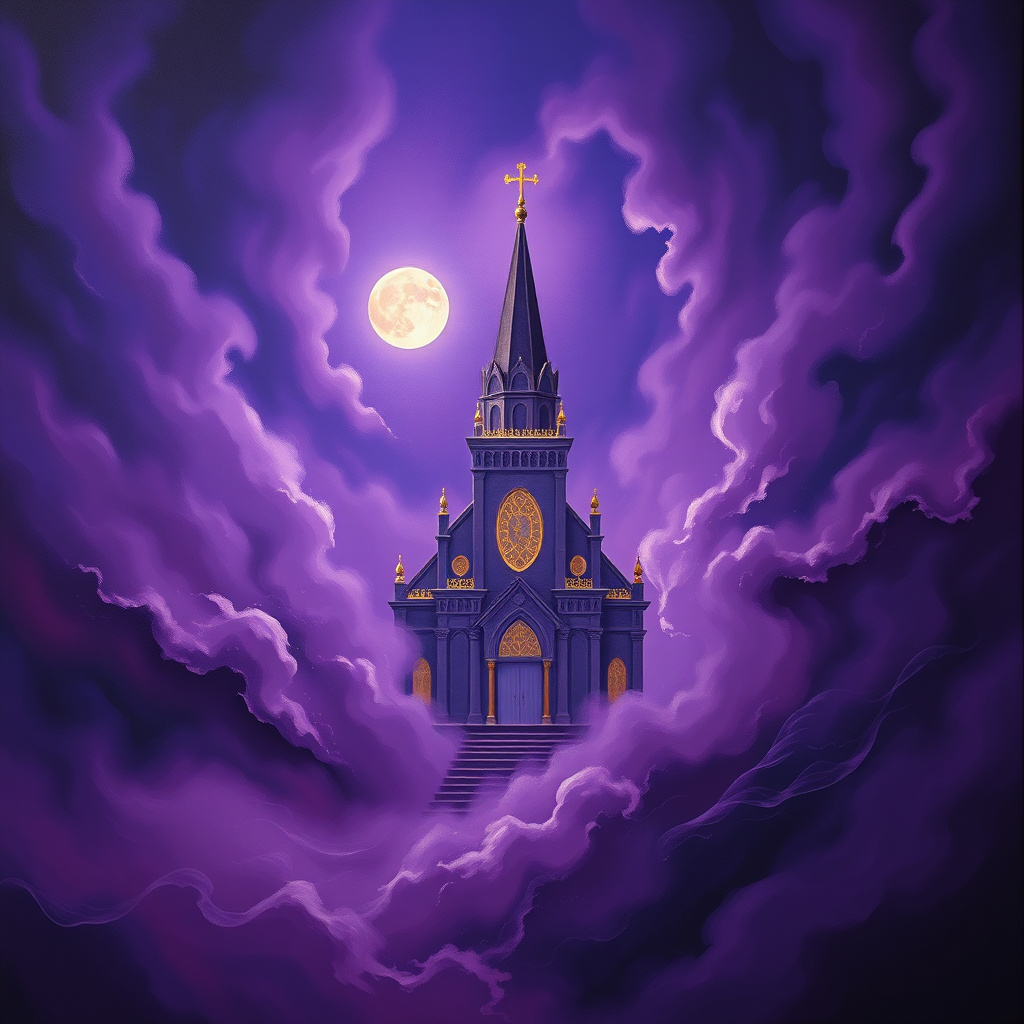
The Evolution of Church Symbolism in Dreams: A Historical Analysis
Explore how the dream meaning of a Church has shifted from ancient prophetic omens to modern neurological interpretations through the ages.
The Church, as a recurring motif in the human subconscious, has undergone a radical interpretive metamorphosis. What one era viewed as a direct transmission from the divine, another dismissed as a mere byproduct of synaptic firing. Understanding a dream about Church requires more than looking at modern psychology; it necessitates an awareness of how human consciousness has historically categorized the sacred. By tracing the shift from ancient omens to the clinical observations of the contemporary age, we uncover how the architecture of faith reflects the architecture of the evolving human mind.
What does your Church dream mean?
Identify the primary tone of the Church in your dream:
From Ancient Prophecy to Medieval Omens
In the classical era, particularly within the Greek tradition of oneiromancy, a dream about Church—or its proto-religious architectural predecessors—was rarely viewed as a personal psychological event. Instead, it was perceived as an external visitation. The dream was a window into the cosmic order, where the appearance of a sacred space signaled an impending shift in the political or social landscape. To see a sanctuary was to receive a message from the gods regarding the stability of the state or the fate of a city. There was no 'inner self' to consult; the meaning resided entirely in the external world. As the timeline progressed into the Middle Ages, the interpretation of the Church symbol became more rigid and moralistic. During this period, a dream about Church was interpreted through the lens of spiritual accountability. The structure functioned as a cosmic courtroom. If the dreamer encountered a grand cathedral, it was often seen as a sign of divine favor or a call to penance. Conversely, seeing a Church falling down or being in disrepair was not viewed as a reflection of personal anxiety, but as a literal omen of spiritual decay or impending plague within the community. The sanctity of the building was absolute, and its presence in a dream served as a direct bridge between the earthly realm and the celestial hierarchy. During this era, the dreamer was a passive recipient of divine truth rather than an active participant in psychological construction. The focus remained on the sanctity of the institution and its role as the sole arbiter of truth in a world where the boundary between the physical and the metaphysical was considered thin and permeable.
Victorian Spiritualism and the Interiority of Faith
The 19th century introduced a pivot toward the individual, fueled by the rise of Spiritualism and the burgeoning interest in the 'soul' as a distinct psychological entity. During the Victorian era, the interpretation of a dream about Church began to move away from communal omens and toward the personal moral character of the dreamer. The Church was no longer just a sign of God's will; it became a mirror for the dreamer's internal struggle between repression and desire. Spiritualist practitioners often suggested that dreaming of a Church service or a gathering of church members indicated a longing for connection with the 'other side' or a need to reconcile one's social standing with their private convictions. The architecture of the Church in dreams started to represent the structure of the Victorian conscience—rigid, imposing, and heavy with the weight of societal expectation. This era saw the emergence of the 'moralized dream,' where the Church served as a backdrop for the tension between the public persona and the private spirit. A dream about church leaders, for instance, was frequently analyzed as an encounter with the dreamer's own internalized sense of authority or the guilt associated with breaking social taboos. While still deeply rooted in religious language, the focus had shifted inward. The Church was becoming a landscape of the psyche, a place where the dreamer's virtues and vices were played out in a theatrical, symbolic arena. This period bridged the gap between the purely external divine messages of the past and the deeply internal psychological explorations that would define the coming century, turning the sacred building into a vessel for the burgeoning concept of the individual ego.
Modern Neuroscience and the Deconstruction of the Sacred
In the contemporary era, the interpretation of a dream about Church has undergone its most drastic shift, moving from the metaphysical to the biological. With the advent of modern neuroscience and cognitive psychology, the sacred architecture of the Church is no longer viewed as a portal to the divine or a mirror of the soul, but as a complex neurological construct. When a person experiences a dream about a church building, modern theorists look toward the brain's method of processing cultural archetypes and long-term memory storage. The Church is seen as a highly potent 'schema'—a mental framework built from years of cultural, social, and visual conditioning. Instead of seeking a message from a deity, a modern interpretation focuses on how the brain utilizes the symbol to organize concepts of community, authority, or tradition. For example, a dream about church members is often analyzed as the brain's way of categorizing social hierarchies or processing feelings of belonging and exclusion within one's actual social circles. Even highly intense imagery, such as a dream about church on fire, is treated as a manifestation of high-arousal emotional processing, where the brain uses a culturally significant symbol to represent the intense 'burning' of stress or cognitive dissonance. The 'meaning' is found in the neural pathways associated with the symbol rather than in the symbol itself. We have moved from the Church as a divine messenger to the Church as a psychological tool—a way for the brain to navigate the complex landscape of human social structures and emotional regulation through the use of deeply embedded cultural imagery.
Frequently Asked Questions
What does it mean when you dream about church members?
Historically, seeing church members was viewed as a communal omen regarding social cohesion. In modern psychological terms, this often reflects your internal processing of social hierarchies, your sense of belonging to a group, or how you perceive the influence of authority figures and collective expectations in your waking life.
What does a dream about church on fire mean?
While medieval interpreters might have seen this as a terrifying omen of spiritual catastrophe, modern analysis views it as an intense manifestation of emotional volatility. The fire represents the brain using a powerful cultural symbol to express acute stress, overwhelming passion, or the sudden disruption of established belief systems.
Why did I dream about church falling down?
A dream about a church falling down has shifted from being a sign of societal collapse in ancient times to a symbol of personal instability today. It typically reflects a perceived breakdown in your internal moral framework, the loss of a foundational belief, or a sense that your social support structures are crumbling.