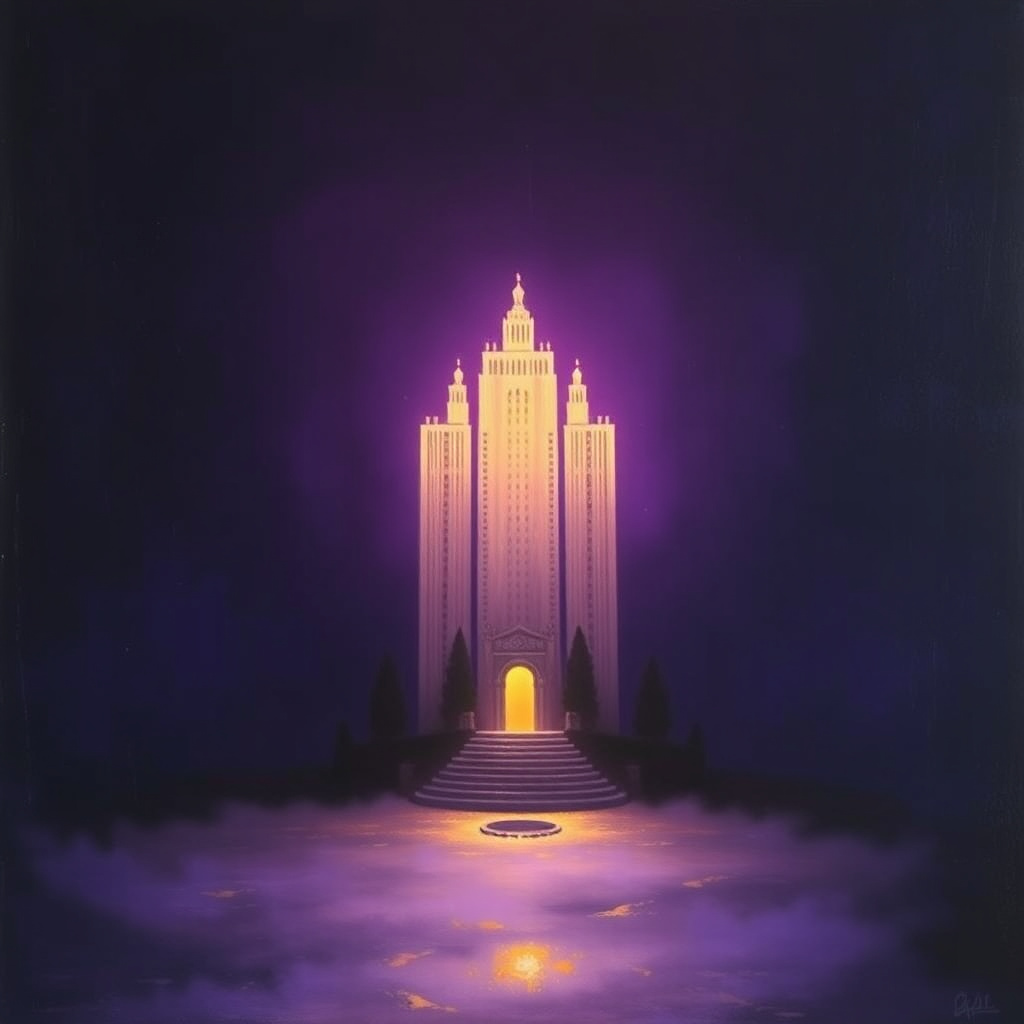
The Archetypal Building: Mythic Foundations and Sacred Structures
Explore the cultural and mythological significance of a Building, from the Tower of Babel to the sacred temples of ancient gods and ancestral dwellings.
In the grand tapestry of human mythology, a Building is never merely a pile of stone or timber; it is a physical manifestation of the cosmic order. From the ziggurats of Mesopotamia to the celestial palaces described in Vedic texts, structures serve as the interface between the terrestrial and the divine. To encounter a Building in the realm of myth is to witness the attempt of humanity to replicate the architecture of the heavens. Whether standing as a monument to hubris or a sanctuary for the soul, these structures anchor the narratives of civilization and the divine will.
What does your Building dream mean?
What is the state of the structure?
The Architecture of Hubris and Divine Decree
Throughout religious history, the act of raising a Building often serves as a litmus test for human morality and the boundaries of mortal ambition. The most enduring archetype is the Tower of Babel, where the construction of a massive edifice became a direct challenge to the celestial hierarchy. In this cultural narrative, a Building reaching toward the clouds is not an achievement of engineering, but an act of defiance that invites divine intervention. When these structures fail, it is rarely seen as a structural flaw, but as a cosmic correction to restore the proper order between man and god. Similarly, in Greek mythology, the construction of great monuments often mirrors the tragic fall of kings who sought to build lasting legacies that rivaled Olympus. The tension between the desire to erect something eternal and the reality of mortal frailty is a central theme in epic literature. When a Building is seen as grand or imposing, it evokes the weight of history and the heavy hand of fate. In many traditions, the height of a structure correlates to the proximity of the sacred, making the verticality of a Building a profound statement on spiritual aspiration. Conversely, a building that is broken or incomplete in myth often signals a broken covenant or a civilization that has lost its moral compass. These narratives teach that any edifice built without reverence for the fundamental laws of the universe is destined to succumb to the forces of chaos, reminding the observer that true permanence resides in the divine, not the masonry of men.
Sacred Sanctuaries and the Ancestral Dwelling
Beyond the monuments of pride, the Building serves as the essential vessel for the sacred and the ancestral. In many Eastern traditions, the home or the temple is a microcosm of the universe, a carefully constructed map of the heavens intended to house both the living and the spirits of the departed. The concept of 'Feng Shui' or similar geomantic practices suggests that a Building is a living organism that must be aligned with the flow of cosmic energy to ensure harmony. In these cultural frameworks, the walls and foundations are not mere barriers, but energetic boundaries that protect the sanctity of the lineage. In many African and Indigenous mythologies, the construction of a dwelling is a ritualized act that invites ancestor spirits to reside within the communal space. A Building, therefore, acts as a bridge between the temporal world and the eternal realm of the ancestors. This is reflected in the architectural styles of ancient cathedrals and mosques, where every arch and spire is designed to direct the gaze and the spirit upward. The permanence of stone in these contexts symbolizes the enduring nature of faith and the continuity of the bloodline. To witness the creation of a sacred space is to see the establishment of a center for the world, a 'navel' around which the chaos of the wild is held at bay. Thus, the Building is the primary tool used by cultures to domesticate the infinite, creating a localized pocket of order where the divine can be honored and the lineage can flourish through the ages.
The Ruin and the Collapse of Cosmic Order
When the narrative shifts to the destruction of a Building, the mythological implications are profound and often apocalyptic. In the cycle of many mythologies, the collapse of a great structure signals the end of an age or the downfall of a dynasty. A Building that falls is not merely a loss of property, but a sign that the protective canopy of civilization has been stripped away, leaving humanity vulnerable to the primordial forces of nature and chaos. In Norse mythology, the concept of Ragnarök involves the destruction of the world's foundations, suggesting that even the most divine structures are subject to the inevitable cycle of decay and rebirth. A Building in flames or under siege in ancient epics often represents the purging of corruption or the violent transition between one era and the next. The image of a crumbling edifice evokes the 'Ozymandias' archetype—the realization that even the mightiest empires are eventually reclaimed by the desert sands. This cultural fascination with ruins serves as a memento mori for entire civilizations, reminding us that the structures we build are temporary compared to the vastness of time. Furthermore, the act of building something new from the wreckage of the old is a recurring motif of resurrection and renewal. In many creation myths, the world itself is built from the remnants of a previous, fallen entity. Therefore, the cycle of construction, stability, and collapse is not a linear path of failure, but a rhythmic, cosmic pulse that governs the rise and fall of all things, from the smallest village to the greatest celestial empire.
Frequently Asked Questions
What is the spiritual meaning of a building collapsing?
In a mythological context, a building collapsing often signifies a period of cosmic realignment or the end of a specific cycle of existence. It suggests that the structures—whether social, spiritual, or ancestral—that you have relied upon are no longer in alignment with the divine order and must be cleared away to make room for a new epoch.
What does it mean to dream about building a new house?
Building a new house is viewed through the lens of establishing a new sacred center or a new lineage. It mirrors the mythological act of creation, where an individual or a people begins to lay the foundations for a new way of living that seeks to harmonize the earthly realm with higher spiritual principles.
What is the significance of a building on fire?
A building on fire relates to the archetypal element of purification. In many religious traditions, fire is the tool used by the gods to cleanse a space of corruption. It represents a violent but necessary transition where the old, decayed structures are consumed to allow for a more sanctified rebirth.