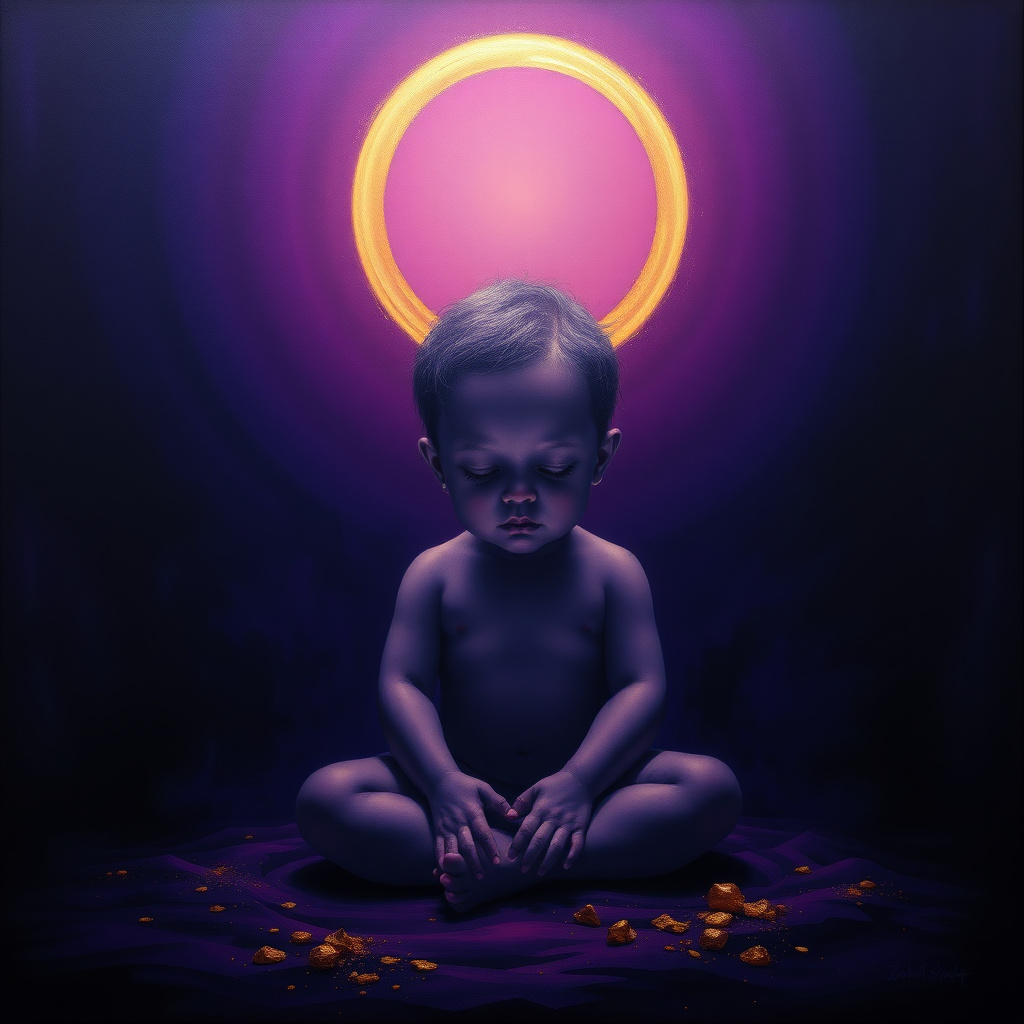
The Historical Evolution of Child Symbolism in Dreams
Trace the shifting interpretations of the Child symbol from ancient Greek omens and Victorian spiritualism to modern neurological perspectives.
The Child occupies a unique position in the history of human thought, serving as a vessel for shifting cultural anxieties and cosmic expectations. Throughout history, the appearance of a Child in the subconscious has not been viewed through a singular lens, but rather as a mirror to the prevailing intellectual climate of the era. From the divine prognostications of antiquity to the data-driven neurobiology of the present day, the way we decode this specific figure has undergone a radical metamorphosis, moving from external prophecy to internal cognitive processing.
What does your Child dream mean?
In which historical context do you feel most connected to your dreams?
Ancient Prophecy and the Omen of the Child
In the classical era, particularly within the frameworks of ancient Greek and Roman thought, a Child was rarely viewed as a personal psychological projection. Instead, the appearance of a Child in a dream was treated as an externalized omen, a message delivered by the gods or the Fates. Within the context of Greek oneiromancy, a Child often functioned as a harbinger of upcoming civic or familial shifts. To witness a Child was to receive a glimpse into the 'unwritten' future of one's lineage or the city-state itself. The presence of a Child was frequently interpreted through the lens of divine favor or impending trial, depending on the Child's condition. A healthy, thriving Child might be seen as an indication of Apollo’s blessing, suggesting a period of prosperity or the successful fruition of a political endeavor. Conversely, a Child in distress was not viewed as a reflection of the dreamer's emotional state, but as a literal warning of impending catastrophe, such as a plague, a lost battle, or a disruption in the natural order. This era lacked the concept of the 'inner self'; therefore, the Child was a messenger from the outside world, a sacred entity that bridged the gap between the mortal realm and the celestial hierarchy. The interpretation was communal and ritualistic, often requiring a priest or an oracle to decipher whether the Child represented a blessing of continuity or a warning of sudden, violent disruption to the established social fabric. The weight of the symbol was grounded in destiny rather than personal identity.
Victorian Spiritualism and the Soul of the Child
As the world transitioned into the 19th century, the interpretation of the Child underwent a profound shift driven by the rise of Victorian spiritualism and the romanticization of innocence. During this period, the Child ceased to be a mere herald of fate and became a bridge to the ethereal plane. Spiritualists believed that the subconscious could act as a medium, allowing the spirits of the departed to communicate through the imagery of a Child. In this context, seeing a Child was often interpreted as a visitation from a lost relative or a sign of a pure, uncorrupted soul attempting to guide the dreamer toward moral rectitude. The Victorian era placed immense value on the concept of 'purity,' and thus, the Child became a highly moralized symbol. A dream involving a Child was frequently scrutinized for its ethical implications; it was a test of the dreamer's character and their connection to the divine through innocence. Unlike the ancient view of the Child as a civic omen, the Victorian perspective was deeply personal and sentimental. The symbol was used to navigate the complexities of grief, mourning, and the hope for an afterlife. If a Child appeared in a dream, it was often viewed as a 'messenger from the beyond,' tasked with bringing comfort or offering a subtle reprimand regarding the dreamer's adherence to social and religious virtues. This era solidified the idea that the Child was a vessel for the sacred, though that sacredness was now found within the sanctity of the family unit and the individual's spiritual journey rather than the grand movements of the gods.
Modern Neuroscience and the Cognitive Child
In the contemporary era, the lens of interpretation has shifted away from both the divine and the ethereal, landing firmly within the domain of neuroscience and cognitive psychology. Today, the Child is understood not as a messenger from a god or a ghost, but as a neurobiological construct—a manifestation of the brain's complex pattern-recognition systems and emotional regulation processes. Modern science views the appearance of a Child in dreams as a byproduct of the brain's attempt to process developmental milestones, vulnerability, or the 'inner' aspects of the self that require nurturing. Rather than seeking meaning in a celestial prophecy, modern researchers look at how the brain utilizes the archetype of the Child to categorize feelings of helplessness, new beginnings, or the preservation of fundamental instincts. The focus is on the neural pathways associated with attachment and survival. When the brain generates the image of a Child, it is often engaging in a form of 'threat simulation' or 'emotional rehearsal,' using the most primal and vulnerable human archetype to represent the dreamer's own perceived fragility or emerging potential. This perspective strips away the mystical layers of the past, replacing them with a functionalist view: the Child is a cognitive tool used by the subconscious to navigate the complexities of human development and social bonding. The interpretation is no longer about what the universe is telling the individual, but about what the individual's own neural architecture is doing to maintain psychological homeostasis. The Child has moved from the heavens to the hearth, and finally, into the firing synapses of the cerebral cortex.
Frequently Asked Questions
What does it mean if I dream about a child drowning?
From a modern cognitive perspective, dreaming about a child drowning often reflects an intense feeling of being overwhelmed by emotions or a perceived loss of control over a new, vulnerable aspect of your life. It is less a literal omen and more a reflection of your brain processing deep-seated anxieties regarding your ability to sustain or protect something precious.
What is the significance of a dream about a child being kidnapped?
Historically, this might have been seen as a warning of social disruption. Today, it is interpreted as a symbolic representation of a fear that your autonomy, creativity, or 'inner innocence' is being taken away by external pressures or stressful life circumstances that demand too much of your energy.
Does a dream about a child birth have a specific meaning?
In a contemporary psychological context, dreaming of childbirth is rarely about literal pregnancy. Instead, it typically signifies the emergence of a new idea, a fresh perspective, or the 'birth' of a new phase in your personal development, representing the mental energy required to bring something new into existence.