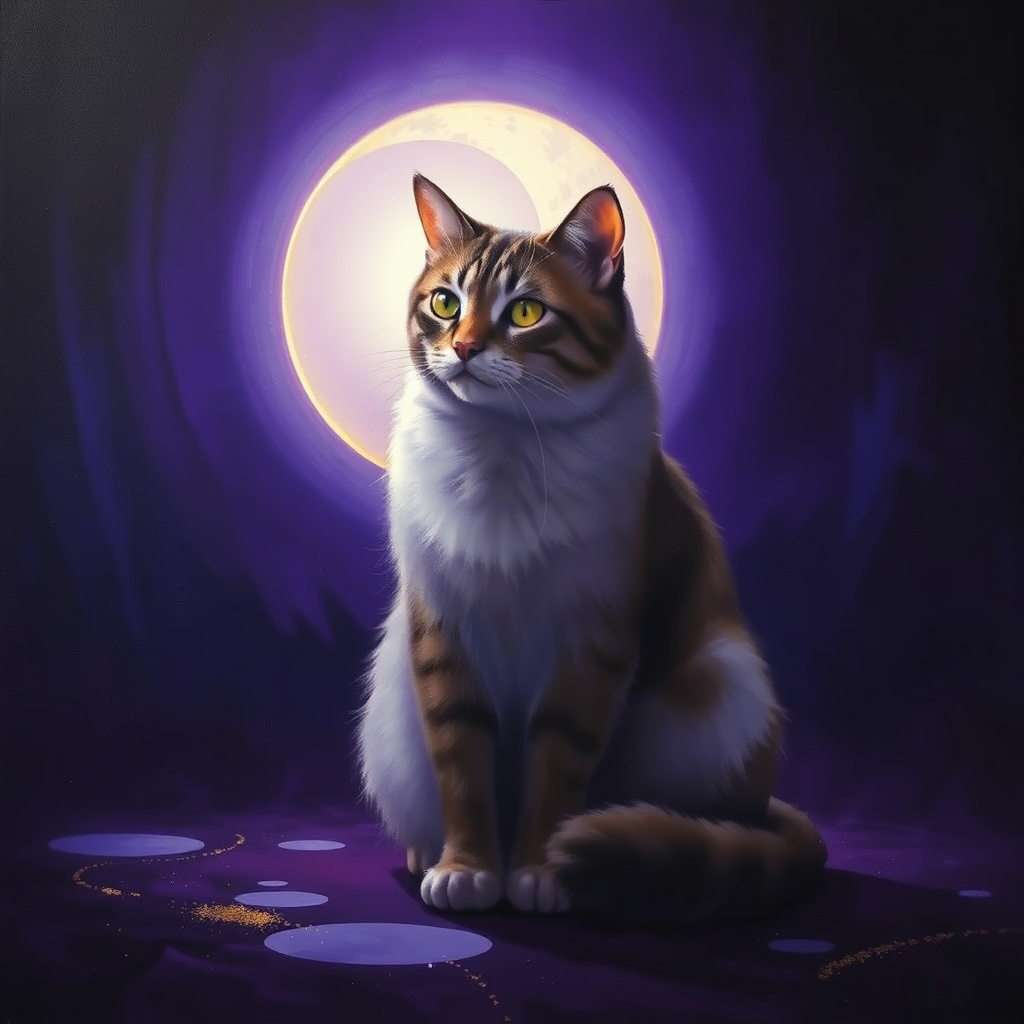
The Evolution of Cat Dream Interpretations Through the Ages
Explore how the meaning of a dream about a cat has shifted from ancient Greek omens to medieval superstition and modern neuroscience.
The appearance of a Cat in a dream carries a weight of history that transcends simple intuition. To understand what it means when you dream about a cat, one must look beyond the immediate emotion of the sleeper and examine the cultural lens through which this animal has been viewed. From the sacred halls of antiquity to the clinical laboratories of the present day, the interpretation of this feline presence has undergone radical shifts, moving from divine prophecy to dark omen, and finally to biological data.
What does your Cat dream mean?
How did you perceive the feline's presence in the dream?
From Divine Oracles to Medieval Omens
In the era of ancient Greek prophetic dreams, the presence of a Cat was often viewed through the lens of divine communication. To the ancients, a dream about a cat was not a mere psychological byproduct but a message from the gods, often linked to the mysteries of the underworld or the unseen forces of nature. The feline was seen as a guardian of the threshold, a creature that navigated the boundaries between the physical realm and the ethereal plane. If a dreamer encountered this animal, they were expected to interpret its behavior as a direct signal regarding their fate or the will of the deities. The focus was entirely external; the dream was a window into a cosmic order that demanded reverence and specific ritualistic responses. However, as the centuries progressed into the Middle Ages, this divine association underwent a dramatic and dark inversion. The cultural perception of the feline shifted from sacred messenger to a harbinger of the supernatural and the sinister. During this period, a dream about a cat was frequently interpreted as a warning of witchcraft or a sign of demonic influence. The animal became a symbol of the occult, often linked to the shadows and the deceptive nature of the night. Instead of seeking divine guidance, a medieval dreamer might have felt a sense of dread, viewing the feline presence as an omen of impending misfortune or spiritual corruption. This era replaced the structured prophecy of the Greeks with a landscape of superstition, where the feline was a creature of the periphery, signaling that the boundaries of the known world were being breached by unseen, malevolent forces.
Victorian Spiritualism and the Intuitive Shadow
As the world entered the Victorian era, the interpretation of the feline in dreams moved away from the overtly demonic and toward the realm of the spiritualist and the subconscious. The rise of spiritualism introduced a nuance where the Cat was seen as a guide for the soul’s journey. In the Victorian parlor, dreams were discussed as evidence of a connection to the 'other side.' A dream about a cat was no longer necessarily a threat of witchcraft, but rather a manifestation of the dreamer's untapped intuition or a visitation from a departed spirit. The feline became a symbol of the 'hidden self'—the parts of the psyche that remain veiled during the waking hours of social propriety. This period emphasized the elegance and mystery of the animal, mirroring the era's fascination with the unseen forces of the mind. The dream was viewed as a bridge between the rigid, structured life of the Victorian citizen and the fluid, unpredictable nature of the spiritual realm. While the Greeks saw a messenger and the Medievals saw a demon, the Victorians saw a mirror. The feline presence was an invitation to explore the depths of one's own sensitivity and the subtle energies that permeate the atmosphere. This shift marked a transition from fearing the animal's presence to attempting to decode its subtle movements as a means of achieving greater self-awareness and spiritual connectivity, setting the stage for the psychological breakthroughs that would follow in the twentieth century.
The Modern Neurological and Psychological Paradigm
In the contemporary era, the interpretation of a dream about a cat has been stripped of its mythological and supernatural trappings, replaced by the rigorous frameworks of neuroscience and modern psychology. We no longer look to the gods or the spirits to explain the feline's appearance; instead, we look to the firing of neurons and the processing of memory. From a neurobiological perspective, the cat is seen as a mental construct—a synthesis of visual data, sensory experiences, and stored archetypes processed by the brain during REM sleep. The dream is understood as a mechanism for emotional regulation or memory consolidation. Psychologically, the modern approach views the feline through the lens of the individual's personal history and current stressors. If a person experiences a dream about a cat attacking you, a modern practitioner would not suggest a curse is imminent, but would instead explore what the feline's aggression represents in the dreamer's waking life—perhaps an unresolved conflict or a perceived threat to autonomy. The focus has moved inward entirely. The 'meaning' is no longer a universal truth dictated by history or heaven, but a subjective truth constructed by the dreamer's own cognitive architecture. We now treat the feline as a biological symbol, a way for the brain to personify complex internal states. This evolution represents the final movement from the external cosmos to the internal landscape, where the cat serves as a tool for navigating the complexities of the human mind and its evolutionary survival instincts.
Frequently Asked Questions
What does it mean when you dream about cat attacking me?
Historically, this was viewed as an omen of betrayal. In modern psychological terms, an attacking cat often reflects internal tension or a feeling of being threatened by a subtle, unpredictable force in your waking life. It highlights a struggle with instincts or a perceived loss of control over a situation that feels 'predatory' or sharp.
What is the significance of a dream about cat dying?
In medieval interpretations, this could signify the loss of spiritual protection. Today, it is often viewed as the conclusion of a phase or the suppression of an intuitive aspect of yourself. It represents the end of a certain way of perceiving the world or the fading of a specific instinctual drive.
What does it mean to dream about cat having kittens?
Ancient traditions might see this as a sign of burgeoning prosperity or divine favor. From a modern perspective, a dream about a cat having kittens or a cat giving birth typically points to the emergence of new ideas, the nurturing of small projects, or the blossoming of creative potential within the subconscious.