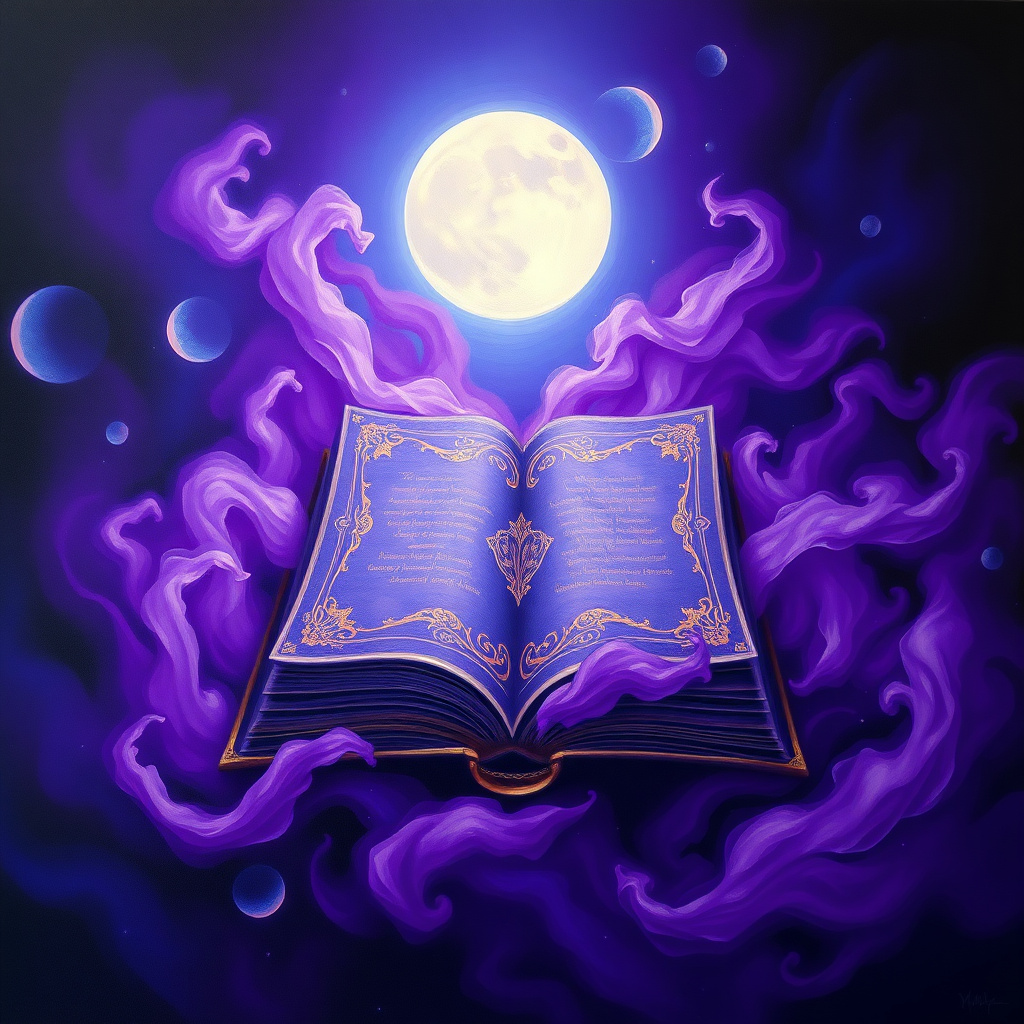
The Book: Mythological Archetypes and Sacred Lore
Explore the Book through the lens of ancient myth, sacred scriptures, and legendary archives. Uncover the cultural weight of this eternal symbol.
In the collective tapestry of human heritage, the Book serves as more than a vessel for information; it is the physical manifestation of Fate, Divine Will, and the Akashic records. From the carved tablets of Mesopotamia to the illuminated manuscripts of the medieval era, the Book functions as a bridge between the mortal realm and the eternal. It is the repository of the Logos, the spoken word made flesh and parchment. To encounter the Book is to stand before the threshold of a cosmic archive where every life is transcribed and every destiny is etched in ink.
What does your Book dream mean?
What is the condition of the Book?
The Book as the Ledger of Fate and Divine Decree
Across diverse theological landscapes, the Book acts as the ultimate arbiter of truth and destiny. In Abrahamic traditions, the 'Book of Life' determines the spiritual trajectory of the soul, serving as a celestial ledger that records every deed for final judgment. This is not merely a record, but a decree; to be written within its pages is to exist in the eyes of the Creator, while to be erased is to face oblivion. Similarly, in various Eastern traditions, the concept of a cosmic record mirrors the idea of karmic debt, where the Book functions as a mirror of one's moral alignment with the universe. The Book is the vessel of the 'Word,' the primordial vibration that brought existence out of chaos. In Greek mythology, the Moirai (the Fates) weave the threads of life, but it is the written record that codifies these threads into an unalterable history. When the Book appears in a cultural context, it invokes the authority of the Absolute. It is the unmoving center around which the chaos of human existence orbits. It represents the tension between predestination and free will—the terrifying and awe-inspiring notion that our most private moments are being documented by an unseen, cosmic scribe. This archetype demands reverence, as it suggests that reality is governed by laws as rigid and permanent as the ink on a page. The Book is the silent witness to the rise and fall of empires, holding the secrets of the gods and the consequences of mortal hubris within its heavy, leather-bound covers.
The Book as an Archetype of Forbidden and Lost Knowledge
In the realm of folklore and epic literature, the Book often serves as a talisman of dangerous or esoteric wisdom. Think of the Grimoires of the Renaissance, where sorcerers sought to command elemental forces through specific incantations, or the lost libraries of Alexandria that symbolized the tragic fragility of human intellect. The Book is frequently depicted as a gatekeeper; to possess it is to hold a key to realms otherwise inaccessible to the uninitiated. In many mythic narratives, the 'Lost Book' is a central quest object, representing a return to a Golden Age of understanding that has been obscured by time or divine intervention. This archetype touches upon the Hermetic tradition, where the written word is a tool for transmutation and the mastery of the self. However, this power is rarely without cost. The 'Forbidden Book' warns of the hubris inherent in seeking knowledge that exceeds human capacity, a theme echoed in the fall of Icarus or the pursuit of Prometheus. In various Asian folklores, ancestral wisdom is often preserved in scrolls that carry the weight of lineage and the spirits of the departed, suggesting that the Book is a medium through which the dead communicate their legacies to the living. It is a repository of the 'hidden,' the 'occult,' and the 'arcane.' Whether it is a sacred sutra or a cursed tome, the Book represents the boundary between the known world and the terrifying vastness of the unknown, acting as both a beacon of enlightenment and a shadow of profound consequence.
The Book as a Monument of Ancestral and Cultural Memory
Beyond individual destiny, the Book functions as the collective memory of a civilization. It is the vessel through which the voices of ancestors are preserved, allowing a culture to maintain its identity across the chasm of centuries. In the context of epic poetry, such as the Homeric epics or the Vedic hymns, the Book (or its oral precursor codified into text) is the bedrock of social cohesion and moral instruction. It is where the myths, laws, and traditions of a people are solidified into an enduring form. In many cultures, the act of writing is seen as a way to achieve a form of immortality, transmuting the ephemeral breath of speech into the permanent substance of the written word. The Book becomes a monument, a structural element of the cultural landscape that provides a sense of continuity and belonging. It is the 'Great Tradition' that informs the 'Little Tradition' of daily life. When we look at the history of human civilization, the transition from oral tradition to the written Book marks a fundamental shift in how humanity perceives time and legacy. The Book allows for the accumulation of wisdom, creating a layered history where each generation builds upon the inscribed foundations of the last. It is the archive of the human spirit, documenting not just facts, but the very essence of what it means to belong to a specific lineage, a specific faith, or a specific land. To honor the Book is to honor the continuity of the human story and the enduring strength of the collective soul.
Frequently Asked Questions
What does it mean to see a book falling apart in a dream?
From a cultural perspective, a book falling apart suggests the erosion of tradition or the crumbling of a sacred lineage. It mirrors the decay of ancient texts or the loss of ancestral wisdom, signaling a period where the foundational myths or laws that govern a society or family are losing their structural integrity and coherence.
What is the significance of a book in relation to cats?
In folklore, cats are often seen as guardians of the threshold between the physical and spiritual worlds. A book associated with a cat may represent the 'hidden knowledge' or the esoteric secrets that are protected by spiritual sentinels, suggesting that certain truths are only accessible to those who can navigate the mystical realms.
How do 'dresses to dream about book' relate to symbolism?
While 'dresses' is a separate symbol, when viewed through a cultural lens alongside the Book, it evokes the ritualistic 'vesting' of a scholar or a priest. It suggests the formalization of knowledge—the way a person 'dresses' themselves in the authority of sacred texts or the ceremonial garments required to handle divine truths.