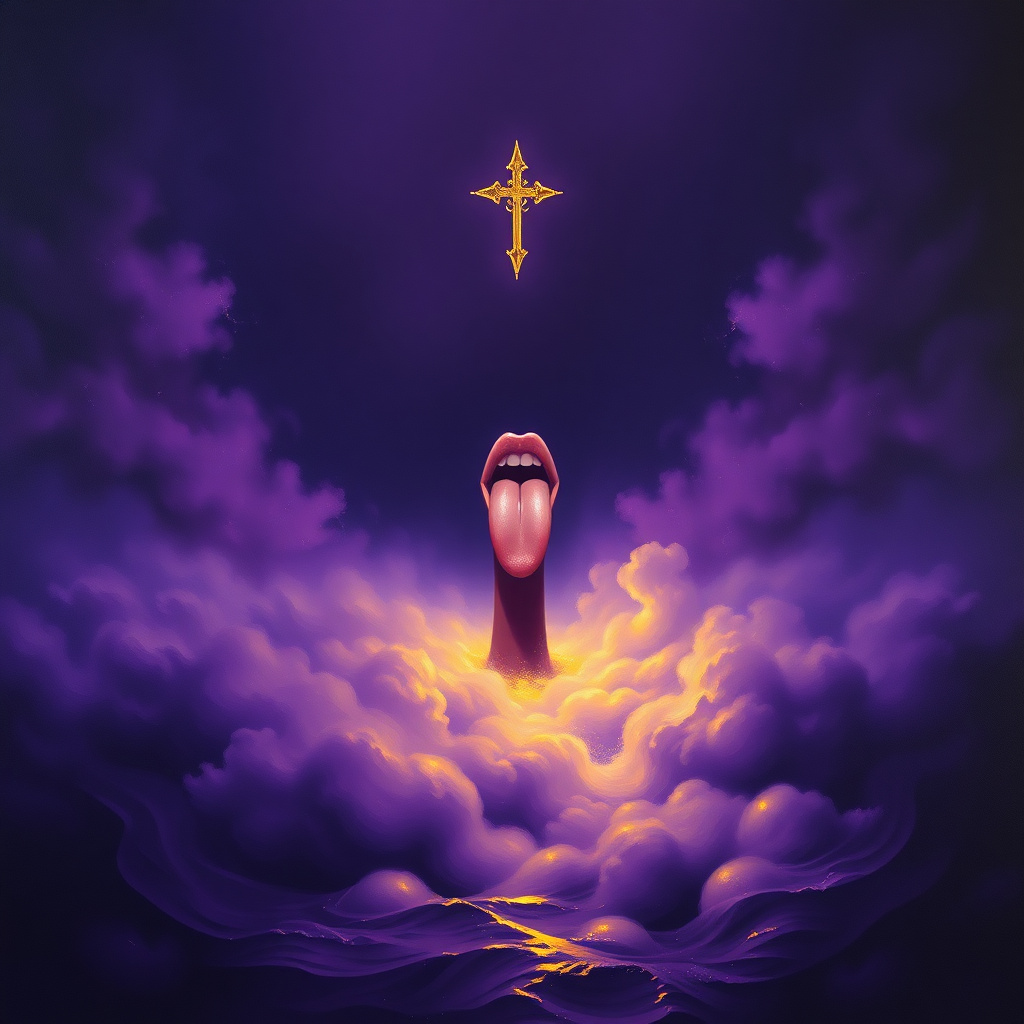
Tongue Dream Meaning: A Jungian Archetypal Analysis
Explore the psychological depth of the tongue in dreams through a Jungian lens, examining its role in individuation, the shadow, and the psyche's expression.
In the realm of depth psychology, the tongue serves as more than a physiological organ; it is a psychic conduit between the internal world of the unconscious and the external world of social reality. When the tongue appears in a dream, it functions as a structural element of the ego's ability to mediate meaning. From a Jungian perspective, this symbol is inextricably linked to the process of individuation—the movement toward psychological wholeness. It acts as the threshold where the unformed contents of the collective unconscious are articulated into the conscious light of the persona.
What does your Tongue dream mean?
How does the tongue manifest its presence in your psyche?
The Tongue as a Mediator of the Persona and Shadow
Within the Jungian framework, the tongue functions as the primary instrument of the Persona—the social mask we wear to navigate the collective. It is the tool through which we curate our identity, selecting which truths to reveal and which to withhold. When a dream focuses on the tongue, it often highlights a tension between the Persona and the Shadow. The Shadow contains the repressed, instinctual, and often 'unspoken' aspects of the personality. If the tongue feels heavy, paralyzed, or oversized, it may indicate a psychic conflict where the Shadow is attempting to breach the controlled boundaries of the Persona. The dreamer may be experiencing a 'slip' of the psyche, where the repressed contents of the unconscious threaten to disrupt the carefully constructed social identity. In waking life, this mirrors the struggle of maintaining a professional or social facade while internal impulses demand expression. Jung suggested that the psyche seeks equilibrium; thus, an erratic or intrusive tongue in a dream is not a malfunction, but an attempt by the unconscious to integrate the unexpressed Shadow into the conscious ego. This tension is vital for psychological health, as it forces the individual to confront the discrepancy between who they present to the world and the raw, unmediated truths of their internal reality. The tongue, therefore, becomes a site of struggle where the ego must learn to balance the necessity of social adaptation with the imperative of authentic, shadow-integrated communication. To ignore this symbolic friction is to risk a fragmentation of the self, where the Persona becomes a hollow shell, disconnected from the vital, pulsing truths of the deeper psyche.
Linguistic Archetypes and the Anima/Animus Connection
The tongue is also deeply connected to the archetypes of the Anima and Animus—the internal feminine and masculine qualities that bridge the ego to the collective unconscious. In Jungian theory, communication is a way of 'speaking' the language of the soul. The tongue serves as the physical manifestation of this psychic translation. If the tongue in a dream feels overly sensitive or hyper-articulate, it may signal an active engagement with the Anima or Animus, as these archetypes often communicate through intuition, feeling, and symbolic language that transcends literal logic. The tongue acts as the bridge for the 'Logos'—the principle of reason and order—or the 'Eros'—the principle of connection and relation. When the tongue is the focal point, the psyche may be attempting to refine its ability to process these archetypal energies. For instance, a struggle to use the tongue might reflect a difficulty in integrating the Animus's capacity for structured thought or the Anima's capacity for emotional nuance. This is not merely about speech, but about the capacity to 'taste' or 'savor' the various qualities of experience. In a broader sense, the tongue represents the psyche's ability to digest the raw data of the collective unconscious and transform it into meaningful, individualized wisdom. Just as the physical tongue processes nutrients, the psychic tongue processes the complex, often overwhelming symbols of the unconscious. A dream involving the tongue thus points to the dreamer's current capacity to metabolize their psychological experiences, turning the 'raw' instinctual drives into the 'cooked' substance of a mature, integrated personality.
Individuation and the Threshold of Expression
At the core of Jungian thought is the concept of individuation: the lifelong journey toward becoming one's true, unique self. The tongue represents a critical threshold in this process. It is the organ of boundary-crossing, moving from the interiority of the mouth (the private, subjective realm) to the exteriority of the air (the public, objective realm). In the context of individuation, the tongue symbolizes the courage required to articulate the emerging Self. As the individual moves closer to psychological wholeness, the 'voice' of the Self becomes more distinct, requiring a more precise and authentic use of the tongue. A dream featuring a transformed or highly specialized tongue may indicate that the dreamer is undergoing a significant shift in their capacity to express their emerging identity. This is the transition from the 'collective' way of speaking—using the clichés and values of the group—to the 'individual' way of speaking—expressing the unique truths discovered in the depths of the unconscious. This transition is often fraught with anxiety, as the ego fears the social repercussions of abandoning the collective mask. However, Jungian theory posits that true growth requires this move toward authenticity. The tongue, as a symbol of the threshold, reminds the dreamer that the integration of the unconscious is not a silent process; it requires a communicative act. The psyche uses the tongue to test the boundaries of what can be known and what can be shared. Ultimately, the tongue in a dream serves as a barometer for the dreamer's readiness to stand in their own truth, bridging the gap between the hidden depths of the soul and the visible world of human interaction.
Frequently Asked Questions
What is the psychological significance of a dream about tongue paralysis?
From a Jungian perspective, paralysis of the tongue often symbolizes a blockage in the individuation process. It suggests a conflict where the Ego is unable to reconcile the demands of the Persona with the emerging truths of the Shadow. The psyche may be signaling that the dreamer's current method of social expression is insufficient or that they are suppressing an essential part of their authentic self to maintain social harmony.
How does a tongue dream meaning relate to the collective unconscious?
The tongue can act as a symbolic conduit for the collective unconscious, representing the capacity to translate universal archetypal patterns into personal meaning. It is the organ that 'tastes' the primordial energies of the psyche. When the tongue appears prominently, it often indicates that the dreamer is being called to process or articulate deep-seated, collective human experiences that transcend their immediate, personal circumstances.
Why would I have a dream about an oversized or growing tongue?
An oversized tongue typically signifies an inflation of the psychic function of expression. This may indicate that the Shadow or an archetypal force (like the Anima/Animus) is demanding more attention than the Ego is prepared to give. It represents a surge of unmediated psychic energy that is attempting to break through the Persona, demanding that the individual acknowledge and give voice to previously ignored internal truths.