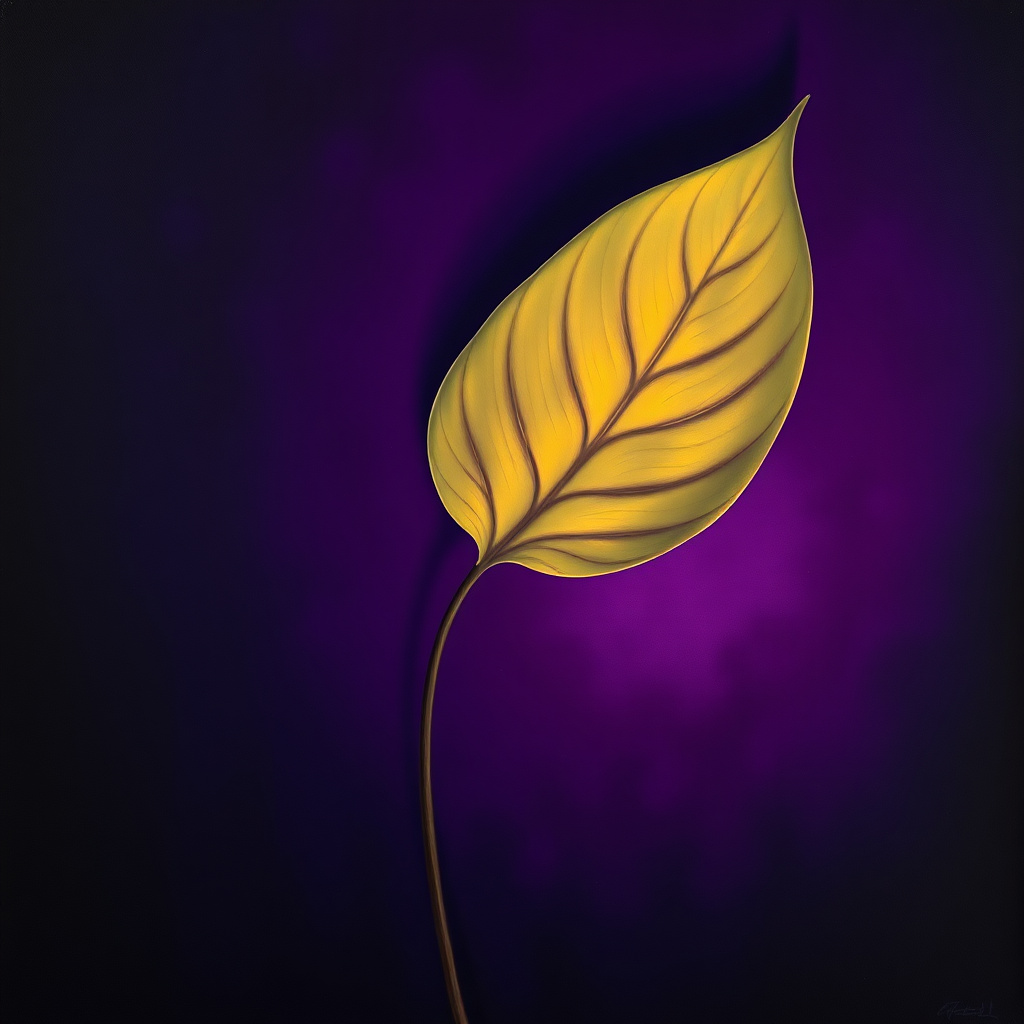
Leaf Dream Meaning: An Evolutionary History of Interpretation
Explore how the meaning of a leaf in dreams has shifted from ancient Greek omens and medieval mysticism to Victorian spiritualism and modern neuroscience.
To encounter a Leaf within the theater of sleep is to engage with a symbol that has undergone radical conceptual restructuring over millennia. While the physical object remains a simple biological unit of photosynthesis, the human attempt to decode its presence in the subconscious has migrated from the external heavens to the internal synapses. Understanding a Leaf dream meaning requires looking past contemporary psychology to see how the collective human intellect has recontextualized this botanical fragment through various historical lenses, moving from divine prophecy to biological data.
What does your Leaf dream mean?
Select the primary state of the symbol:
From Classical Prophecy to Medieval Omens
In the era of Ancient Greek dream interpretation, the appearance of a Leaf was rarely viewed as a reflection of the dreamer's internal psyche. Instead, it functioned as a semiotic bridge to the divine or the natural order. To dream of a Leaf was to receive a specific communiqué from the gods or the Fates. A vibrant, green Leaf might be interpreted as a favorable sign regarding an upcoming harvest or a blessing upon a household's vitality, functioning much like a meteorological forecast delivered through the medium of sleep. The emphasis was on the external world's reaction to the individual, rather than the individual's internal state. As the cultural landscape shifted into the Middle Ages, the interpretation of the Leaf underwent a theological hardening. The botanical symbol became embedded in a complex system of religious iconography and moralizing omens. A single Leaf was no longer just a sign of prosperity; it became a vessel for moral instruction. Within the medieval framework, the health or decay of a Leaf in a dream could signal the state of a person's soul or the impending judgment of a divine authority. The leaf served as a microcosm of the cosmic hierarchy, where the shedding of a leaf was not merely a seasonal event but a warning of spiritual attrition or the transitory nature of earthly existence. During this period, the dreamer was a passive recipient of a moralistic code, where the Leaf acted as a celestial herald, signaling shifts in the divine favor or the inevitable decay of the mortal coil. The focus remained outward, looking toward the heavens for the source of the symbol's weight.
Victorian Spiritualism and the Vitalist Lens
The 19th century brought a profound shift in how the Leaf was perceived during sleep, driven by the rise of Spiritualism and the Romantic movement's obsession with the 'vital force.' During the Victorian era, the Leaf transitioned from a divine omen to a medium for communicating with the departed. In the séance rooms and the burgeoning field of spiritualist dream study, a Leaf was often viewed as a delicate conduit—a thin, permeable membrane through which the energies of the afterlife could manifest. If a dreamer encountered a Leaf, it was frequently interpreted as a sign of a lingering spirit attempting to signal its continued presence in the natural world, using the most fragile and ubiquitous element of the landscape as its calling card. This era also saw the Leaf intertwined with the concept of 'vitalism'—the belief that a non-physical force animates all living matter. Unlike the rigid moralism of the medieval period, Victorian interpretations allowed for a more sentimental and aestheticized view. The Leaf became a symbol of the 'soul's breath,' a physical manifestation of the invisible currents that connected the living to the dead and the human to the ether. The interpretation moved closer to the individual's emotional experience, yet it remained tethered to a supernatural reality. The Leaf was seen as a delicate, vibrating entity that reflected the subtle movements of the unseen world. It was during this period that the symbol began to lose its purely prophetic character and started to take on the qualities of a psychological bridge, though it still required a spiritualist framework to be understood. The focus was on the 'aura' of the Leaf, treating its appearance as a manifestation of a refined, invisible energy flowing through the dreamer's environment.
The Modern Neuroscientific and Cognitive Shift
In the contemporary era, the interpretation of a Leaf has undergone its most radical transformation, moving away from the ether and into the architecture of the brain. Modern neuroscience and cognitive psychology have largely stripped the Leaf of its mystical and spiritual agency. Today, when an individual investigates a dream about a leaf, the analytical focus is directed toward the brain's processing of sensory input, memory consolidation, and the activation of the visual cortex during REM cycles. The Leaf is no longer a messenger from the gods or a sign from the dead; it is a cognitive construct, a mental representation generated by the brain's attempt to organize complex information or process residual environmental stimuli. From a neurobiological perspective, the Leaf is viewed through the lens of pattern recognition and associative memory. The brain utilizes the concept of a Leaf to categorize concepts related to growth, decay, or environmental stability based on the dreamer's waking-life experiences. The 'meaning' is found in the neural pathways activated during the dream state. If a dreamer experiences a Leaf, it is seen as a byproduct of the hippocampus and the prefrontal cortex working to synthesize recent perceptions or long-term memories into a coherent, albeit often fragmented, visual narrative. This shift represents a complete inversion of the historical trajectory: we have moved from looking up at the stars to find the meaning of a Leaf, to looking inward at the synaptic firing patterns of the human brain. The symbol has been deconstructed from a sacred icon into a functional unit of cognitive architecture, where its significance is determined by the individual's unique neurological history rather than a shared cultural or divine code.
Frequently Asked Questions
What is the significance of a dream about leaf patterns?
Historically, intricate patterns on a leaf were seen as complex divine messages or sacred geometry. In modern cognitive terms, focusing on these patterns suggests the brain is engaged in high-level pattern recognition or is attempting to process complex, detailed information from waking life through visual synthesis during sleep.
How to understand leaf dream meaning regarding seasonal changes?
Ancient cultures viewed seasonal leaf changes as direct omens of environmental shifts. Today, this is interpreted through the lens of biological rhythm and psychological adaptation, where the brain uses the seasonal cycle of a leaf to represent the dreamer's internal processing of life's natural transitions and cycles.
Why do I keep having a dream about leaf decay?
While medieval thinkers viewed decaying leaves as warnings of spiritual decay, modern neuroscience views this as the brain's way of processing concepts of entropy or loss. It is a cognitive representation of the brain's attempt to categorize and integrate the reality of biological breakdown and temporal progression.