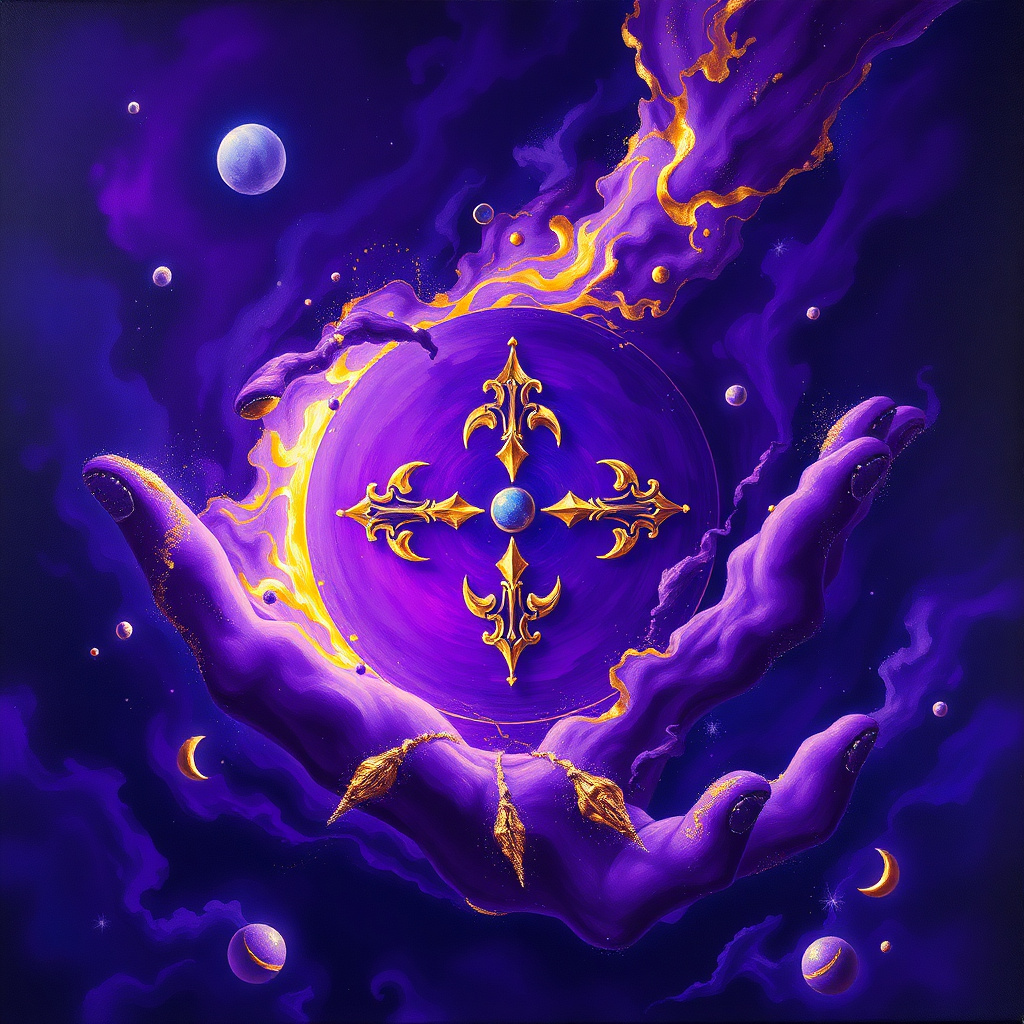
The Mythology of the Game: Divine Strategy and Cosmic Fate
Explore the cultural and mythological significance of the Game symbol, from ancient cosmic struggles to the archetypes of fate and divine providence.
In the tapestry of human heritage, a Game is rarely viewed as mere recreation; it is a sacred enactment of the laws governing existence. From the dice-throwing gods of antiquity to the intricate strategic battles of epic poetry, the Game serves as a ritualized microcosm of the universe. To encounter this symbol is to step into a realm where chance, skill, and divine decree intersect. It evokes the tension between the mortal hand and the unseen architect, framing life not as a chaotic accident, but as a structured contest governed by ancient, unyielding rules.
What does your Game dream mean?
In what arena is the contest being played?
The Dice of the Gods and the Architecture of Fate
In many ancient traditions, the Game functions as the primary mechanism through which the divine interacts with the terrestrial. In Greek mythology, the concept of Tyche or Fortuna suggests that the whims of fate are often perceived through the lens of a gambler’s luck. To engage in a Game is to acknowledge that there are forces beyond human agency that dictate the outcome of every move. This is not a matter of simple probability, but of cosmic alignment. In various folklore traditions, the roll of the dice or the draw of a card is seen as a direct communication from the ancestors or the heavens, a way for the unseen world to impose its will upon the physical plane. This perspective treats the Game as a bridge between the mundane and the eternal. Rather than viewing a loss as a personal failure, the mythological lens views it as a predetermined decree from a higher power. The Game becomes a ritual where the boundaries of reality are tested. In the epic poems of old, heroes often find themselves caught in a celestial Game where the stakes are nothing less than their souls or their kingdoms. The structure of the Game provides a framework for understanding the unpredictable nature of existence, turning the chaos of life into a legible, albeit difficult, sequence of moves. It suggests that while the rules are fixed and the players may be mortal, the outcome is authored by a grander, more ancient design that demands respect and adherence to the cosmic order.
Archetypal Combat and the Strategist’s Burden
Beyond the roll of the dice lies the archetype of the Great Strategist, a figure found in the sagas and legends of nearly every civilization. This aspect of the Game emphasizes the intellectual and spiritual struggle of the individual against a structured adversary. In Eastern philosophical traditions and historical military treatises, the Game is an exercise in discipline and the mastery of self within a rigid system of constraints. It mirrors the Hamlet-style archetype of the thinker caught in a web of complex machinations, where every action carries a weight that ripples through the entire social and spiritual hierarchy. This is the Game of courtly intrigue and martial prowess, where one must navigate a landscape of hidden intentions and rigid protocols. Literature often uses the Game to illustrate the tension between individual agency and the predetermined roles assigned by society or lineage. The player is not just competing against an opponent, but against the very structure of the Game itself. This reflects the mythological struggle of the hero who must learn to operate within the confines of destiny while still seeking to exert their will. The Game becomes a theater of character, where the true victory lies not in the material win, but in the demonstration of virtue, wisdom, and tactical excellence under pressure. It is a test of the spirit's ability to maintain composure and clarity when the rules of engagement are both absolute and unforgiving, mirroring the heavy burden of leadership and the complexities of human governance.
Sacred Rituals and the Cosmic Order
In many indigenous and ancient cultures, the Game is a sacred ritual designed to maintain or restore the balance of the world. It is not an escape from reality, but a concentrated attempt to understand the rhythm of the universe. Whether through the movement of pieces on a board or the casting of bones, the Game serves as a ritualized simulation of the seasonal cycles, the movements of the stars, and the ebb and flow of life and death. In these contexts, the Game is a form of divination, a way to read the intentions of the spirits and the ancestors. The board represents the earth, and the pieces represent the various forces—elements, spirits, or social classes—that must work in concert to preserve harmony. To play is to participate in the maintenance of the cosmic order. This view rejects the idea of the Game as a triviality; instead, it positions it as a vital necessity for communal and spiritual stability. The rules of the Game are seen as reflections of the natural laws that prevent the world from descending into primordial chaos. When the Game is played correctly, it reinforces the connections between the human, the natural, and the divine. It is a structured performance that honors the complexity of existence, acknowledging that while the world is fraught with conflict, there is an underlying logic and a sacred pattern that can be deciphered through disciplined engagement and respect for the ancient traditions of play.
Frequently Asked Questions
What does a dream about game signify in a cultural context?
Culturally, such a dream signifies an encounter with the mechanics of fate. It suggests that the dreamer is navigating a period where the 'rules' of their social or spiritual environment are being tested, reflecting the ancient view of life as a structured contest governed by higher archetypal forces rather than mere coincidence.
How does the Game symbol relate to ancestral spirits?
In many folklore traditions, the Game is a medium through which ancestors communicate. The movements within the Game can be interpreted as the guidance or the warnings of those who came before, framing the current life path as a continuation of a long, ancestral narrative that requires strategic wisdom to navigate.
Is the Game symbol a sign of divine intervention?
From a mythological perspective, yes. The Game often represents the intersection of the human and the divine. It suggests that the dreamer is participating in a cosmic drama where the outcomes are influenced by celestial decrees, urging a recognition of the larger, sacred patterns at play in their reality.